
The primary users of tactical shoes are military personnel and law enforcement officers who depend on high-performance footwear for demanding operational environments. However, their use has expanded significantly to include a wide range of professionals and civilians who value the same core features of durability, support, and reliability.
Tactical footwear is purpose-built for professionals in high-stakes fields. Its core design principles—durability, protection, and stability—have led to its adoption by a much broader audience seeking footwear that simply will not fail.
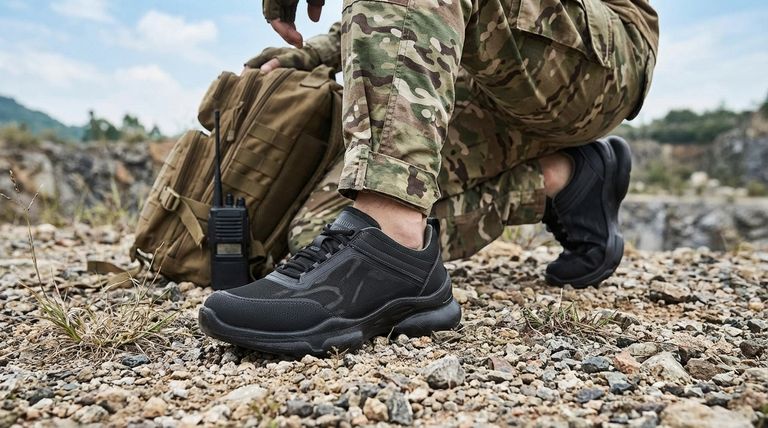
The Core Professional Users
The original and most demanding users of tactical shoes are professionals who operate in unpredictable and often hazardous conditions. Their needs have directly shaped the evolution of tactical footwear design.
Military Personnel
Military operators require boots that can perform reliably in diverse and unforgiving combat zones, from rocky mountains to wet jungles. The footwear must offer protection, withstand extreme wear, and provide stable footing across any terrain.
Law enforcement officers
Police officers need shoes that provide all-day comfort during long patrols, deliver excellent traction for sudden sprints on urban surfaces, and maintain a professional appearance. Many tactical shoes feature a polishable toe to meet uniform requirements.
Emergency Responders
Paramedics, firefighters, and other first responders rely on tactical footwear for protection from worksite hazards. Features like safety toes, slip-resistant outsoles, and durable construction are critical for their safety and effectiveness.
The Expanding User Base
The same qualities that make tactical shoes essential for professionals also make them highly appealing to civilians in various contexts. This has created a large and growing secondary market.
Outdoor Enthusiasts
Hikers, campers, and hunters value tactical footwear for its ruggedness and support. These shoes offer superior ankle stability and aggressive traction, making them a reliable alternative to traditional hiking boots.
Skilled Trades and Laborers
Workers in construction, logistics, and other demanding trades often choose tactical shoes for their durability and protective features. They function as a modern, more athletic alternative to traditional work boots.
Everyday Civilians
A growing number of people wear tactical shoes for daily activities. They are sought after for their exceptional longevity, comfort, and supportive feel, far surpassing what typical consumer-grade sneakers can offer.
Understanding the Trade-offs
While highly functional, tactical footwear is not always the optimal choice for every situation. Understanding the inherent compromises is key to making an informed decision.
Weight and Bulk
To achieve their high level of durability and protection, many tactical shoes are heavier and bulkier than standard athletic footwear. This can lead to fatigue over very long periods if you are not accustomed to it.
Reduced Flexibility
The stiff construction needed for ankle support and foot protection often means a tactical boot is less flexible than a running shoe. This can feel restrictive during activities that require a high degree of agility.
The Break-in Period
The robust materials used in high-quality tactical shoes, such as full-grain leather and thick nylon, often require a break-in period to conform to your foot and become truly comfortable.
Making the Right Choice for Your Goal
Your specific need should guide your footwear selection.
- If your primary focus is professional duty: Prioritize mission-specific features like compliance, safety toes, and materials suited to your operational environment.
- If your primary focus is outdoor recreation: Look for models with excellent waterproofing, aggressive outsole lugs for traction, and strong ankle support.
- If your primary focus is durable everyday wear: Consider lighter-weight "tactical trainer" styles that blend sneaker-like comfort with the durability of a boot.
Ultimately, choosing the right footwear means matching its intended purpose to your actual daily demands.
Summary Table:
| User Group | Primary Need / Use Case |
|---|---|
| Military Personnel | Extreme durability & protection for combat zones |
| Law Enforcement Officers | All-day comfort, traction, and professional appearance |
| Emergency Responders | Safety toes, slip-resistance for hazardous sites |
| Outdoor Enthusiasts | Ruggedness & ankle support for hiking/hunting |
| Skilled Trades/Laborers | Durable, protective alternative to work boots |
| Everyday Civilians | Long-lasting comfort for daily wear |
Need High-Performance Tactical Footwear for Your Market?
As a large-scale manufacturer, 3515 produces a comprehensive range of tactical, work, and outdoor footwear for distributors, brand owners, and bulk clients. Whether you need rugged boots for military contracts, durable shoes for law enforcement, or versatile styles for the growing civilian market, our production capabilities cover all types of shoes and boots to meet your specific demands.
Contact 3515 today to discuss your manufacturing needs and discover how we can deliver the quality and reliability your customers count on.
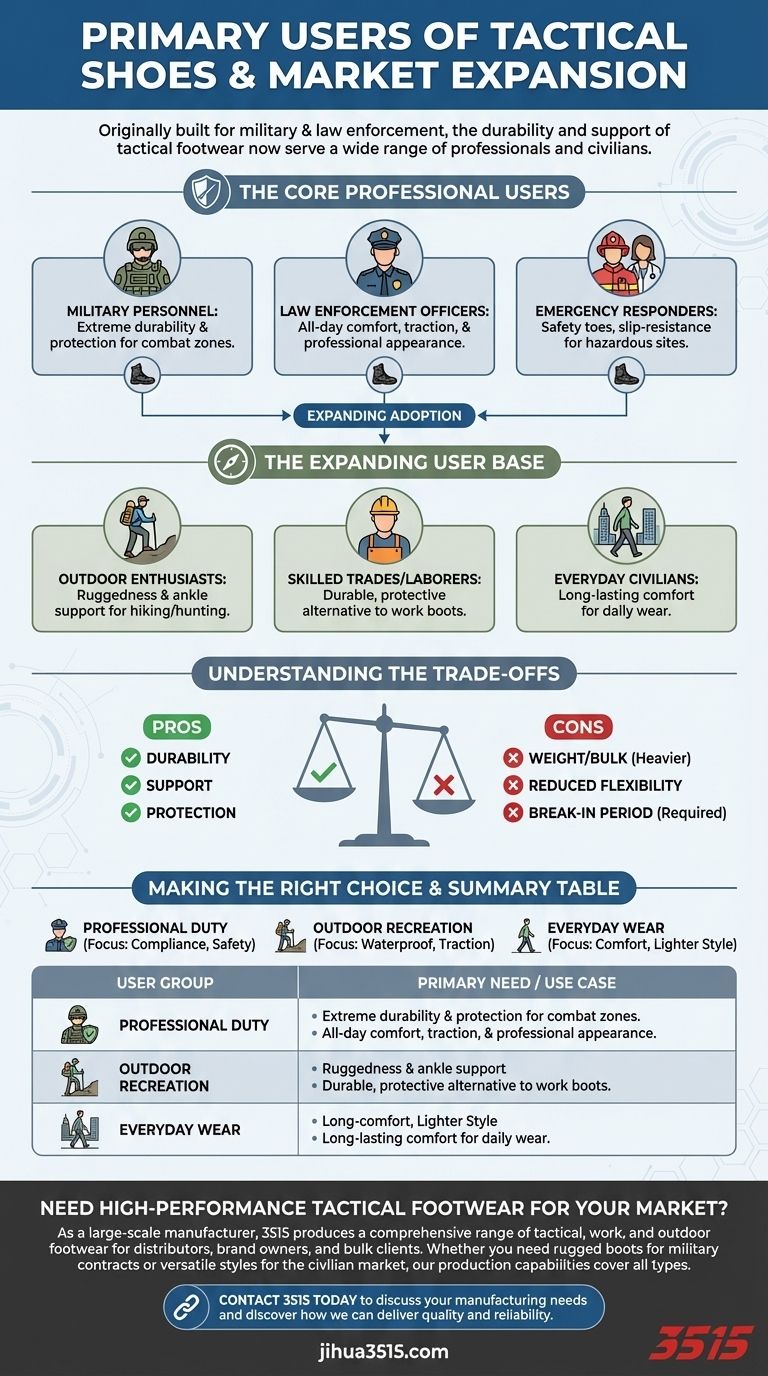
Visual Guide
Related Products
- Durable Leather Tactical Boots Wholesale & Custom Manufacturing for Brands
- Durable Leather High-Ankle Tactical Boots for Wholesale & Custom Manufacturing
- Durable High-Ankle Tactical Boots Wholesale Manufacturer for Custom & Bulk Orders
- Wholesale Waterproof Tactical Boots Custom Suede & High-Traction Soles
- Wholesale Lightweight Tactical Boots with Dial Closure OEM & Bulk Orders
People Also Ask
- What specialized protections do tactical boots offer? Maximize Endurance with High-Performance Footwear
- What features should law enforcement officers look for in tactical boots? Essential Guide for Safety & Performance
- Importance of Professional Tactical Boots in Loess Gully Regions: Ensure Safety and Precision for Field Monitoring
- What is rucking, and why are tactical boots suitable for it? Discover the Ultimate Footwear for Heavy Loads
- What makes the traction of tactical boots superior? Unlock the Science of Unbeatable Grip



















