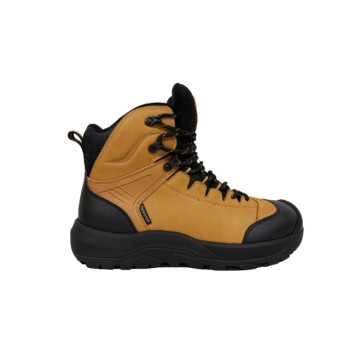
For the serious cold-weather cyclist, the answer is definitive: dedicated winter cycling boots are the superior choice. While shoe covers, or overshoes, serve a purpose, they are a compromise in protection and convenience. For riders who log significant miles in freezing conditions, a purpose-built boot is a long-term investment in performance and comfort.
The core decision is not between two equal options, but between a complete, integrated system (the boot) and an accessory (the overshoe). For serious use, a dedicated tool will always outperform a temporary modification.
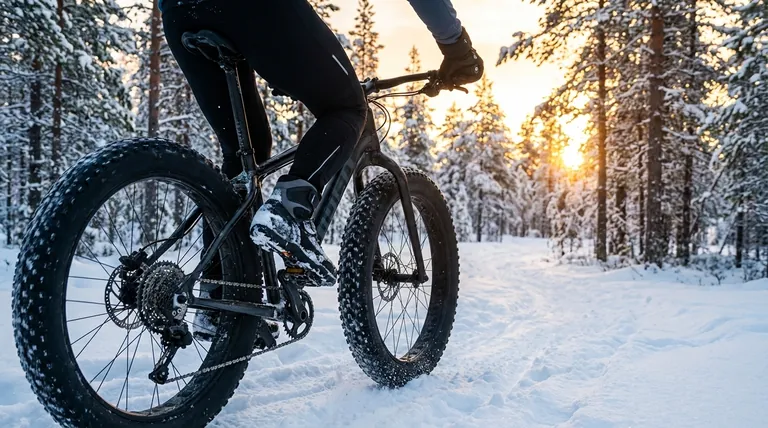
The Case for Dedicated Winter Boots
A winter cycling boot is engineered from the ground up to solve the specific problems of riding in the cold. It isn't a summer shoe with a cover; it's a single, cohesive unit designed for warmth, dryness, and durability.
Integrated Insulation and Weatherproofing
Dedicated boots feature insulation built directly into the shoe's structure, often complemented by a thermal insole. This creates a complete, sealed environment.
An outer shell, typically using materials like Gore-Tex, provides a waterproof and windproof barrier, eliminating the primary sources of heat loss.
Superior Breathability
A critical, often overlooked, factor in warmth is moisture management. If your sweat cannot escape, your socks become damp and your feet get cold regardless of insulation.
Winter boots are designed as a single, breathable system. Overshoes, in contrast, wrap your breathable summer shoes in a largely non-breathable layer, trapping moisture effectively.
Durability and Ease of Use
Winter boots are built to withstand the harsh conditions of winter riding, including road salt and grime. Their closures are designed to be operated with gloved hands.
There are no fragile zippers to break or delicate materials to tear while walking, which are common failure points for overshoes.
Where Overshoes Fit In (And Where They Fall Short)
Overshoes are a popular choice because they represent a lower initial cost and work with your existing cycling shoes. However, for the serious rider, their weaknesses become apparent quickly.
The Compromise on Protection
The most significant flaw in the overshoe design is the large hole in the bottom for your cleat. This is a primary entry point for water splashing up from the road.
Water can also seep in from the top around the ankle, running down your leg and into your shoe. They are a barrier, but they are not a seal.
The Convenience Fallacy
While they seem convenient, the reality of wrestling a muddy, wet, and cold overshoe off a shoe post-ride is a significant hassle.
Conversely, a dedicated boot comes off as easily as any other piece of footwear. This simplicity is invaluable after a long, draining ride in the cold.
Understanding the Trade-offs
Choosing the right gear requires an objective look at the costs and benefits. While winter boots are the superior technical solution, they are not without their own considerations.
The Investment: Cost vs. Longevity
There is no question that winter boots are a significant upfront expense.
However, a single pair of high-quality boots will often outlast multiple pairs of overshoes, which are prone to tears and zipper failures. For a frequent rider, the boot can be a more economical choice over a span of several seasons.
The Drying Time Dilemma
Because of their thick, integrated insulation, winter boots can take a long time to dry out completely.
This is a real-world issue for cyclists who ride on consecutive days. An electric boot dryer can be a necessary secondary investment to manage this.
Making the Right Choice for Your Goal
Your decision should be guided by the demands of your riding, not just the temperature outside.
- If your primary focus is maximum performance and comfort on long rides in genuinely freezing conditions: A dedicated winter cycling boot is the only choice that provides the necessary integrated protection and reliability.
- If your primary focus is a budget-friendly solution for occasional, shorter, or milder winter riding: High-quality overshoes offer a viable, though compromised, alternative to extend the use of your summer shoes.
Ultimately, investing in the right equipment removes a significant barrier, allowing you to focus purely on the ride itself.
Summary Table:
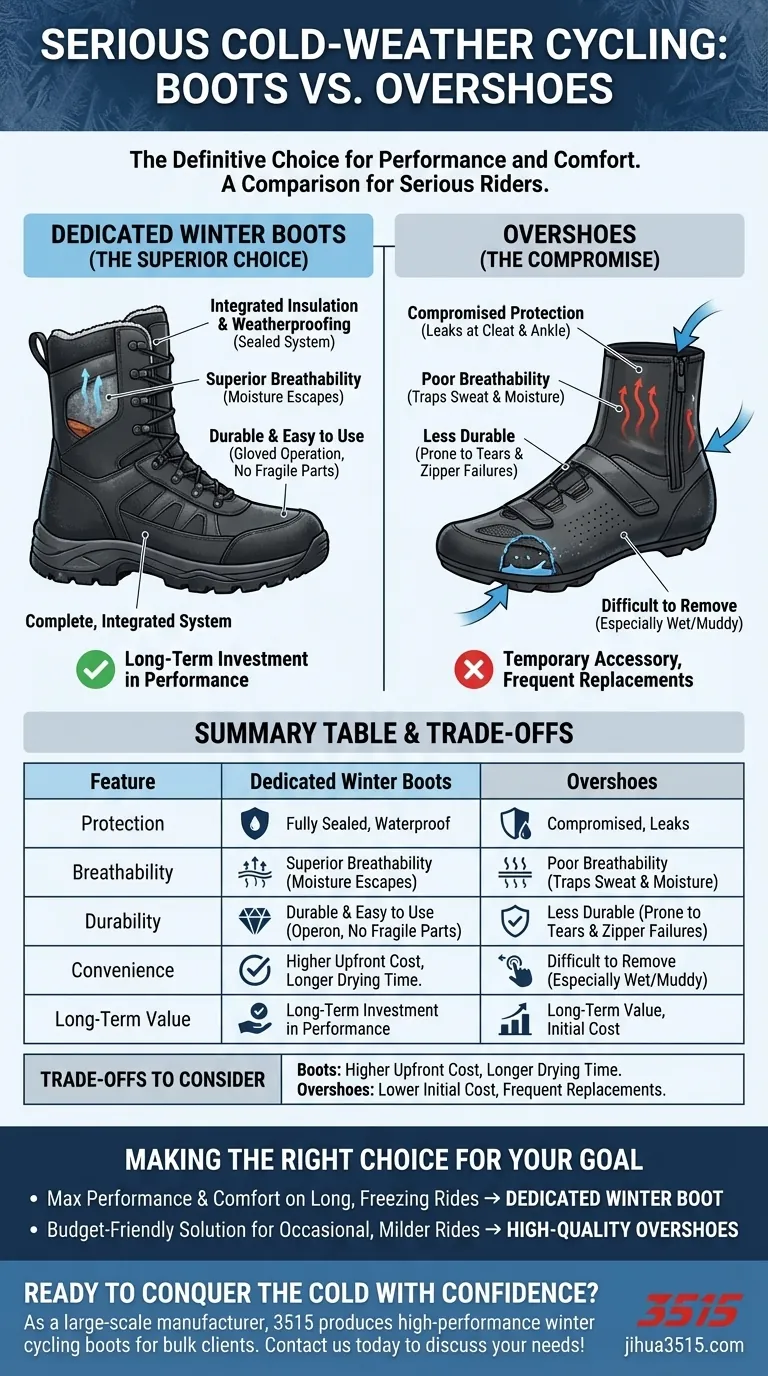
| Feature | Dedicated Winter Boots | Overshoes |
|---|---|---|
| Protection | Fully sealed, waterproof/windproof shell | Compromised; water entry at cleat and ankle |
| Breathability | Integrated moisture-wicking system | Traps sweat, leading to dampness |
| Durability | Built for harsh conditions; easy to use with gloves | Prone to tears and zipper failures |
| Convenience | Easy on/off like regular footwear | Difficult to remove when wet/muddy |
| Long-Term Value | Higher upfront cost, but more economical over time | Lower initial cost, but frequent replacements needed |
Ready to Conquer the Cold with Confidence?
As a large-scale manufacturer, 3515 produces a comprehensive range of high-performance winter cycling boots for distributors, brand owners, and bulk clients. Our production capabilities ensure durable, weatherproof footwear designed for serious riders. Don't let cold feet hold you back—invest in gear that performs.
Contact us today to discuss your needs and discover how we can equip you for superior winter riding!
Visual Guide
Related Products
- Premium Insulated Safety Boots and Shoes for Wholesale & Bulk Orders
- Factory Direct Wholesale Rain Boots Durable Waterproof & Fully Customizable
- Durable Waterproof Rain Boots | Custom Manufacturer for Wholesale & Brands
- Heavy-Duty Waterproof Nubuck Safety Boots Safety Shoes for Bulk Supply
- Durable Goodyear Welt Leather Work Boots for Wholesale & Private Label
People Also Ask
- What are the recommended insulation ratings for mild winter conditions? A Guide for Active & Stationary Workers
- How does insulation thickness correlate with temperature ranges? A Guide to Choosing the Right Warmth
- What insulation level is needed for severe cold and stationary work? 1200g or Higher is Essential
- What safety advantages do insulated boots offer beyond warmth? Dielectric Protection & Superior Grip
- How does fleece lining contribute to the warmth of insulated boots? Trapping Air for Superior Cold Protection