Okay, here's the deal. My initial task is straightforward: the user needs a list of materials to avoid when using a beeswax and coconut oil-based waterproofing treatment. The answer is clear: suede, nubuck leather, and canvas are off-limits. But I know they're not just looking for a list; they want to understand. They're asking "why" and what the consequences are. This is where I can really add value as a technical advisor.
Beeswax and coconut oil create a non-breathable, sealed barrier. While excellent for smooth leather, this same property irreversibly damages the delicate, napped textures of suede and nubuck and can cause discoloration and stiffness in canvas.
Here’s my thought process on why these materials are incompatible:
Why Certain Materials React Poorly to Wax
The core of the issue lies in the physical characteristics of these materials and how they interact with the wax.
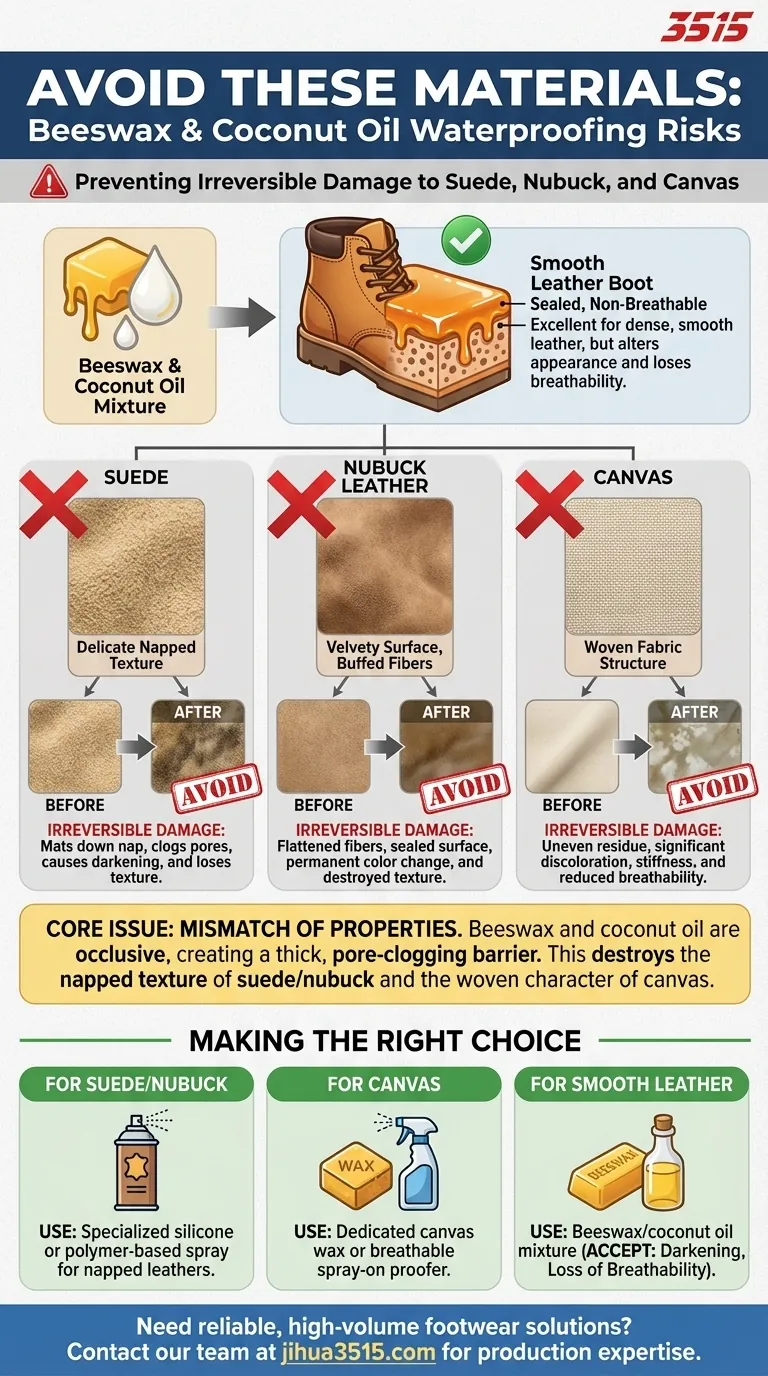
The Problem with Suede and Nubuck: Suede and nubuck have a napped surface. This fuzzy texture, created by sanding the leather, is their defining feature. When you apply the wax mixture, especially with heat from a hairdryer (as described in one reference), the wax penetrates and mats down the nap. This clogs the pores, creating a smooth, greasy, and often much darker finish. The original texture is gone, and this damage is irreversible.
The Issue with Canvas: Canvas is a woven fabric. While the wax will make it water-resistant, it'll also leave a greasy, uneven residue. This can cause significant discoloration, and make the fabric stiff, and less breathable. Essentially, it changes the fundamental character of the canvas, which is often chosen for its flexibility and breathability.
The Principle of Material Porosity: The key to understanding this incompatibility is to remember that this waterproofing method works by filling the pores of a material, creating a barrier. This works well with smooth, full-grain leather, which has a naturally dense and less porous structure. However, materials like suede and canvas are valued precisely because of their texture and breathability. By filling in their pores, we are, in essence, destroying those very qualities.
Understanding the Trade-offs
Even when using this method on suitable materials, there are trade-offs to consider:
Loss of Breathability: This method creates a non-breathable layer. For footwear, this can lead to discomfort, trapped moisture, and sweaty feet. It's a fundamental consequence of creating a waterproof seal.
Altered Appearance and Feel: Even on smooth leather, the wax will darken the color and change the texture. It may become smoother, shinier, or slightly stiffer than before. Users need to be aware of this potential aesthetic alteration.
Potential for Uneven Application: The hairdryer method mentioned has the potential for splotchy, uneven results. This is something the user needs to be mindful of.
Choosing the Right Waterproofing Method
My conclusion is simple. Matching the waterproofing method to the material is crucial.
- If your goal is to waterproof smooth leather boots or shoes: Beeswax/coconut oil is a viable, effective option, provided you accept a potential darkening of the leather.
- If your goal is to protect suede or nubuck: You must use a specialized silicone-based or polymer-based spray designed specifically for napped leathers.
- If your goal is to waterproof canvas gear: Consider a dedicated canvas wax (like those for jackets) or a spray-on treatment formulated to avoid excessive stiffness and discoloration.
Matching the waterproofing method to the material's properties is the key to effective protection without causing damage. To prevent permanent damage, you must avoid using beeswax and coconut oil-based waterproofing on suede, nubuck leather, and canvas. This type of wax-based sealant works by creating a heavy, non-porous barrier that will irreversibly mat the delicate textures of suede and nubuck and can cause significant discoloration and stiffness in canvas.
The core issue is a mismatch of properties: beeswax and oil create a thick, pore-clogging barrier. While effective on smooth, dense materials, this same action destroys the napped texture of suede and the woven character of canvas.
Why Certain Materials React Poorly to Wax
The effectiveness of a waterproofing agent depends entirely on its compatibility with the material's structure. Beeswax and coconut oil are occlusive, meaning they seal a surface completely.
The Problem with Suede and Nubuck
Suede and nubuck are valued for their soft, velvety texture. This "nap" is created by buffing the surface of the leather to raise a fine layer of fibers.
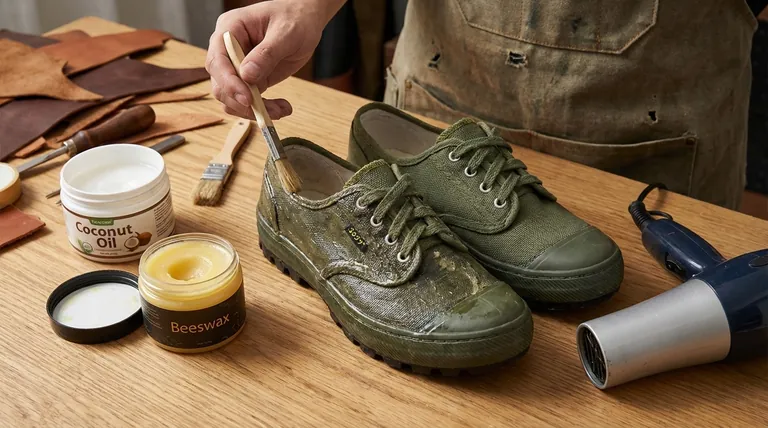
Applying a heavy wax and melting it with heat, as the method requires, will permanently flatten and mat these delicate fibers. The treatment clogs the material's pores, creating a greasy, darkened, and smooth patch that cannot be restored to its original state.
The Issue with Canvas
Canvas is a woven fabric. While a wax mixture will make it water-resistant, it often comes at a cost.
The wax can saturate the fibers unevenly, leading to a splotchy, discolored appearance. It also tends to make the fabric significantly stiffer and heavier, altering its natural drape and feel.
The Principle of Material Structure
This incompatibility boils down to material structure. A beeswax and oil blend is designed to saturate and seal the surface of dense, smooth leather.
Materials like suede, nubuck, and canvas derive their unique characteristics from their open, textured, or woven structures. Sealing them with a heavy wax fundamentally and often permanently damages these defining properties.
Understanding the Trade-offs
Even when used on appropriate materials like smooth leather, this waterproofing method involves clear compromises you must accept.
Loss of Breathability
Sealing the pores of any material with wax eliminates its ability to breathe. For footwear, this traps sweat and moisture inside, which can lead to discomfort and odor.
Altered Appearance and Feel
Beeswax and oil mixtures will almost always darken the color of the leather. They also create a waxy, slightly tacky surface. You must be prepared for this permanent aesthetic change.
Potential for Uneven Application
The process requires melting the wax into the surface, often with a hairdryer. If not done with meticulous care, this can result in a blotchy finish that is very difficult to correct once it has cooled and set.
Making the Right Choice for Your Goal
Always match the waterproofing product to the specific material you are treating.
- If your primary focus is waterproofing rugged, smooth leather boots: A beeswax/oil mixture is an effective, traditional choice, provided you accept the change in color and loss of breathability.
- If your primary focus is protecting suede or nubuck items: You must use a specialized spray designed for napped leathers, which creates a protective barrier without matting the fibers.
- If your primary focus is making canvas water-resistant: Seek out a dedicated canvas wax or a modern spray-on proofer formulated to treat woven fabrics without causing excessive stiffness or discoloration.
Ultimately, understanding the properties of your material is the key to protecting it effectively without causing harm.
Summary Table:
| Material to Avoid | Reason for Incompatibility | Recommended Alternative |
|---|---|---|
| Suede | Wax mats and clogs delicate nap, causing irreversible flattening and darkening. | Silicone-based spray for napped leathers. |
| Nubuck Leather | Heavy wax seals and destroys the velvety texture permanently. | Polymer-based spray designed for nubuck. |
| Canvas | Causes discoloration, stiffness, and an uneven, greasy residue. | Dedicated canvas wax or breathable spray proofer. |
Need to waterproof footwear at scale without compromising material integrity? As a large-scale manufacturer, 3515 produces a comprehensive range of durable, properly-treated footwear for distributors, brand owners, and bulk clients. Our expertise ensures the right waterproofing method is applied to each material—from rugged smooth leather boots to specialized nubuck and canvas designs. Let us handle your production needs with precision. Contact our team today for a consultation on reliable, high-volume footwear solutions!
Visual Guide
Related Products
- High-Traction Suede Tactical Boots Wholesale & Custom Manufacturing
- Durable Rubber Sole Outdoor Shoes Wholesale & Custom Manufacturing
- Classic Leather Derby Dress Shoes Wholesale & Custom Manufacturing
- Custom Manufactured Air Cushion Leather Business Shoes for Wholesale
- Wholesale Durable & Breathable Training Shoes for Custom Brands
People Also Ask
- Why is sequential analysis utilized to evaluate tactical boots? Master Dynamic Boot Development and Ergonomic Performance
- How does the material of tactical boots affect their performance? Choose the Right Material for Your Mission
- How do tactical boots differ from regular boots? Performance, Durability & Design Explained
- How do military uniforms and tactical boots impact the prediction of thermal risk? Essential Safety Insights
- What are the benefits of integrating FES and sEMG into tactical boots? Safety, Reliability & Field-Ready Performance