Knowing when to escalate foot pain from a nuisance to a medical concern is crucial for anyone required to wear steel toe boots. You should seek professional help if you experience severe pain that does not improve with rest or home care, significant swelling or numbness in your feet, or have difficulty walking normally. These symptoms indicate a potential underlying injury that requires a proper diagnosis.
While some initial discomfort can be part of adjusting to new boots, persistent or escalating pain is a clear signal that the protective gear may be causing a separate health issue. Ignoring these signs can lead to chronic conditions that impact your mobility and well-being.
Recognizing the Red Flags: When to See a Professional
Understanding specific symptoms can help you determine when self-care is no longer sufficient and a medical opinion is necessary.
Persistent or Severe Pain
Initial soreness can be normal, but pain that lingers for days, worsens over time, or is sharp and debilitating is a major red flag. If rest, ice, and changing your socks or insoles provide no relief, it's time to consult a professional.
Swelling or Numbness
Swelling is a sign of inflammation or injury. Numbness or a tingling sensation can suggest nerve compression or circulation issues, which are serious concerns that should not be ignored.
Difficulty with Mobility
If your foot pain is severe enough to alter your gait or make walking difficult, it has moved beyond a simple ache. This functional impairment is a clear indicator that you need a medical evaluation to identify the root cause.
Symptoms of Specific Foot Conditions
Pain in your heel, especially in the morning, may signal plantar fasciitis. Pain and stiffness along the back of your heel could indicate Achilles tendonitis. A professional can accurately diagnose these conditions and create a treatment plan.
Understanding the Root Causes of Boot-Related Pain
Steel toe boots are essential for safety, but their rigid construction can create problems if not managed correctly.
The Problem of Inadequate Support
Many work boots lack sufficient arch support. Over a long shift, this forces the ligaments in your foot, particularly the plantar fascia, to endure excessive strain, leading to inflammation and pain.
The Impact of an Improper Fit
Pressure is a primary cause of pain. Boots that are too tight can cause ingrown toenails and blisters, while boots that are too loose allow your foot to slide, creating friction and instability.
The Rigidity of the Toe Box
The steel cap itself, while protective, is unforgiving. If the toe box is not shaped correctly for your foot, it can exert constant pressure on your toes and joints, leading to significant discomfort.
Common Pitfalls and Preventative Measures
Avoiding foot injury is often about proactive choices and recognizing the difference between normal adjustment and a developing problem.
Mistaking Injury for a "Break-In" Period
While new leather boots require a break-in period, this should involve stiffness, not sharp pain. Pain that feels like an injury is an injury and should be treated as such.
Investing in Quality Footwear
High-quality boots designed with proper ergonomics, arch support, and breathable materials are an investment in your health. Cheaper, poorly constructed boots are a common source of foot problems.
The Critical Role of Orthotic Insoles
Over-the-counter or custom orthotic insoles can dramatically improve the fit and support of your boots. They are one of the most effective tools for preventing conditions like plantar fasciitis.
Making the Right Choice for Your Goal
Your next step depends entirely on the nature and severity of your symptoms.
- If your primary focus is preventing future pain: Invest in high-quality, properly fitted boots and supplement them with supportive orthotic insoles.
- If you are experiencing mild, manageable discomfort: Implement home care like rest and ice, and re-evaluate your insoles and sock choices for better cushioning.
- If your pain is severe, persistent, or accompanied by numbness: Schedule an appointment with a podiatrist or your primary care physician without delay.
Ultimately, listening to your body's warning signs is the most effective strategy for ensuring your long-term health and safety on the job.
Summary Table:
| Symptom | When to Seek Help |
|---|---|
| Persistent or Severe Pain | If pain lasts for days, worsens, or is sharp and debilitating |
| Swelling or Numbness | If swelling indicates inflammation or numbness suggests nerve compression |
| Difficulty Walking | If pain alters your gait or makes walking difficult |
| Signs of Specific Conditions | If you suspect plantar fasciitis or Achilles tendonitis |
Don't let ill-fitting boots compromise your safety and comfort. As a large-scale manufacturer, 3515 produces a comprehensive range of high-quality, ergonomically designed footwear for distributors, brand owners, and bulk clients. Our production capabilities encompass all types of safety boots and shoes, engineered with proper arch support, breathable materials, and correctly shaped toe boxes to prevent pain and injury. Contact us today to explore our durable, supportive footwear solutions designed for long-term health and performance on the job.
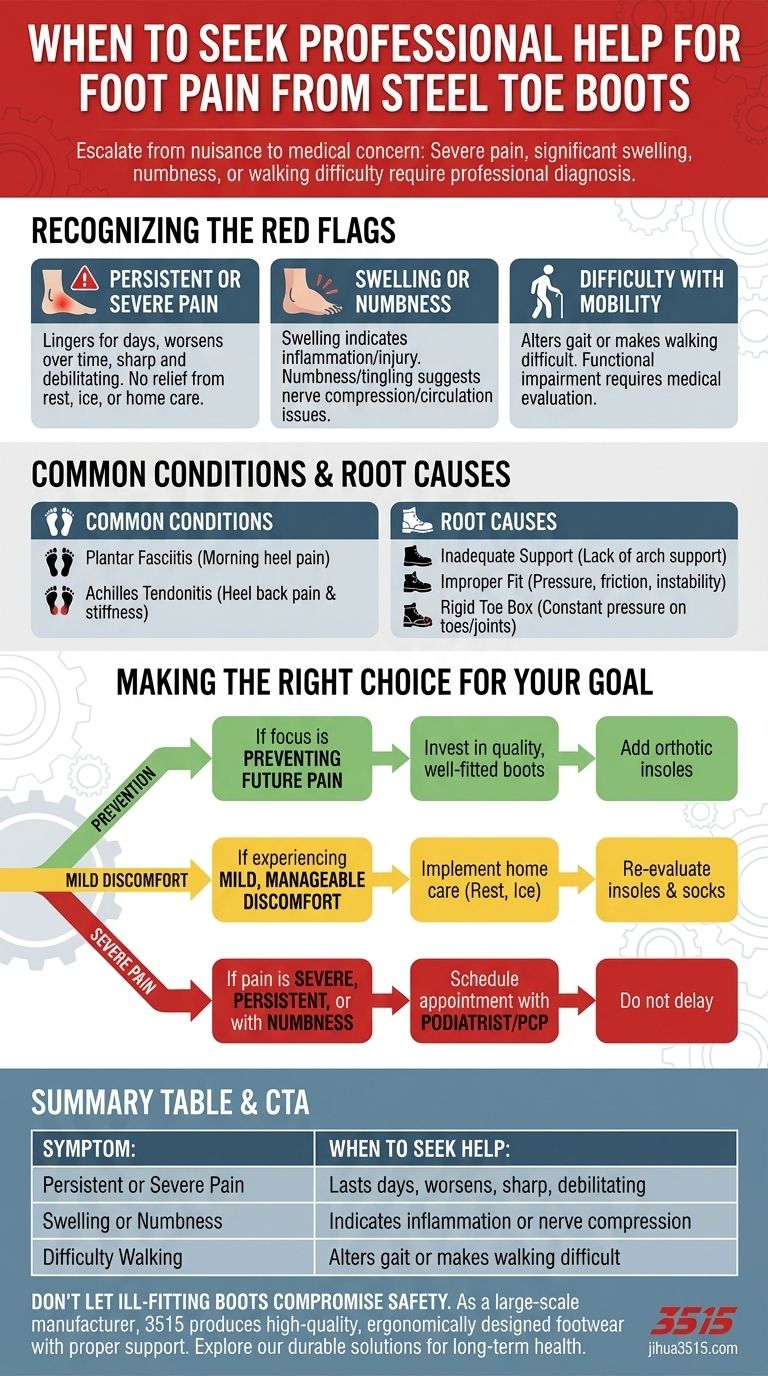
Visual Guide
Related Products
- Durable Steel Toe Safety Boots Wholesale & Custom Manufacturing
- Wholesale Durable Breathable Safety Boots Custom OEM Manufacturer
- Wholesale Durable 6-Inch Work Boots | Custom & Private Label Manufacturer
- Puncture-Resistant Velcro Safety Boots for Wholesale & Custom Manufacturing
- Premium Sport Style Safety Boots for Bulk Orders
People Also Ask
- Why are industrial safety boots with steel toes necessary for machine operators? Essential Foot Protection for Safety
- Why is it mandatory to wear safety shoes with steel toe protection during metal loading? Prevent Crushing Injuries
- What are the main materials used in steel toe safety shoes? A Guide to Protective Footwear Construction
- What are the characteristics of steel toe safety boots? Maximum Protection, Key Trade-offs
- Is it true that steel toes can cause toes to get cut off? Debunking the Dangerous Myth