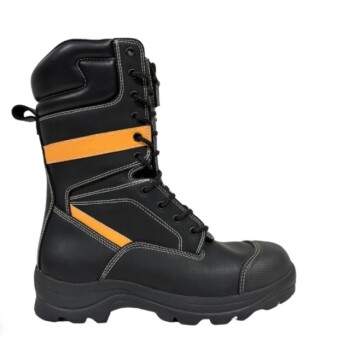
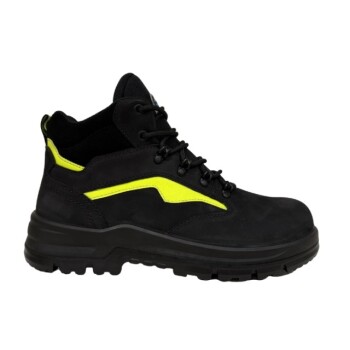
The short answer is winter hiking. Water-resistant hybrid shoes are specifically recommended for activities in cold, damp, or snowy conditions where you need a balance of warmth and protection without the full commitment of a heavy, waterproof boot. They excel at keeping your feet dry from snow and light moisture while often providing better breathability than their fully waterproof counterparts.
The core principle is to use water-resistant hybrids when you anticipate encountering moisture from the environment—like snow, mud, or light rain—but do not expect to submerge your feet. They are a strategic compromise between a breathable trail runner and a fully waterproof boot.
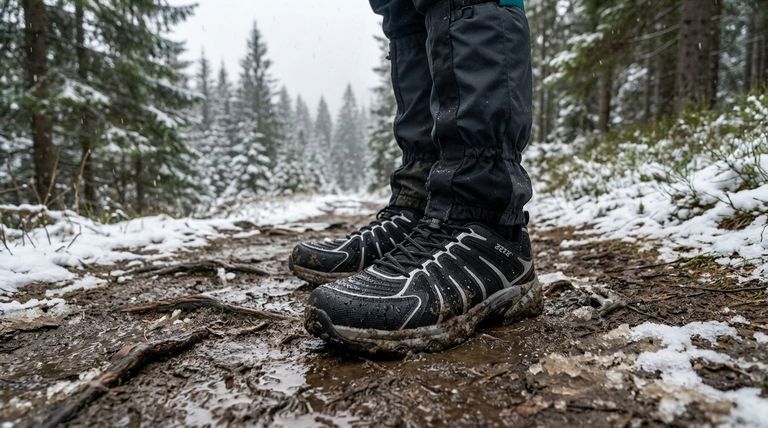
The Ideal Environment for Water-Resistant Hybrids
The primary advantage of a water-resistant shoe is its ability to fend off moderate environmental moisture. This makes it a specialized tool for certain conditions.
Protection in Snowy Conditions
Water-resistant materials are highly effective at preventing melting snow from soaking through the shoe's upper. This keeps your feet dry and, by extension, warmer.
For deeper snow, these hybrids pair exceptionally well with gaiters, which create a seal around your ankle to stop snow from entering the top of the shoe.
Warmth and Insulation
Compared to standard, highly-ventilated trail shoes, water-resistant models often use denser upper materials. This construction naturally provides a degree of insulation, helping to retain heat in colder temperatures.
Navigating Mud and Light Rain
These shoes are not just for winter. They are an excellent choice for shoulder-season hiking in the spring or fall when trails are often muddy, dewy, or subject to intermittent, light rain.
Understanding the Trade-offs
Choosing footwear is always about balancing competing needs. A water-resistant hybrid is a compromise, and understanding its limitations is critical for its effective use.
"Resistant" Is Not "Proof"
This is the most important distinction. Water-resistant means the material can withstand light moisture penetration for a limited time. Waterproof typically implies a membrane (like GORE-TEX) that completely blocks liquid water from entering.
A water-resistant shoe will eventually fail and become saturated in a heavy downpour or if you step in a creek.
The Breathability Compromise
While more breathable than a fully waterproof boot, a water-resistant shoe is less breathable than a standard mesh trail runner.
In hot, dry conditions, this reduced airflow can cause your feet to sweat more, potentially leading to discomfort and blisters. They are a poor choice for summer desert hiking.
When a Different Shoe is Better
A water-resistant hybrid is not a one-shoe quiver.
- For hot, dry trails, choose a highly breathable, non-water-resistant trail shoe.
- For prolonged, heavy rain or deep water crossings, a truly waterproof boot is the only reliable option.
Making the Right Choice for Your Goal
Select your footwear based on the most likely conditions you will face on the trail.
- If your primary focus is day hiking in cold, snowy, or slushy conditions: A water-resistant hybrid offers the ideal blend of warmth and protection.
- If your primary focus is 3-season hiking on muddy or dewy trails: These shoes provide the necessary protection from ground moisture without causing your feet to overheat.
- If your primary focus is hiking in heavy rain or through wetlands: You should upgrade to a fully waterproof boot to ensure your feet stay dry.
Matching your shoe's capabilities to the environment is the key to comfort and performance on any hike.
Summary Table:
| Ideal Use Case | Key Benefit | Key Limitation |
|---|---|---|
| Winter Hiking / Snow | Keeps feet dry from melting snow; provides warmth | Not fully waterproof; will fail if submerged |
| Muddy / Dewy Trails | Protects from ground moisture; better breathability than waterproof boots | Less breathable than standard trail runners in heat |
| Light Rain / Shoulder Seasons | Effective for intermittent, light precipitation | Not suitable for heavy, prolonged rain |
Need Durable, High-Performance Water-Resistant Hybrids for Your Inventory?
As a large-scale manufacturer, 3515 produces a comprehensive range of footwear for distributors, brand owners, and bulk clients. Our production capabilities encompass all types of shoes and boots, including high-quality water-resistant hybrids designed for the conditions described in this article.
We can help you equip your customers with the right footwear for every trail. Contact our team today to discuss your manufacturing needs and get a quote.
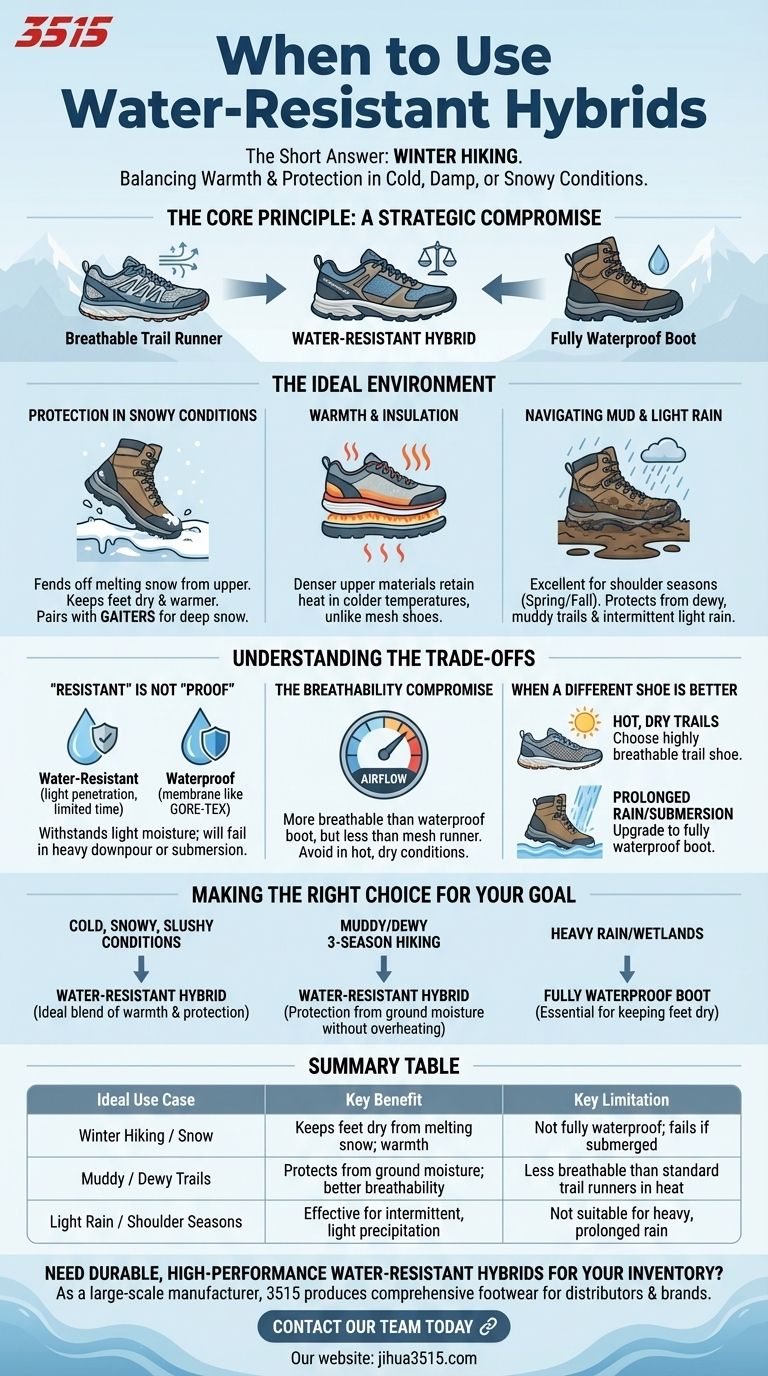
Visual Guide
Related Products
- Premium Flame-Retardant Waterproof Safety Boots and Shoes
- Heavy-Duty Waterproof Nubuck Safety Boots Safety Shoes for Bulk Supply
- Wholesale Premium Waterproof Nubuck Safety Shoes Boots
- Durable Waterproof Rain Boots | Custom Manufacturer for Wholesale & Brands
- Premium Wholesale Waterproof Safety Boots High Performance Protection for Industrial Markets
People Also Ask
- Why are waterproof safety boots recommended for certain work environments? Essential Protection for Wet & Hazardous Jobs
- What materials are commonly used in waterproof boots? The Complete Guide to Durable, Breathable Protection
- How does boot construction affect waterproofing? The Science Behind Truly Dry Feet
- What should you look for to ensure boots are fully waterproof? The Essential 2-Part System
- What is the advantage of one-piece construction in waterproof boots? Unbeatable Seamless Protection