
For winter cycling, your shoes will be compatible with one of two distinct cleat systems: the two-bolt mountain bike (MTB) style or the three-bolt road style. While both are available, the choice is not merely a matter of preference; it has significant practical implications for safety and usability in harsh conditions.
The core decision comes down to on-bike performance versus off-bike practicality. For the vast majority of riders, the superior walkability and versatility of the two-bolt MTB system make it the definitive and recommended choice for winter cycling.
Breaking Down the Two Cleat Systems
To understand which is best for winter, you first need to understand how each system fundamentally works and where it excels.
The Two-Bolt (SPD/MTB) System
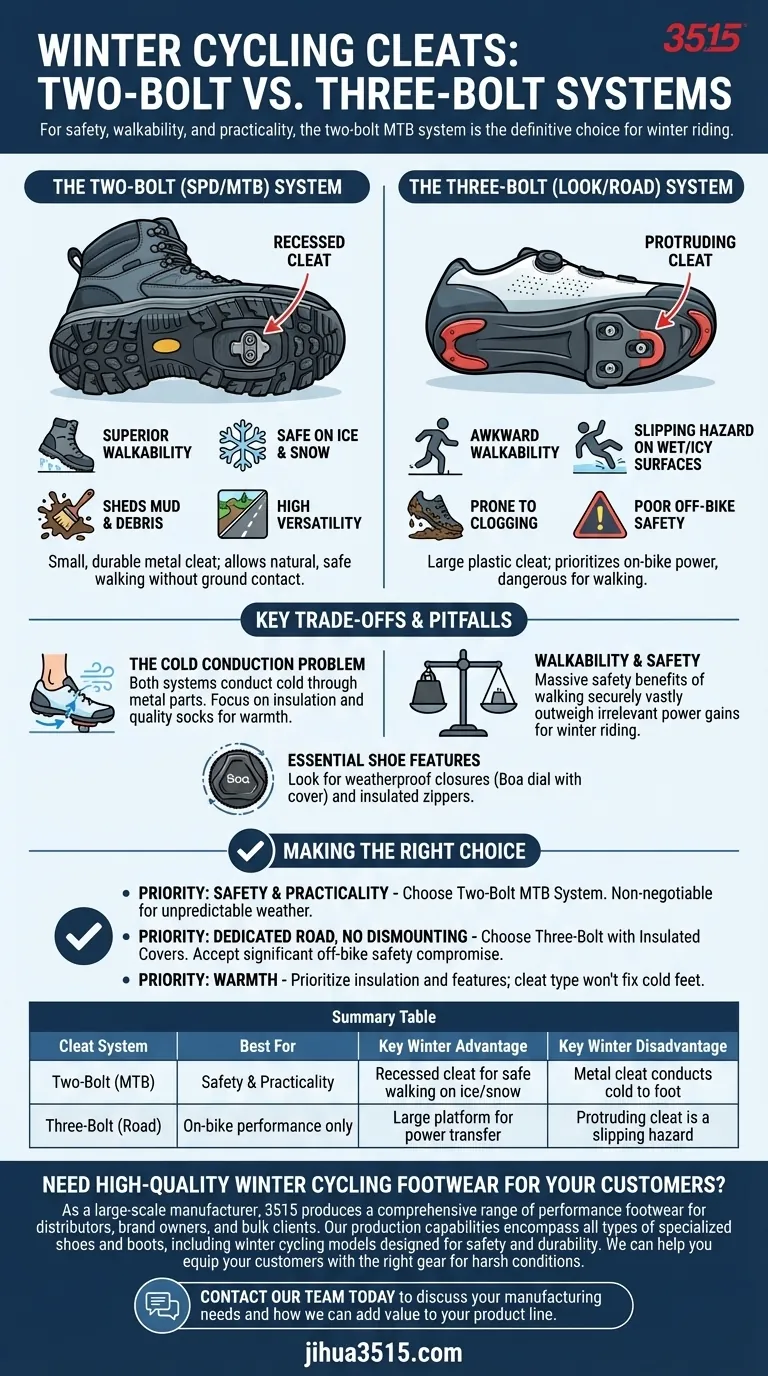
The two-bolt system uses a small, durable metal cleat that attaches to the shoe's sole with two bolts.
Crucially, on most winter and MTB shoes, this cleat is recessed into the sole, sitting flush with the surrounding rubber tread.
This design is the system's greatest strength, allowing you to walk naturally and safely without the cleat making direct contact with the ground.
The Three-Bolt (Look/Road) System
The three-bolt system uses a larger, typically plastic cleat that attaches to a smooth-soled shoe with three bolts.
This cleat protrudes significantly from the bottom of the shoe. This design prioritizes a wide, stable platform for maximum power transfer on the bike.
However, this makes walking awkward and treacherous, as you are essentially balancing on a small piece of hard plastic.
Why the Two-Bolt System Excels in Winter
The unique challenges of winter riding—ice, snow, mud, and cold—heavily favor the design principles of the two-bolt system.
Superior Walkability on Slippery Surfaces
Winter conditions often force you to dismount. Whether you're navigating an icy patch, carrying your bike through snow, or stopping at a cafe, you need to be able to walk safely.
The recessed cleat and aggressive tread of a two-bolt shoe provide essential grip. A three-bolt road shoe, by contrast, becomes a dangerous slipping hazard on wet or icy surfaces.
Better Performance in Mud and Debris
The smaller, simpler design of a two-bolt metal cleat is more effective at shedding mud, snow, and ice.
Larger three-bolt plastic cleats are more prone to getting clogged, which can make clipping into your pedals difficult or impossible without first cleaning them out.
Overall Versatility
Winter riding is unpredictable. The two-bolt system's ruggedness and off-bike capability make it far more adaptable to changing conditions than the highly specialized three-bolt road system.
Understanding the Trade-offs and Pitfalls
While the two-bolt system is the clear winner, it's important to understand the complete picture, including factors that affect both systems.
The Cold Conduction Problem
Any metal cleat attachment acts as a thermal bridge, conducting cold directly from the pedal to the sole of your foot. This is a primary cause of cold feet for winter cyclists.
This issue affects both two-bolt and three-bolt systems. It highlights the importance of choosing a shoe with excellent insulation and pairing it with high-quality wool socks, rather than focusing on the cleat type as a solution for warmth.
Power Transfer vs. Practicality
Advocates for the three-bolt system often cite superior power transfer due to the larger contact patch.
While technically true, the marginal gain is largely irrelevant for winter base miles and is vastly outweighed by the enormous safety and practicality benefits of being able to walk securely.
Essential Shoe Features
Beyond the cleat, look for winter-specific features. A good closure system, like a Boa dial with a weatherproof cover or a protected zipper, is critical for easy adjustment while wearing thick gloves and for keeping wind and water out.
Making the Right Choice for Your Winter Riding
Your decision should be guided by a realistic assessment of your winter riding conditions and priorities.
- If your primary focus is safety and practicality: Choose a winter boot with a two-bolt MTB cleat system. Its walkability is a non-negotiable advantage in unpredictable winter weather.
- If you are a dedicated road cyclist who never dismounts: You can use a three-bolt system with insulated shoe covers, but you accept a significant compromise in off-bike safety and versatility.
- If your main concern is warmth: Prioritize a shoe's insulation, waterproofing, and windproofing features over the cleat type, as both systems conduct cold.
Ultimately, choosing the right equipment is about removing barriers and making your ride safer and more enjoyable.
Summary Table:
| Cleat System | Best For | Key Winter Advantage | Key Winter Disadvantage |
|---|---|---|---|
| Two-Bolt (MTB) | Safety & Practicality | Recessed cleat for safe walking on ice/snow | Metal cleat conducts cold to foot |
| Three-Bolt (Road) | On-bike performance only | Large platform for power transfer | Protruding cleat is a slipping hazard |
Need High-Quality Winter Cycling Footwear for Your Customers?
As a large-scale manufacturer, 3515 produces a comprehensive range of performance footwear for distributors, brand owners, and bulk clients. Our production capabilities encompass all types of specialized shoes and boots, including winter cycling models designed for safety and durability.
We can help you equip your customers with the right gear for harsh conditions. Contact our team today to discuss your manufacturing needs and how we can add value to your product line.
Visual Guide
Related Products
- Wholesale Durable Camouflage Canvas Shoes with High-Traction Cleated Rubber Sole
- Premium Suede Sport Safety Shoes for Wholesale & Bulk Orders
- Wholesale Durable & Breathable Training Shoes for Custom Brands
- Advanced KPU Athletic Safety Shoe with Steel Toe Cap Anti-Slip Rotary Lacing System
- Lightweight Breathable Sneakers with Wet-Traction Grip for Wholesale & Private Label
People Also Ask
- Why is the selection of high-strength fabric materials necessary in the production of canvas shoes and training shoes?
- What are the properties of canvas as a shoe material? A Guide to Lightweight Comfort & Style
- Can canvas shoes be worn in rainy conditions? The Truth About Water Resistance
- What are some examples of vulcanized shoes? Discover the Flexibility and Board Feel of Classic Sneakers
- What are the characteristics of canvas as a shoe material? A Guide to Lightweight, Breathable Footwear








