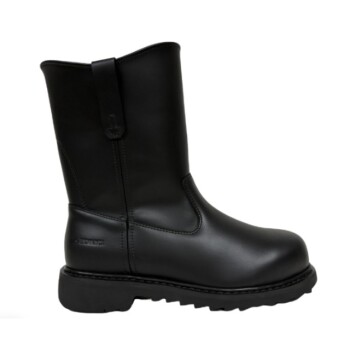
High-performance midsole materials stabilize the lower limb by providing critical physical torque support. By utilizing advanced compounds like high-elastic EVA (Ethylene-Vinyl Acetate) or Polyurethane, these midsoles create a structural foundation that limits excessive foot rotation, ensuring the ankle and knee joints maintain consistent, aligned movement patterns.
Core Takeaway Midsole stability is not just about comfort; it is about securing the kinetic chain. By mechanically correcting foot imbalances like over-pronation, these materials prevent the upstream instability that leads to joint strain, secondary pain, and premature fatigue.
The Mechanics of Midsole Stability
Material Composition
Professional training and outdoor footwear rely on specific high-performance materials to function. The most common and effective compounds used are high-elastic EVA and Polyurethane.
Providing Physical Torque Support
The primary mechanism for stability in these materials is physical torque support. Rather than simply squishing under weight, these materials provide resistance against twisting forces.
Controlling Foot Rotation
This structural rigidity is essential for controlling foot mechanics. It explicitly prevents excessive over-pronation (rolling inward) or supination (rolling outward) during the foot strike.
Impact on the Lower Limb Kinetic Chain
Aligning the Joints
Stability at the foot dictates the alignment of the leg. By controlling the foot's rotation, high-performance midsoles ensure that the ankle and knee joints maintain consistent, linear movement rather than twisting under load.
Reducing Structural Imbalance
When the foot is unstable, the body compensates, leading to mechanical structural imbalances. Proper midsole support neutralizes these imbalances at the source.
Minimizing Secondary Pain
By stabilizing the kinetic chain, these materials reduce secondary pain and fatigue. This protects the user from injuries caused by the repetitive strain of misalignment.
Understanding the Trade-offs
Support vs. Shock Absorption
While stability focuses on alignment, it must be balanced with impact management. As noted in logistics safety footwear, features like shock absorption are distinct from stability but equally vital for reducing fatigue in high-intensity environments.
The Limits of Material
Even high-performance materials like EVA and Polyurethane are subject to wear. To maintain the sustainable productivity and protection levels described, footwear must be monitored for material compression, which compromises stability over time.
Making the Right Choice for Your Goal
To select the correct footwear, you must balance the need for structural control against the intensity of your environment.
- If your primary focus is Joint Alignment: Prioritize footwear featuring high-elastic EVA or Polyurethane to provide the physical torque support needed to prevent over-pronation.
- If your primary focus is Fatigue Management: Look for professional-grade options that combine stability with superior shock absorption to minimize impact during high-frequency tasks.
The right midsole material acts as an external skeleton for your foot, preserving your energy and protecting your joints from the ground up.
Summary Table:
| Feature | High-Performance Midsole Material | Impact on Stability |
|---|---|---|
| Core Materials | High-elastic EVA, Polyurethane | Provides a rigid structural foundation |
| Primary Mechanism | Physical Torque Support | Resists twisting forces and foot rotation |
| Mechanical Benefit | Limits Over-pronation | Maintains linear ankle and knee alignment |
| Long-term Outcome | Kinetic Chain Protection | Minimizes secondary joint pain and fatigue |
Elevate Your Product Line with 3515’s Advanced Footwear Engineering
As a premier large-scale manufacturer serving global distributors and brand owners, 3515 specializes in high-performance footwear construction. We integrate advanced EVA and Polyurethane midsole technologies to ensure every pair offers superior lower limb stability and torque support.
Our comprehensive production capabilities include:
- Flagship Safety Shoes: Engineered for maximum protection and durability.
- Performance Gear: Tactical boots, outdoor shoes, and training sneakers.
- Professional Footwear: Dress & Formal shoes designed for bulk requirements.
Partner with us to provide your customers with footwear that prevents fatigue and secures the kinetic chain. Contact us today to discuss your bulk manufacturing needs!
References
- A. Mougui, I. El Bouchti. AB1183 NEUROPATHIC PAIN IN PRIMARY KNEE OSTEOARTHRITIS. DOI: 10.1136/annrheumdis-2023-eular.4771
This article is also based on technical information from 3515 Knowledge Base .
Related Products
- High Performance Fire-Retardant Waterproof Safety Boots
- Premium Wholesale Waterproof Safety Boots High Performance Protection for Industrial Markets
- Wholesale Durable & Breathable Training Shoes for Custom Brands
- Lightweight Breathable Training Shoes for Wholesale & Custom OEM Manufacturing
- Custom OEM Training Shoes Wholesale Manufacturer Durable & Breathable
People Also Ask
- Why are waterproof safety boots recommended for certain work environments? Essential Protection for Wet & Hazardous Jobs
- What roles do 3D vision systems and industrial robots play in the manufacturing of fire safety boots? Smart Automation
- What's the difference between waterproof and water-resistant boots? Choose the Right Footwear for Your Environment
- What are the primary benefits of incorporating waterproof technology into professional and outdoor boots? Boost Value
- How does boot construction affect waterproofing? The Science Behind Truly Dry Feet