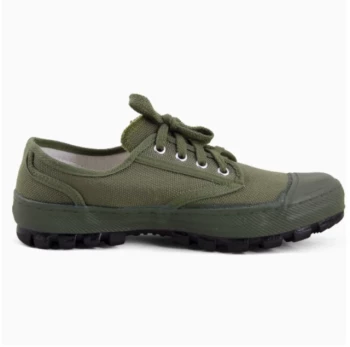
For individuals with flat feet, the most effective work shoes are stability shoes designed with strong, structured arch support. These shoes are specifically engineered to counteract overpronation—the tendency for the foot to roll inward—which is the primary source of discomfort and fatigue associated with flat feet. By providing proper alignment, they minimize strain on your feet, ankles, and knees during long hours of standing or walking.
The central challenge for flat feet is managing the foot's alignment, not just cushioning it. The ideal work shoe provides firm, structural support to prevent the arch from collapsing and the foot from rolling inward, which is far more effective than a soft, pillow-like insole for all-day comfort.
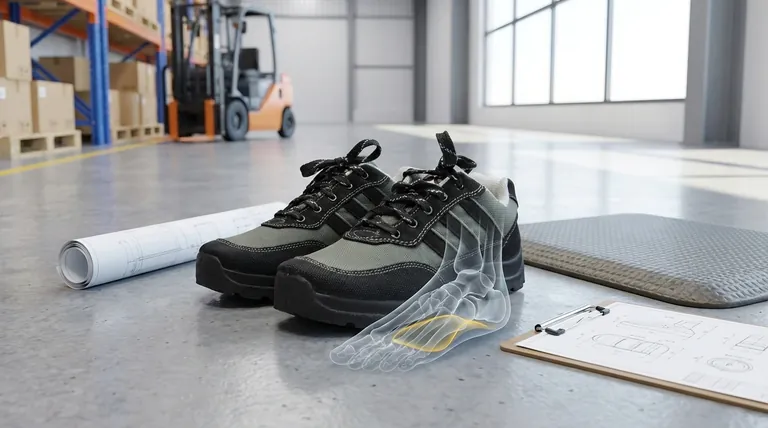
The Core Problem: Understanding Overpronation
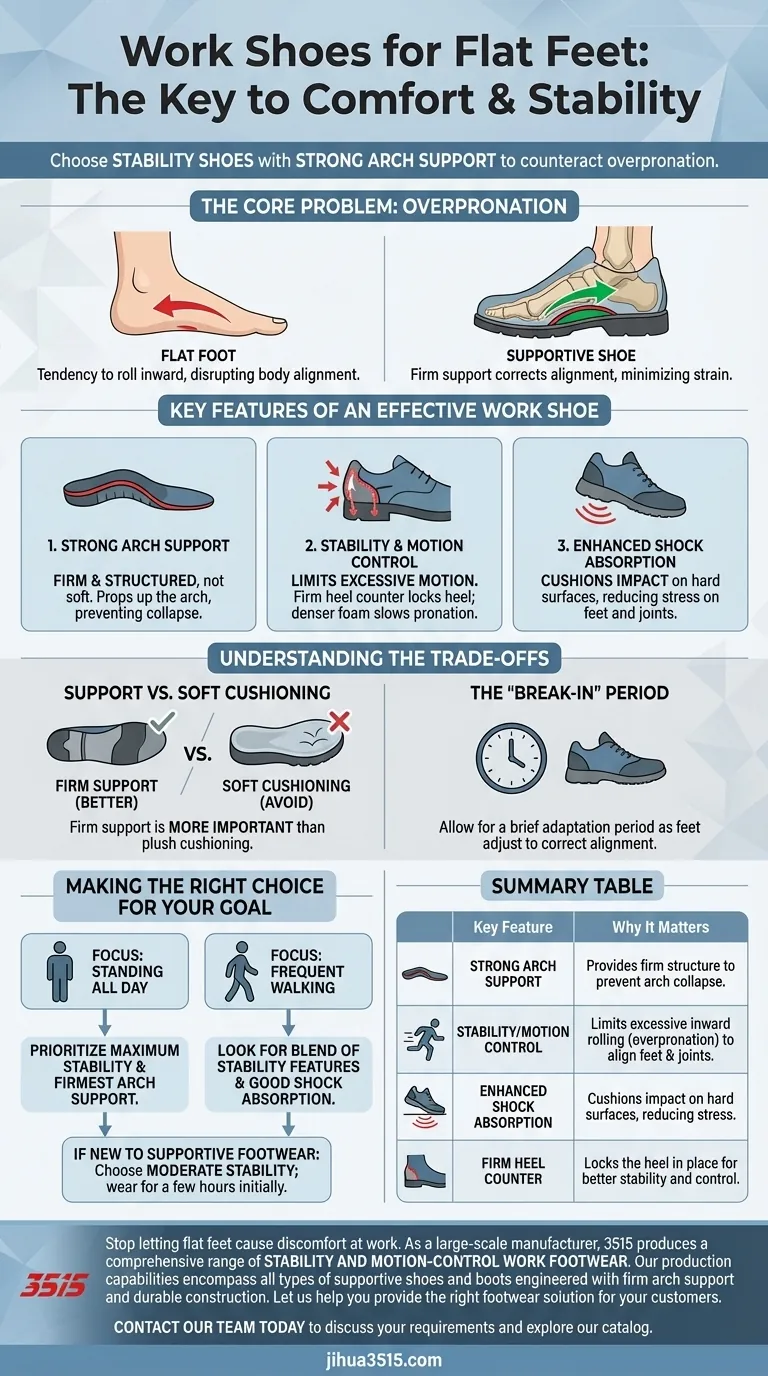
To select the right shoe, it's essential to understand the biomechanical issue you are trying to solve. The problem isn't just the lack of an arch; it's the chain reaction that this causes.
What "Flat Feet" Really Means
Flat feet, or fallen arches, occur when the tendons that support the arch of the foot weaken. This causes the entire sole of the foot to come into near-complete contact with the ground when standing.
The Impact of Overpronation
Without a supportive arch, the foot and ankle have a tendency to roll excessively inward with each step. This movement, known as overpronation, disrupts your body's natural alignment and can lead to strain not just in the feet, but also in the ankles, shins, knees, and even the lower back.
Key Features of an Effective Work Shoe
The right work shoe acts as an external support system for your foot. Look for these specific features to ensure you get the stability you need.
Feature 1: Strong Arch Support
This is the most critical feature. The shoe's arch support should be firm and structured, not soft and flimsy. Its purpose is to prop up the arch, preventing it from collapsing under your body weight throughout the day.
Feature 2: Stability and Motion Control
Stability shoes are built with specific technologies to limit excessive foot motion. This often includes a firm heel counter (the cup at the back of the shoe) to lock your heel in place and denser foam on the inner side of the midsole to slow the rate of pronation.
Feature 3: Enhanced Shock Absorption
While support is the priority, good shock absorption is also important for workplace comfort. A quality midsole will cushion the impact of walking on hard surfaces, reducing the overall stress on your feet and joints.
Understanding the Trade-offs
Choosing the right shoe often means rethinking what "comfort" feels like. It's crucial to avoid common misconceptions.
Support vs. Soft Cushioning
Many people equate comfort with soft, pillow-like cushioning. For flat feet, this is a mistake. An overly soft shoe will allow your foot to overpronate just as it would barefoot, offering no corrective support. Firm support is more important than plush cushioning.
The "Break-In" Period
A truly supportive shoe may feel unusual or even slightly rigid at first. This is often because it is forcing your foot into a more correct alignment. Allow for a brief adaptation period as your feet and body adjust to the new support.
Making the Right Choice for Your Goal
Your specific work environment and daily tasks should guide your final selection.
- If your primary focus is standing all day: Prioritize shoes with maximum stability and the firmest arch support to prevent the fatigue that comes from your arches slowly collapsing.
- If your primary focus is frequent walking: Look for a blend of strong stability features and good shock absorption to reduce the repetitive impact of each step.
- If you are new to supportive footwear: Choose a moderate stability shoe and consider wearing it for a few hours at a time initially to allow your feet to adapt to the new alignment.
Ultimately, selecting your work shoe based on its structural support, not just its initial softness, is the key to managing flat feet and ensuring long-term comfort at work.
Summary Table:
| Key Feature | Why It Matters for Flat Feet |
|---|---|
| Strong Arch Support | Provides a firm structure to prop up the arch and prevent collapse. |
| Stability/Motion Control | Limits excessive inward rolling (overpronation) to align feet and joints. |
| Enhanced Shock Absorption | Cushions impact on hard surfaces, reducing stress on feet and knees. |
| Firm Heel Counter | Locks the heel in place for better stability and control. |
Stop letting flat feet cause discomfort at work. As a large-scale manufacturer, 3515 produces a comprehensive range of stability and motion-control work footwear designed specifically for the needs of distributors, brand owners, and bulk clients. Our production capabilities encompass all types of supportive shoes and boots engineered with firm arch support and durable construction. Let us help you provide the right footwear solution for your customers. Contact our team today to discuss your requirements and explore our catalog.
Visual Guide
Related Products
- Durable Leather Moc Toe Work Boots for Wholesale & Custom Manufacturing
- Durable Canvas Work Shoes with Rubber Lug Sole | Wholesale Manufacturer
- Premium Lightweight Safety Shoes for Wholesale & Bulk Orders
- Durable Leather Safety Boots for Wholesale & Custom OEM Manufacturing
- Durable Leather Work Boots for Wholesale & Custom OEM Manufacturing
People Also Ask
- What are moc toe work boots designed for? Superior Comfort and Mobility for Tradespeople
- What are the key features to look for when purchasing moc toe boots? A Guide to Durability & Fit
- How did moc toe boots originate? A Legacy of Workwear Durability and Style
- What clothing items complement the Outdoorsman/Heritage Look with moc toe boots? Build a Timeless, Rugged Wardrobe
- What types of outfits can moc toe boots be worn with? Versatile Style Guide