
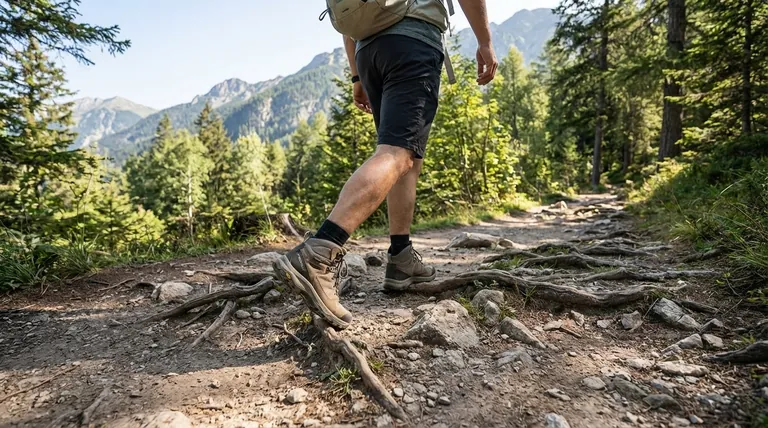
At their core, mid-height hiking shoes are the versatile workhorses of the trail. They are ideally suited for day trips on regular, established trail surfaces while you are carrying a light backpack. This design provides a crucial balance, offering more ankle support than a low-cut shoe without the weight and rigidity of a full hiking boot.
The key to understanding mid-height shoes is recognizing their balance. They provide essential ankle support for uneven terrain and light loads, making them the default, reliable choice for the vast majority of day hikes and short backpacking trips.
The Purpose of the Mid-Height Design
The "mid" designation refers to the height of the cuff, which typically comes up to and covers the ankle bones. This specific design directly influences the shoe's performance, protection, and ideal use case.
Balancing Support and Flexibility
The primary benefit of the mid-height cut is ankle support. By wrapping around the ankle, the shoe helps prevent twists and rolls on rocky or uneven ground.
However, it achieves this without the extreme stiffness of a full boot, allowing for a more natural and flexible stride on less demanding terrain.
Protection from Trail Hazards
The higher cuff acts as a small gaiter, providing a better seal against debris like pebbles, sand, and twigs from entering your shoe.
This design also offers more protection from light water splashes when crossing small streams or walking through dewy vegetation compared to a low-cut model.
Managing Pack Weight
Mid-height shoes are engineered to support your body plus the weight of a light backpack. A heavier, multi-day pack places significantly more stress on your feet and ankles.
For substantial loads, the more rigid sole and superior ankle support of a full hiking boot become necessary to prevent foot fatigue and injury.
Matching the Shoe to the Terrain
The term "regular trail surfaces" encompasses a wide range of common hiking conditions. Understanding this context helps clarify when a mid-height shoe is the optimal choice.
Ideal Terrain: Established Trails
Mid-height shoes excel on well-defined dirt paths, moderately rocky trails, and routes with variable inclines. This covers the majority of designated trails in local, state, and national parks.
Their versatility shines when a trail includes a mix of smooth sections, root-covered paths, and rocky scrambles.
When to Choose a Low-Cut Shoe
For walks on smooth, predictable trails or in areas with very clear ground, a low-cut shoe is often sufficient.
If you are carrying little to no weight in a backpack and prioritize speed and agility, the reduced weight and increased flexibility of a low-cut model are advantageous.
Understanding the Trade-offs
Choosing footwear is always about balancing competing factors. While versatile, mid-height shoes are not the perfect solution for every scenario.
The Cost of Support
The added ankle support and protection of a mid-height shoe come with a slight weight penalty and reduced ankle flexibility compared to low-cut shoes or trail runners.
The Limit on Load Bearing
It is critical to respect the shoe's design limitations. Overloading a mid-height shoe with a heavy, multi-day pack can overwhelm its structure, leading to insufficient support and potential foot pain.
Breathability vs. Protection
By covering more of your foot, a mid-height shoe is inherently less breathable than a low-cut alternative. In very hot and dry climates, this can be a significant comfort consideration.
Making the Right Choice for Your Hike
Selecting the correct footwear is one of the most important decisions you can make before a hike. Use your intended activity as your primary guide.
- If your primary focus is day hiking on varied trails with a light pack: The balanced support and protection of a mid-height shoe make it your most reliable choice.
- If your primary focus is speed and agility on smooth, well-groomed paths: A low-cut hiking shoe or trail runner will serve you better by minimizing weight.
- If your primary focus is multi-day backpacking with a heavy load: You need the superior support, durability, and stiffness of a full hiking boot to handle the terrain and weight.
Choosing the right footwear begins with an honest assessment of your pack and your path.
Summary Table:
| Feature | Ideal For | Not Ideal For |
|---|---|---|
| Terrain | Established trails, dirt paths, moderate rocks | Off-trail scrambling, technical mountaineering |
| Pack Weight | Light daypack (up to ~20 lbs / 9 kg) | Heavy multi-day backpacking loads |
| Ankle Support | Moderate support for uneven ground | Maximum support for heavy loads or weak ankles |
| Flexibility | Balanced flexibility for a natural stride | Maximum rigidity for rough, technical terrain |
Ready to find your perfect hiking footwear?
As a large-scale manufacturer, 3515 produces a comprehensive range of mid-height hiking shoes and boots for distributors, brand owners, and bulk clients. Our production capabilities ensure durable, high-performance footwear designed for the trails you love.
Let's discuss your needs: Contact our team today to explore our catalog and get a quote for your next order.
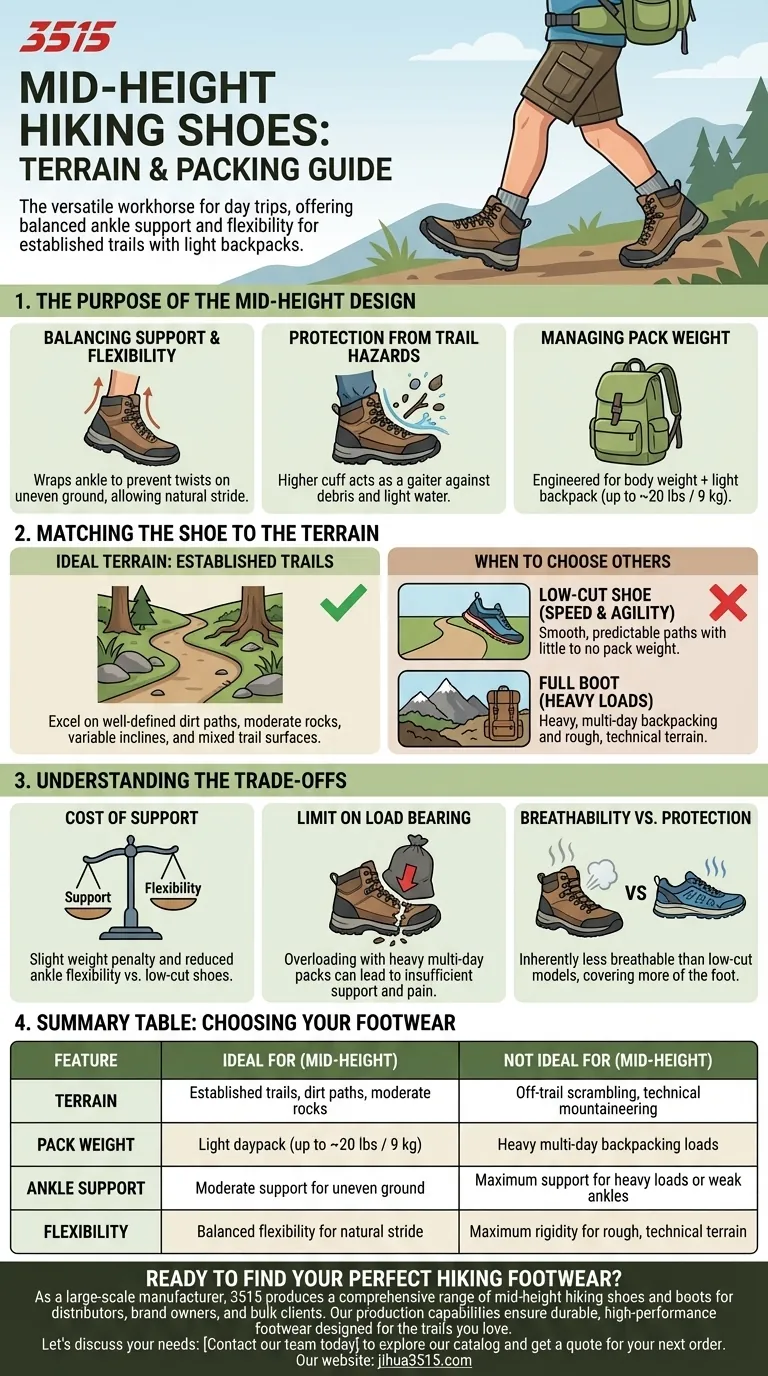
Visual Guide
Related Products
- Durable Rubber Sole Outdoor Shoes Wholesale & Custom Manufacturing
- Wholesale High-Traction Camo Boots - Custom Manufacturer for Brands
- Durable Leather High-Ankle Tactical Boots for Wholesale & Custom Manufacturing
- Wholesale Durable Camouflage Canvas Shoes with High-Traction Cleated Rubber Sole
- Durable Mid-Cut Tactical Boots for Wholesale & Private Label
People Also Ask
- What is the function of the sole in outdoor shoes? Find the Perfect Grip and Support
- What role do outdoor shoes and sneakers play in navigating external terrains? Engineered Stability for Every Surface
- How is AI utilized in the design of outdoor and safety footwear? Harnessing Big Data for Market-Driven Shoe Innovation
- Why is durability important when selecting outdoor shoes? A Guide to Safety & Long-Term Value
- What are the key components of outdoor shoes that affect comfort and sturdiness? A Guide to Durable, High-Performance Footwear














