The short answer is clear: Low-cut hiking shoes are best suited for well-maintained, smooth trails where the ground is relatively clear. They are the right choice when you are carrying a lightweight backpack or no pack at all, prioritizing mobility and comfort over rugged protection.
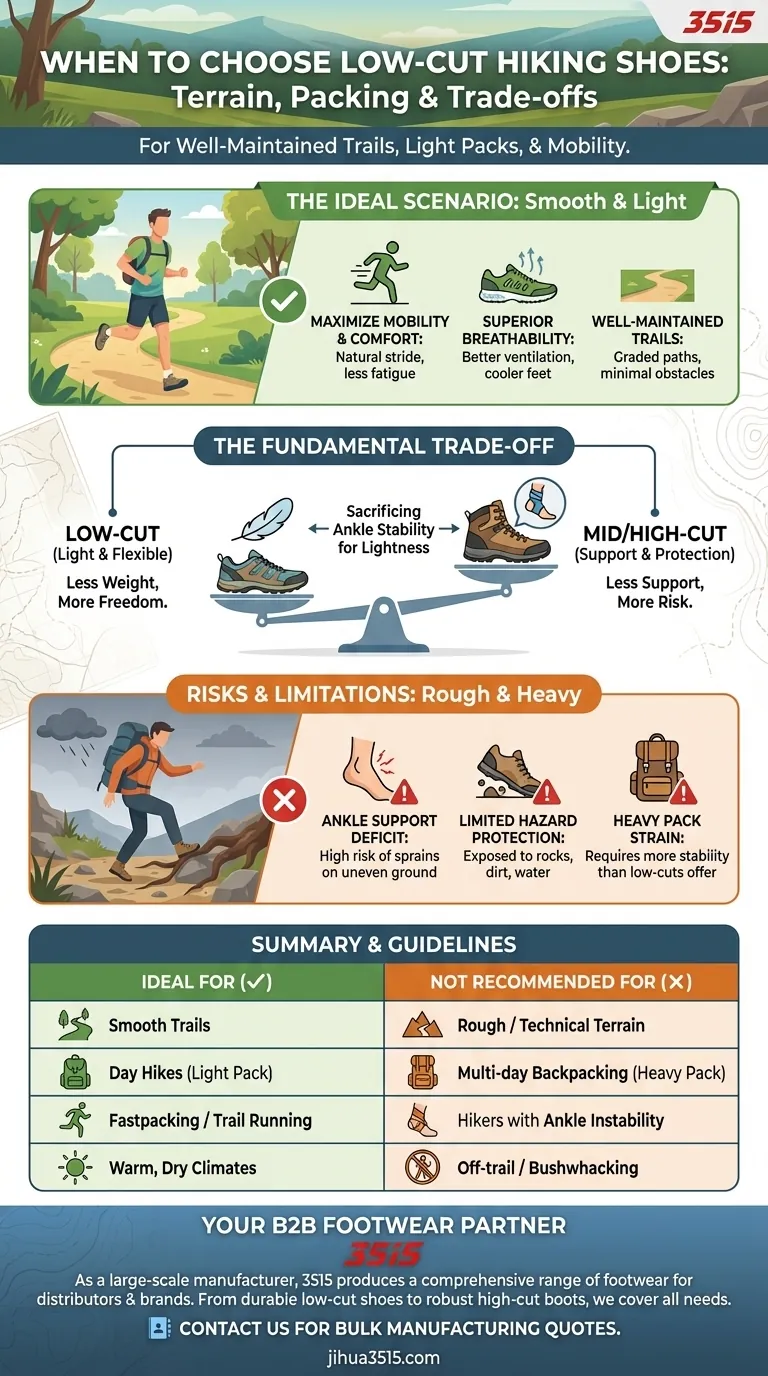
The fundamental trade-off with low-cut hiking shoes is sacrificing ankle support and protection for significantly less weight and greater flexibility. This makes them an excellent tool for specific conditions but a potential liability on challenging terrain.
The Case for Low-Cut Hiking Shoes
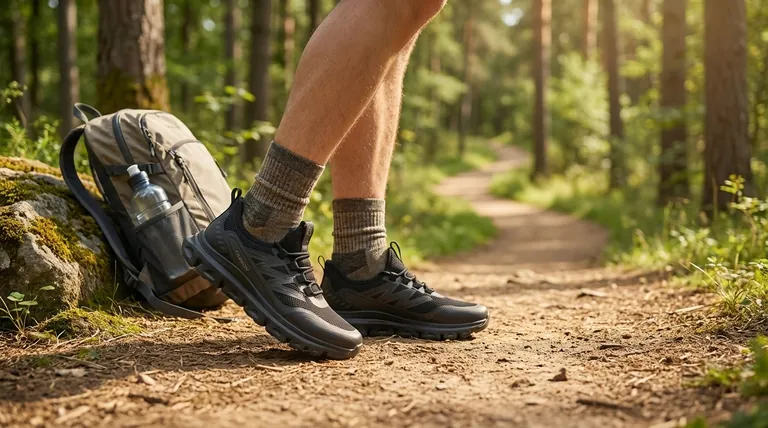
Low-cut hiking shoes, often resembling trail running shoes, are designed with a specific purpose in mind: moving efficiently and comfortably on predictable terrain. Their advantages are most apparent in the right environment.
Maximizing Mobility and Comfort
The primary benefit of a low-cut design is the freedom of movement it provides for your ankle. This allows for a more natural stride, which can feel less restrictive and more comfortable over many miles.
Their lightweight construction also reduces fatigue, allowing you to move faster and conserve energy on your hike.
Superior Breathability
With less material covering your foot and ankle, low-cut shoes offer better ventilation. This is a significant advantage in warm or dry climates, helping to keep your feet cooler and reducing the chance of blisters caused by sweat.
The Ideal Conditions
Low-cut shoes excel on smooth trails, dirt paths, and graded walkways. They are perfect for day hikes in local parks or on established routes where the risk of encountering rocks, roots, or other obstacles is minimal.
Understanding the Trade-offs and Risks
Choosing a low-cut shoe means consciously accepting certain limitations. Understanding these downsides is critical to preventing injury and ensuring you have the right footwear for your objective.
The Ankle Support Deficit
This is the most significant drawback. The absence of a supportive collar around the ankle dramatically increases the risk of twists and sprains, especially on uneven or rocky ground.
Inexperienced hikers or those with a history of ankle instability should be particularly cautious, as a single misstep can easily lead to injury.
Limited Protection from Hazards
A low-cut design offers very little protection from trail hazards. Your ankles are exposed to scrapes from rocks and brush, and it is much easier for dirt, pebbles, and water to get inside your shoes.
For this reason, they are not suitable for multi-day treks or hikes through technical, off-trail environments.
The Critical Role of Pack Weight
Your footwear must support the total weight you are carrying. A lightweight daypack places minimal stress on your joints, which a flexible low-cut shoe can handle.
However, once you add the weight of a multi-day backpacking pack, your center of gravity shifts and the strain on your ankles and feet increases dramatically. This added weight demands the stability and support that only a mid or high-cut boot can provide.
Making the Right Choice for Your Hike
Selecting the correct footwear is about aligning your gear with your specific goal. Use the following guidelines to make an informed decision.
- If your primary focus is day hiking on well-maintained trails: A low-cut hiking shoe is an excellent choice for its comfort and light weight.
- If your primary focus is moving fast on non-technical ground: The mobility and breathability of a low-cut shoe are ideal for fastpacking or trail running.
- If your primary focus is backpacking or hiking on rough, unpredictable terrain: You must choose a mid or high-cut boot to get the necessary ankle support and protection.
Choosing the right shoe is the first step to ensuring your safety and enjoyment on the trail.
Summary Table:
| Ideal For | Not Recommended For |
|---|---|
| Well-maintained, smooth trails | Rough, rocky, or technical terrain |
| Day hikes with a light pack | Multi-day backpacking with a heavy pack |
| Fastpacking and trail running | Hikers with ankle instability |
| Warm, dry climates for breathability | Off-trail or bushwhacking routes |
Need the Perfect Hiking Shoe for Your Trail?
As a large-scale manufacturer, 3515 produces a comprehensive range of footwear for distributors, brand owners, and bulk clients. Whether you need durable low-cut shoes for light trails or robust high-cut boots for challenging terrain, our production capabilities encompass all types of shoes and boots.
Let us help you equip your customers with the right gear. Contact our team today to discuss your manufacturing needs and get a quote.
Visual Guide
Related Products
- Durable Rubber Sole Outdoor Shoes Wholesale & Custom Manufacturing
- Wholesale High-Traction Camo Boots - Custom Manufacturer for Brands
- Wholesale Durable Camouflage Canvas Shoes with High-Traction Cleated Rubber Sole
- Lightweight Breathable Training Shoes for Wholesale & Custom OEM Manufacturing
- Premium Lightweight Safety Shoes for Wholesale & Bulk Orders
People Also Ask
- What is the function of the sole in outdoor shoes? Find the Perfect Grip and Support
- What role do outdoor shoes and sneakers play in navigating external terrains? Engineered Stability for Every Surface
- How is AI utilized in the design of outdoor and safety footwear? Harnessing Big Data for Market-Driven Shoe Innovation
- Why is durability important when selecting outdoor shoes? A Guide to Safety & Long-Term Value
- What are the key components of outdoor shoes that affect comfort and sturdiness? A Guide to Durable, High-Performance Footwear