
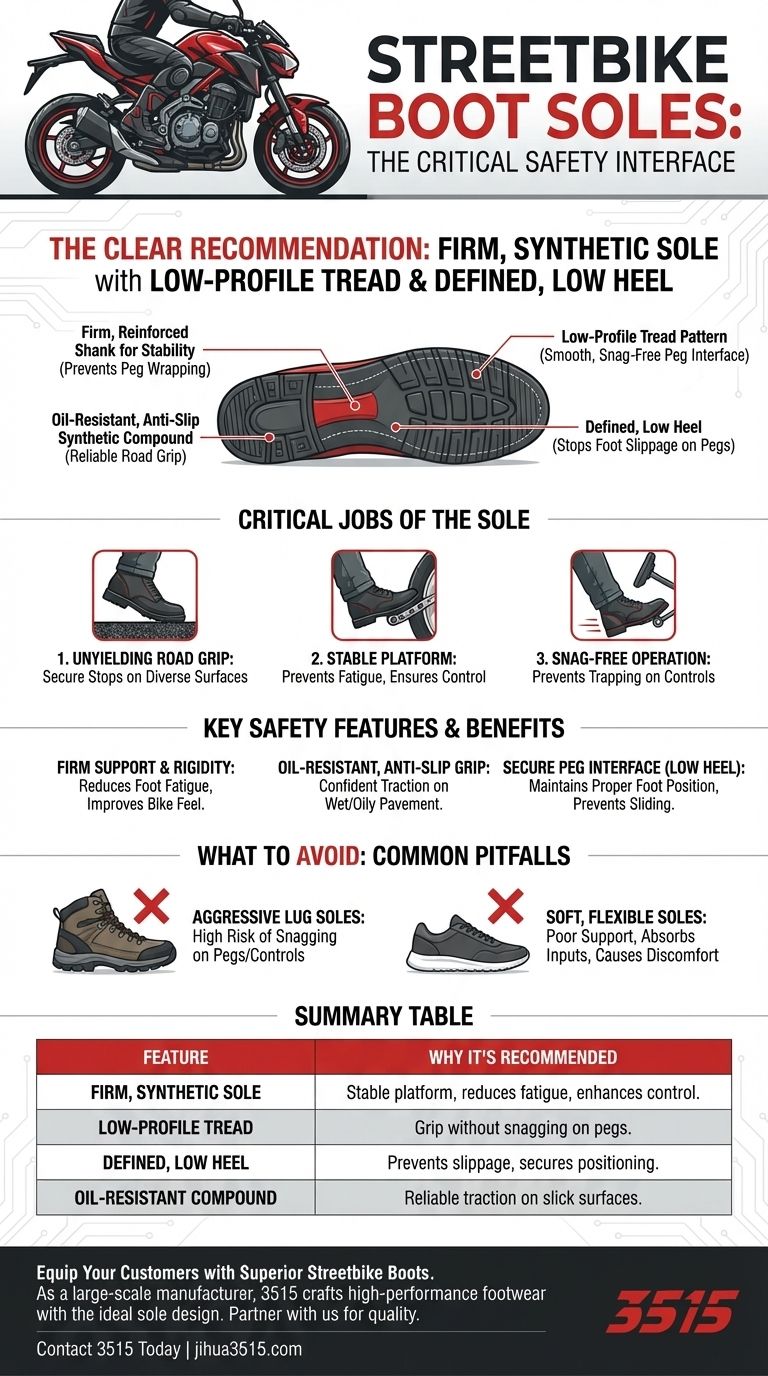
For streetbike boots, the clear recommendation is a firm, synthetic sole with a low-profile tread pattern and a defined, low heel. This specific design is not arbitrary; it directly addresses the three critical jobs a motorcycle boot sole must perform: gripping the pavement securely during stops, providing a stable platform on the footpegs, and preventing your foot from snagging on the controls.
The sole of a motorcycle boot is a piece of technical equipment, not just a walking surface. The ideal design balances the need for unyielding grip on the road with a smooth, predictable interface with the motorcycle's footpegs, all while providing the rigidity needed for control and comfort.
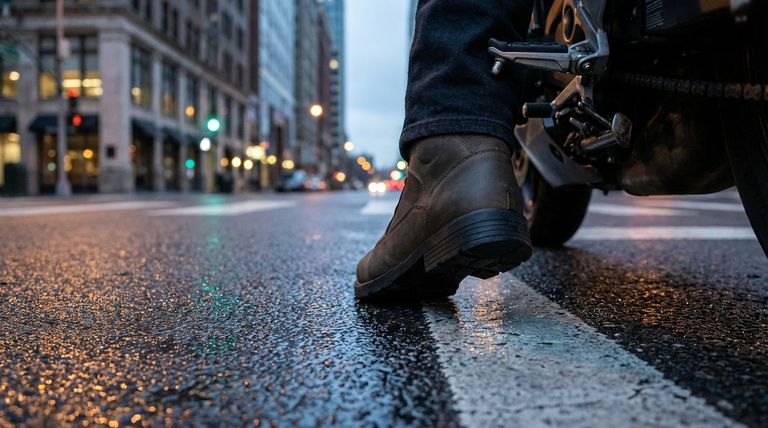
Why Sole Design is a Critical Safety Feature
A boot's sole is your direct connection to both the machine and the ground. Its design characteristics have a significant impact on your control, comfort, and safety during every ride.
The Need for Firmness and Support
A soft, flexible sole, like that of a sneaker, will bend and deform under the pressure of your body weight on the narrow footpegs. This leads to foot fatigue and discomfort on longer rides.
A proper streetbike boot sole is firm and reinforced, often with an integrated shank. This rigidity prevents the sole from wrapping around the peg, providing a stable platform for you to apply pressure and control the bike.
Grip Where It Counts: The Road
When you put your foot down at a stoplight, you need absolute confidence that it will not slip. The sole material should be a durable, synthetic compound that is both oil-resistant and anti-slip.
This ensures predictable traction on various urban surfaces, from clean, dry asphalt to pavement with oil residue or rain.
A Secure Interface with the Footpeg
The sole's interaction with the footpeg is crucial. It should allow for easy movement and repositioning of your feet but also provide security.
This is achieved with a low, wide heel (around half an inch or more). The heel acts as a stop, preventing your foot from sliding too far forward on the peg and ensuring it remains in the proper position.
What to Avoid: Common Sole Pitfalls
Choosing a boot with the wrong type of sole can introduce unnecessary risk and discomfort. Certain designs are poorly suited for the specific demands of street riding.
The Hazard of Aggressive Lug Soles
Deep, aggressive tread patterns, often called lug soles (common on hiking or work boots), are a significant hazard. While excellent for traction on uneven, off-road terrain, these deep channels can easily snag or catch on the footpegs.
This can prevent you from getting your foot down quickly at a stop or, in a worst-case scenario, trap your foot on the bike during an incident.
The Problem with Soft, Flexible Soles
As mentioned, boots without a rigid sole structure fail to provide the necessary support. They absorb control inputs, reduce your feel for the bike, and cause significant discomfort by concentrating pressure on one small part of your foot.
The Misconception of a "Smooth" Sole
Some guides mention a "smooth" sole to prevent catching, but this can be misleading. A completely smooth, featureless sole (like a dress shoe) is dangerous, offering poor grip on imperfect road surfaces.
The ideal is a low-profile tread design. It provides the necessary channels for grip on wet or oily pavement without having the deep lugs that can snag on your pegs.
How to Apply This to Your Search
When evaluating a pair of boots, focus on these key characteristics of the sole to ensure it meets the demands of street riding.
- If your primary focus is daily commuting or touring: Prioritize a durable, oil-resistant synthetic sole with a defined heel and a tread pattern that balances grip with a snag-free design for all-weather confidence.
- If your primary focus is performance or track riding: Look for the firmest sole available, often with a thinner profile, to maximize feedback and precise control through the footpegs.
- If your primary focus is cruiser riding: Ensure the boot has a distinct and sturdy heel that can securely hook onto forward-mounted footpegs, combined with a robust anti-slip sole.
Ultimately, selecting a boot with the right sole transforms it from simple footwear into an essential piece of high-performance safety equipment.
Summary Table:
| Feature | Why It's Recommended |
|---|---|
| Firm, Synthetic Sole | Provides a stable platform on footpegs, reduces foot fatigue, and enhances control. |
| Low-Profile Tread | Ensures grip on wet or oily roads without snagging on motorcycle pegs. |
| Defined, Low Heel | Prevents foot slippage on pegs and secures proper foot positioning for safety. |
| Oil-Resistant Compound | Delivers reliable traction on various urban surfaces, including slick pavement. |
Ready to equip your customers with superior streetbike boots? As a large-scale manufacturer, 3515 produces a comprehensive range of high-performance motorcycle footwear for distributors, brand owners, and bulk clients. Our expertise in crafting boots with the ideal sole design—firm, grippy, and snag-free—ensures safety and comfort for every rider. Let us help you deliver the quality your market demands. Contact 3515 today to discuss your manufacturing needs!
Visual Guide
Related Products
- Durable Goodyear Welt Leather Work Boots for Wholesale & Private Label
- Wholesale Tactical Boots High-Traction & Reflective for Bulk & Brand Orders
- Puncture-Resistant Velcro Safety Boots for Wholesale & Custom Manufacturing
- Heavy-Duty Waterproof Nubuck Safety Boots Safety Shoes for Bulk Supply
- Premium Wholesale Tactical Style Safety Shoes Boots with Quick Lacing
People Also Ask
- What is the difference between full-grain and top-grain leather? Premium Material Guide for Boot Manufacturers
- What are the advantages of leather as an upper material for work boots? Unmatched Durability & Custom Comfort
- Why is it important to waterproof leather work boots? Protect Your Investment and Performance
- How should new leather work boots be broken in? A Guide to Comfort and Durability
- What are the advantages of leather uppers in work boots? Unmatched Durability & Protection



















