
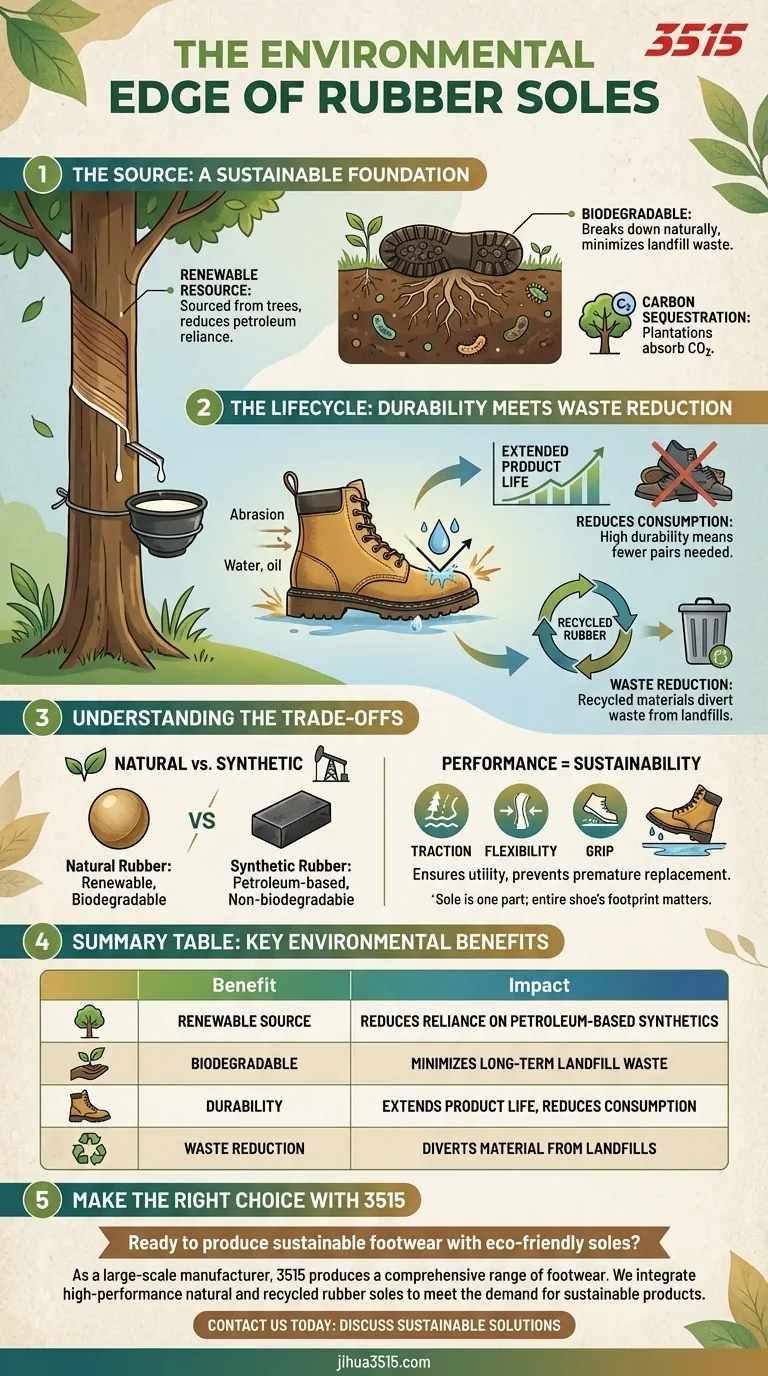
To put it simply, the primary environmental benefits of rubber soles stem from the use of natural rubber, which is a renewable and biodegradable material. Sourced from trees, it exists within nature's lifecycle, and the ability to incorporate recycled rubber further reduces landfill waste and contamination.
The true environmental advantage of a rubber sole isn't just about its natural origin. It's the powerful combination of a sustainable source, a biodegradable end-of-life, and exceptional real-world durability that reduces the overall consumption of footwear.
The Source: A Sustainable Foundation
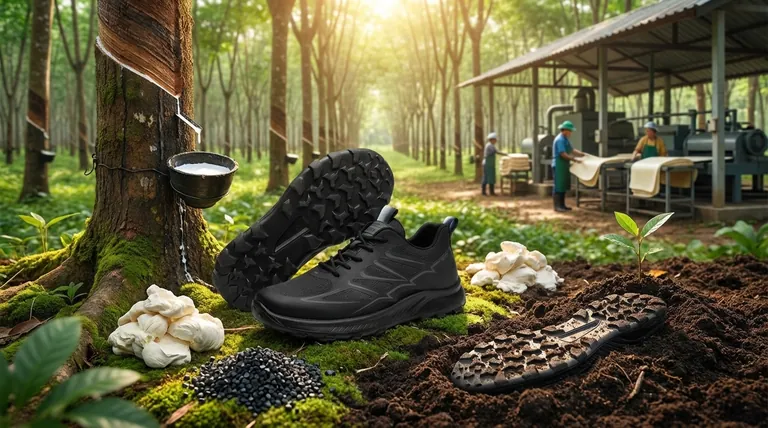
The environmental story of a rubber sole begins with its raw material. Unlike many synthetic alternatives, natural rubber offers a clear advantage.
A Renewable Resource
Natural rubber is harvested as latex from the Hevea brasiliensis tree. This makes it a renewable resource, in stark contrast to synthetic materials that are typically derived from non-renewable petroleum.
The Biodegradability Factor
Because it originates from a natural source, natural rubber is biodegradable. This means it can break down and return to the earth, fitting into a natural cycle rather than persisting in a landfill for centuries.
Potential for Carbon Sequestration
The cultivation of rubber trees itself can be beneficial. Like other forests, rubber plantations can play a role in sequestering carbon from the atmosphere, helping to mitigate climate change.
The Lifecycle: Durability Meets Waste Reduction
A material's sustainability is also measured by how long it lasts and what happens to it after its initial use. Rubber excels in both areas.
Durability Reduces Consumption
A key principle of sustainability is longevity. Rubber soles are known for their high durability, abrasion resistance, and water resistance. A longer-lasting sole means fewer pairs of shoes are manufactured and discarded over time.
The Power of Recycled Rubber
The footwear industry can also use recycled rubber in new soles. This practice directly reduces the amount of material sent to landfills and minimizes the environmental impact associated with waste.
Understanding the Trade-offs
While rubber offers significant benefits, a truly informed perspective requires acknowledging the complete picture. Objectivity is crucial when evaluating sustainability claims.
Natural vs. Synthetic
It is critical to distinguish between natural rubber and synthetic rubber. While natural rubber holds the benefits discussed, synthetic rubber is a petroleum product and does not share the same renewable or biodegradable qualities. Many soles use a blend, so the environmental benefit is proportional to the natural rubber content.
The Sole is Not the Whole Shoe
A sustainable sole is only one component. The environmental footprint of a shoe also depends on the upper materials, the glues used for assembly, and the manufacturing processes involved.
Performance Is a Sustainability Feature
A shoe that fails to perform its function will be discarded, negating its material benefits. Rubber's superior traction, flexibility, and grip on wet or oily surfaces are not just performance features—they ensure the product remains useful and avoids premature replacement.
Making the Right Choice for Your Goal
When selecting footwear, your personal priorities will guide your decision. Use the material's lifecycle as your framework.
- If your primary focus is material origin: Seek out products that explicitly state a high percentage of natural, sustainably-sourced rubber in their soles.
- If your primary focus is reducing waste: Look for brands that incorporate recycled rubber into their sole compounds.
- If your primary focus is longevity: Choose a durable rubber sole designed for your specific activity to maximize the shoe's lifespan and reduce overall consumption.
Ultimately, choosing a truly sustainable option means looking beyond a single material and considering how durability, origin, and end-of-life all contribute to a smaller environmental footprint.
Summary Table:
| Benefit | Key Feature | Impact |
|---|---|---|
| Renewable Source | Sourced from rubber trees | Reduces reliance on petroleum-based synthetics |
| Biodegradable | Breaks down naturally | Minimizes long-term landfill waste |
| Durability | High abrasion & water resistance | Extends product life, reduces consumption |
| Waste Reduction | Use of recycled rubber | Diverts material from landfills |
Ready to produce sustainable footwear with eco-friendly soles?
As a large-scale manufacturer, 3515 produces a comprehensive range of footwear for distributors, brand owners, and bulk clients. Our production capabilities encompass all types of shoes and boots, and we can integrate high-performance natural and recycled rubber soles into your designs to meet the growing demand for sustainable products.
Contact us today to discuss how we can help you create durable, environmentally conscious footwear that your customers will love.
Visual Guide
Related Products
- Durable Rubber Sole Outdoor Shoes Wholesale & Custom Manufacturing
- Durable Rubber-Soled Utility Shoes for Wholesale & Custom Brand Manufacturing
- Wholesale Durable Camo Canvas Shoes with High-Traction Rubber Soles
- Wholesale Durable Camouflage Canvas Shoes with High-Traction Cleated Rubber Sole
- Durable Canvas Work Shoes with Rubber Lug Sole | Wholesale Manufacturer
People Also Ask
- What is the function of the sole in outdoor shoes? Find the Perfect Grip and Support
- What role do outdoor shoes and sneakers play in navigating external terrains? Engineered Stability for Every Surface
- How is AI utilized in the design of outdoor and safety footwear? Harnessing Big Data for Market-Driven Shoe Innovation
- Why is durability important when selecting outdoor shoes? A Guide to Safety & Long-Term Value
- What are the key components of outdoor shoes that affect comfort and sturdiness? A Guide to Durable, High-Performance Footwear

















