
The best socks for cowboy boots are over-the-calf models made from a breathable, moisture-wicking material like merino wool or a synthetic blend. These socks are designed to stay up all day, protect your skin from the boot shaft, and manage temperature to prevent blisters and discomfort.
The ideal cowboy boot sock isn't about a specific brand, but about a specific set of features. It must be tall enough to clear the boot top, structured enough to prevent bunching, and made of a material that can handle moisture effectively.

The Core Principles of a Good Boot Sock
Choosing the right sock is fundamental to the comfort and function of your cowboy boots. The wrong sock can quickly lead to chafing, blisters, and general discomfort, undermining the entire experience. Understanding the key features is more important than focusing on any single brand.
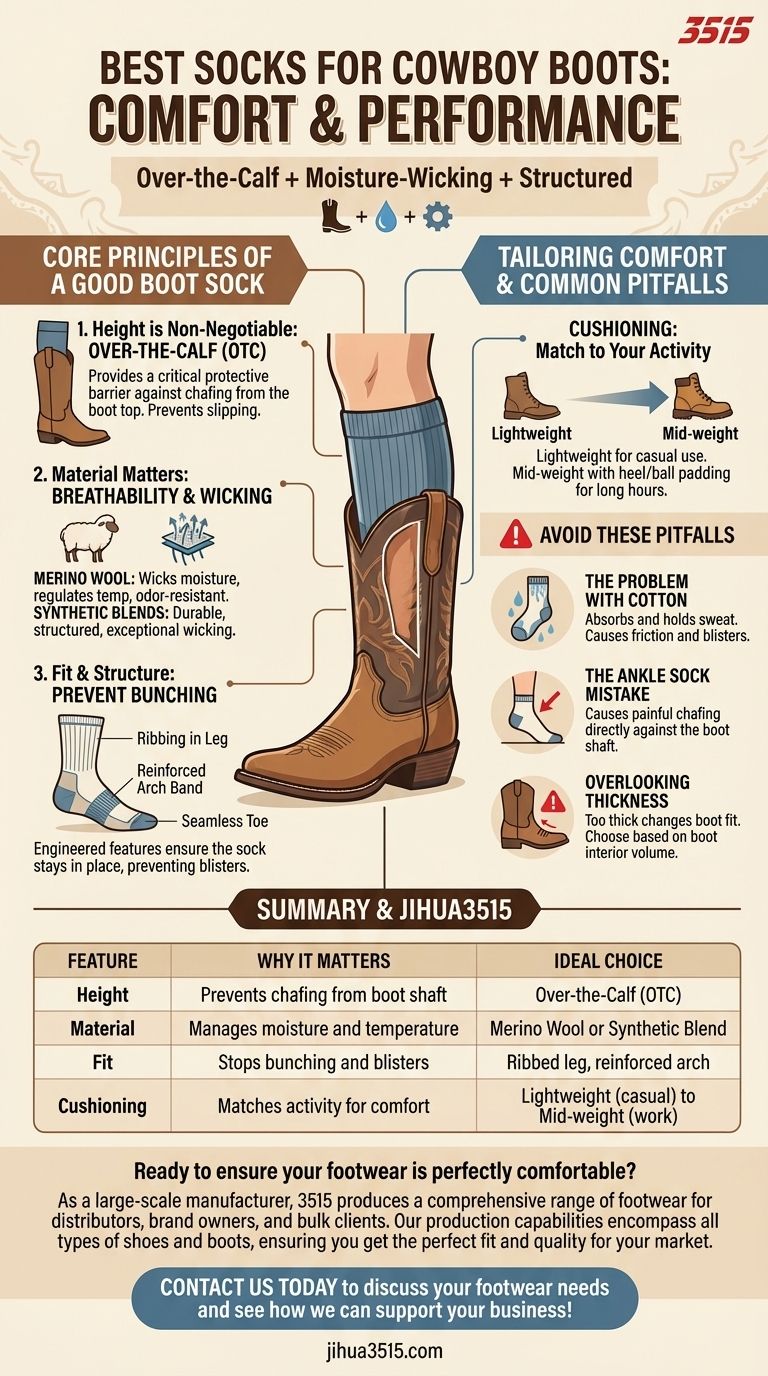
Height is Non-Negotiable: Over-the-Calf
The shaft of a cowboy boot will rub against your leg as you walk. An over-the-calf (OTC) sock provides a critical protective barrier between your skin and the boot's leather or lining.
This height ensures the sock's cuff sits well above the boot's opening, preventing it from slipping down inside the shaft. Socks that are too short, like ankle or crew cuts, will inevitably lead to irritation.
Material Matters: Breathability and Moisture Wicking
The material of your sock is the most important factor for all-day comfort, as your feet will be enclosed in a leather environment.
Merino wool is widely considered the premium choice. It excels at wicking moisture away from the skin, regulating temperature in both hot and cold conditions, and is naturally odor-resistant.
Synthetic blends (using materials like nylon, spandex, or polyester) are also excellent. They provide durability, structure, and exceptional moisture-wicking properties, often at a lower price point than wool.
Fit and Structure Prevent Bunching
A quality boot sock is engineered to stay in place. Look for features like ribbing in the leg, a reinforced arch band, and a seamless toe closure.
These elements provide structure, ensuring the sock hugs your foot and leg without constricting them. This secure fit is what prevents the material from bunching up at your toes or heel, which is a primary cause of blisters.
Cushioning: Tailoring Comfort to Your Activity
The level of cushioning should match how you use your boots. Cushioning provides both impact absorption and added durability.
For work boots or riding boots used for long hours, a mid-weight sock with targeted cushioning at the heel and ball of the foot is ideal. For fashion or casual boots, a lightweight or ultra-lightweight sock provides the necessary protection without adding bulk that could make your boots feel tight.
Common Pitfalls to Avoid
Making a poor sock choice is a frequent and easily avoidable mistake. Being aware of these common errors will ensure your boots remain comfortable for any occasion.
The Problem with Cotton
Avoid 100% cotton socks at all costs. Cotton is highly absorbent, meaning it soaks up sweat and holds it against your skin.
Once wet, cotton loses its shape, bunches easily, and creates a damp environment perfect for friction and blisters. It also takes a very long time to dry.
The Ankle Sock Mistake
Wearing ankle or crew socks with tall boots is a recipe for discomfort. The top edge of the boot shaft will chafe directly against your bare skin, causing painful irritation within a short period.
Overlooking Sock Thickness
A sock that is too thick can fundamentally change the fit of your boots, making them uncomfortably tight across the instep and toes.
Always consider the interior volume of your boots. If they are already snug, choose a lightweight sock. If they have some room, a mid-weight sock can provide a more secure fit.
Selecting the Right Sock for Your Needs
Your choice should be guided by your primary use for the boots. Different activities place different demands on your feet.
- If your primary focus is all-day work or riding: Prioritize a mid-weight merino wool blend with ample cushioning for maximum durability and moisture management.
- If your primary focus is casual or fashion wear: Opt for a lightweight merino wool or synthetic blend that offers breathability without adding unnecessary bulk.
- If your primary focus is managing heat and sweat: Look for an ultra-lightweight sock with a high percentage of technical synthetics or merino wool, engineered for superior wicking.
Ultimately, investing in purpose-built socks is as crucial as investing in the boots themselves for achieving true comfort and performance.
Summary Table:
| Feature | Why It Matters | Ideal Choice |
|---|---|---|
| Height | Prevents chafing from boot shaft | Over-the-Calf (OTC) |
| Material | Manages moisture and temperature | Merino Wool or Synthetic Blend |
| Fit | Stops bunching and blisters | Ribbed leg, reinforced arch |
| Cushioning | Matches activity for comfort | Lightweight (casual) to Mid-weight (work) |
Ready to ensure your footwear is perfectly comfortable?
As a large-scale manufacturer, 3515 produces a comprehensive range of footwear for distributors, brand owners, and bulk clients. Our production capabilities encompass all types of shoes and boots, ensuring you get the perfect fit and quality for your market.
Contact us today to discuss your footwear needs and see how we can support your business!
Visual Guide
Related Products
- Wholesale Waterproof Tactical Boots Custom Suede & High-Traction Soles
- Premium Wholesale Tactical Style Safety Shoes Boots with Quick Lacing
- Durable Waterproof Rain Boots | Custom Manufacturer for Wholesale & Brands
- High-Traction Suede Tactical Boots Wholesale & Custom Manufacturing
- Durable Leather Moc Toe Work Boots for Wholesale & Custom Manufacturing
People Also Ask
- What waterproof technology is used in tactical boots? Unlock All-Weather Performance & Protection
- What are the advantages and disadvantages of waterproof tactical boots? A Guide to the Key Trade-Offs
- What is the significance of waterproof functionality in tactical boots? Essential for Health & Performance
- What is the role of professional 3D medical imaging software in optimizing tactical boot design and performance?
- What features enhance breathability and comfort in tactical boots? A Guide to Superior Footwear Performance













