For leather goods, the clear recommendation is a non-oil-based leather conditioner. These products typically have a milky, creamy consistency and are often sold in a slim, round tin. Their primary purpose is to nourish the leather, keeping it supple and preventing it from drying out.
The goal is not merely to apply a product, but to follow a specific process: first clean the leather thoroughly, then nourish it with the right type of conditioner, and finally buff away the excess to activate its protective qualities.
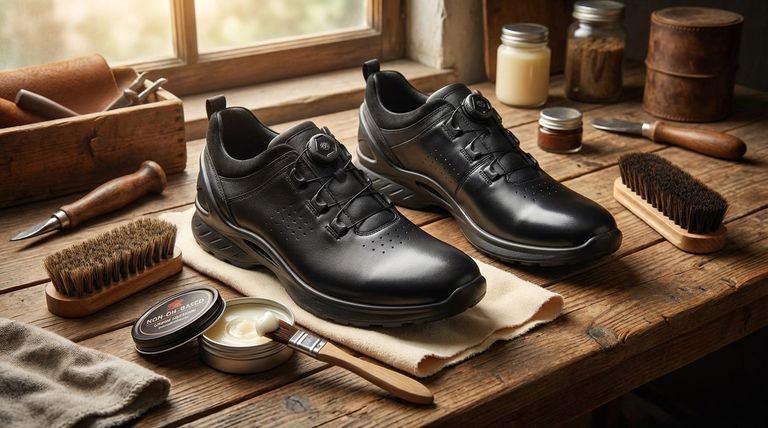
The Foundation of Leather Care: Clean First
Proper nourishment can only begin once the leather's pores are free of dirt and debris. Skipping this step can trap grime within the leather, causing long-term damage.
Start with a Clean Surface
For general cleaning, a simple damp cloth is all that is required. Gently wipe down the entire surface to remove any dust or light soil.
Removing Stubborn Dirt
If you encounter more stubborn dirt, use a stiff shoe brush. Its bristles can get into the grain of the leather to dislodge grime without scratching the surface.
Conditioner vs. Polish: Understanding the Goal
While often used interchangeably, conditioner and polish serve distinct functions. Understanding the difference is key to proper leather care.
The Role of a Leather Conditioner
A conditioner’s primary job is nourishment. It penetrates the leather's pores to restore the natural fats and oils that keep it flexible, supple, and resistant to water.
The recommended type is a non-oil-based cream. This formula provides deep conditioning without over-saturating or unnaturally darkening the leather.
The Role of a Leather Polish
A polish is primarily for surface protection and shine. While some polishes offer light conditioning, their main function is to create a final, buffed seal over the leather after it has been conditioned.
The Proper Application Technique for Conditioner
Applying conditioner correctly is just as important as choosing the right product. An improper technique can lead to a sticky, uneven finish.
Use a Minimal Amount
Start with a pea-sized amount of conditioner. It is always easier to add more if needed than to remove an excess.
Apply in Sections
Using your fingers or a soft cotton chamois, work the conditioner into the leather in small sections. Use gentle, circular motions to ensure even coverage.
Allow Time for Absorption
Let the conditioner rest and penetrate the leather for 5 to 10 minutes. The surface may look slightly dull or hazy as it dries.
Buff to Finish
Using a clean horsehair brush, briskly brush the entire surface. This crucial step removes any excess conditioner from the surface and warms the waxes, activating their protective properties and creating a subtle sheen.
Common Pitfalls to Avoid
Even with the right products, a few common mistakes can undermine your efforts.
Using Oil-Based Products
While tempting for very dry leather, heavy oil-based conditioners can clog the leather's pores. This prevents it from breathing and can lead to a greasy finish that attracts more dirt.
Applying Too Much Product
Over-applying conditioner is the most common error. This saturates the leather, making it feel sticky, and prevents a clean buff. The goal is to nourish, not to coat.
Skipping the Final Buff
Failing to brush off the excess conditioner leaves a dull, tacky residue. The final buff is what works the product into the leather and brings out its natural luster.
Making the Right Choice for Your Leather
Your approach should be dictated by the condition of your leather and your desired outcome.
- If your primary focus is restoring suppleness to dry leather: A high-quality, non-oil-based cream conditioner is the essential tool for deep nourishment.
- If your primary focus is routine maintenance: Regular cleaning with a damp cloth, followed by a light conditioning every few months, is the most effective strategy.
- If your primary focus is achieving a high shine: Apply conditioner and buff as directed, then follow up with a separate wax polish for a protective, glossy finish.
Ultimately, consistent and correct care is the key to preserving the strength and beauty of your leather for years to come.
Summary Table:
| Step | Product Type | Key Purpose |
|---|---|---|
| 1. Clean | Damp Cloth / Shoe Brush | Remove dirt and debris from leather pores. |
| 2. Nourish | Non-Oil-Based Cream Conditioner | Restore natural fats and oils to keep leather supple. |
| 3. Protect/Shine | Wax Polish (Optional) | Create a final protective seal and add shine. |
Need high-quality leather care products for your brand or retail business? As a large-scale manufacturer, 3515 produces a comprehensive range of footwear for distributors, brand owners, and bulk clients. Our production capabilities encompass all types of shoes and boots, and we understand the importance of proper maintenance. Let us help you provide the best for your customers. Contact our experts today to discuss your manufacturing needs!
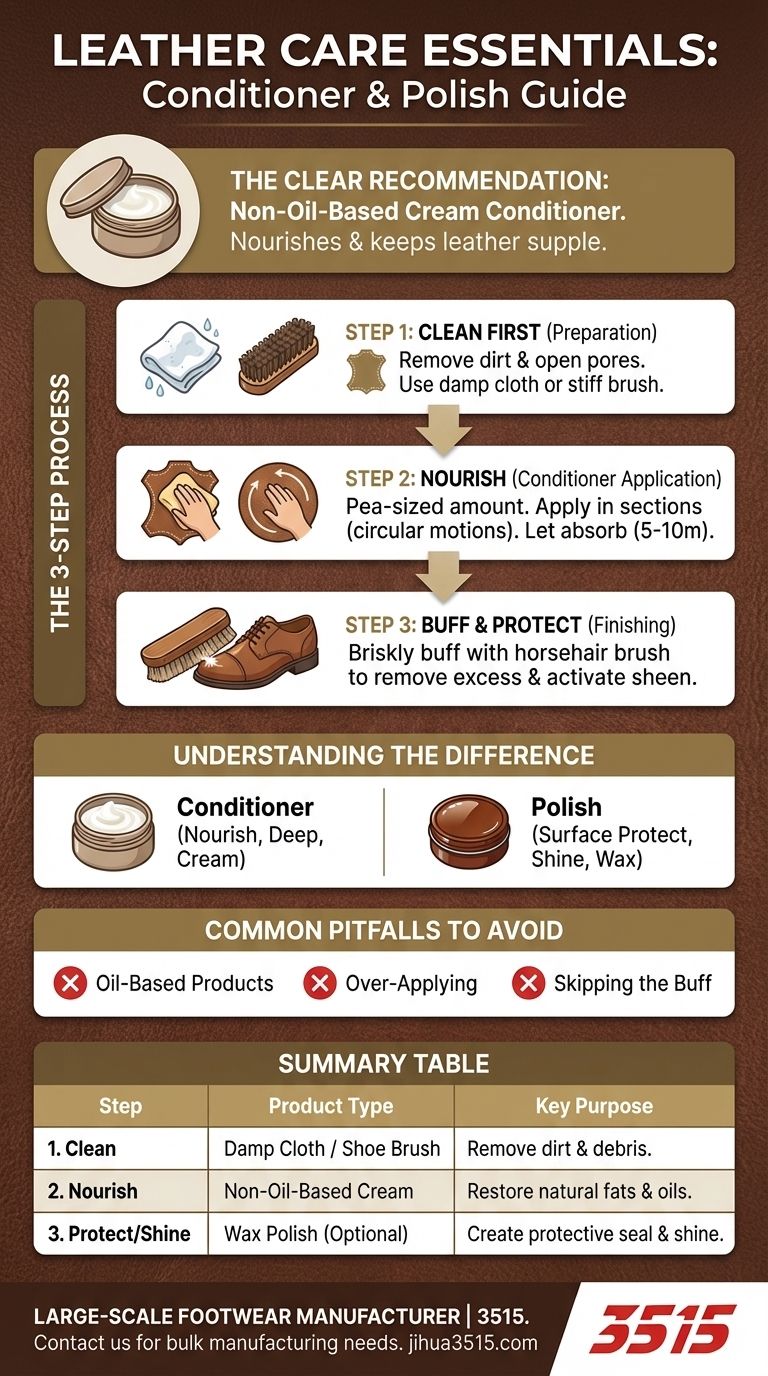
Visual Guide
Related Products
- Dial Closure Leather Business Casual Shoes for Wholesale & Private Label
- Wholesale Comfort Leather Business Shoes with Dial Lacing System
- Wholesale Leather Apron Toe Derby Shoes Custom Factory Production
- Factory Direct Wholesale Leather Comfort Shoes with Dial Closure
- Wholesale Classic Leather Lace-Up Ankle Boots for Brand Manufacturing
People Also Ask
- What are the top three recommended business casual shoes? Build a Polished, Versatile Wardrobe
- Why is choosing the right shoes important for a business casual look? Elevate Your Professional Image
- What materials are commonly used in business casual shoes? A Guide to Leather, Suede & More
- What factors should be considered when choosing business casual shoes? Find the Perfect Balance of Style & Comfort
- Are black or brown shoes better for business casual? Master the Versatile Choice for Your Wardrobe