
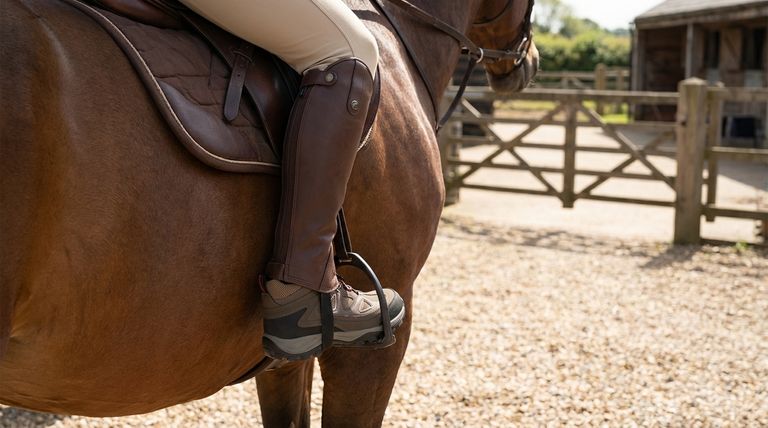
At its core, the half chap is a functional accessory that transforms the simple paddock boot into a modular system mimicking the performance of a tall boot. By adding a fitted layer over the lower leg, half chaps provide critical support, enhance grip against the saddle, and protect both the rider's skin and clothing from friction.
The combination of paddock boots and half chaps offers a practical, comfortable, and cost-effective alternative to tall boots. It delivers much of the same functionality while providing superior versatility for everyday riding and training.
The Core Functional Upgrades
Pairing half chaps with paddock boots isn't just about looks; it's a significant functional enhancement. Each component adds a specific layer of performance that directly impacts the rider's effectiveness and comfort in the saddle.
Enhancing Stability and Support
A well-fitted half chap provides compression and support to the rider's lower leg muscles. This reduces muscle fatigue during long rides.
This added structure helps to stabilize the ankle and prevent the kind of minor twisting that can occur in a simple short boot.
Improving Grip and Connection
Most half chaps are made of leather or suede, which offers superior grip against the saddle flap compared to breeches alone.
This secure contact point allows for a quieter lower leg and more subtle communication with the horse.
Preventing Rubbing and Discomfort
Half chaps effectively prevent breech legs from twisting, bunching, or riding up. This ensures a smooth, seamless fit.
They also create a durable barrier that protects the rider's skin from being pinched or chafed by stirrup leathers, a common issue in English riding.
Mimicking the Performance of Tall Boots
The primary reason this combination is so popular is that it provides a practical alternative to traditional tall boots, especially for schooling and hacking.
A Modular Two-Piece System
Think of the paddock boot and half chap as a two-piece system that offers versatility. The paddock boots can be worn alone around the barn for groundwork.
The half chaps can then be added just for riding, providing targeted performance exactly when it's needed.
The Practicality of Easy Removal
Unlike stiff tall boots that can be cumbersome, half chaps are easy to put on and take off.
This convenience is highly valued for comfort, allowing a rider to quickly remove them after a ride to cool down.
Achieving the Traditional Look
When fitted correctly, the combination of a black paddock boot and matching half chap closely resembles the silhouette of a tall boot.
This makes it an acceptable and polished look for lessons, clinics, and many types of local or schooling shows.
Understanding the Trade-offs
While the benefits are significant, it's crucial to recognize where this combination differs from a dedicated tall boot. Objectivity requires acknowledging the potential downsides.
Fit and Polish
Even the best-fitting half chaps can sometimes create a slightly bulkier profile around the ankle compared to a single, sleek tall boot. The integration is functional, but not always as seamless.
Formal Show Compliance
This combination is ideal for training but is often not permitted in higher-level, formal show rings, particularly in disciplines like hunters or dressage. Always check the specific rules for your competition level.
A Point of Failure
The zipper is the most critical component of a half chap. It is the most common point of wear and potential failure, requiring more care and eventual replacement than a pull-on or laced tall boot.
Making the Right Choice for Your Riding
Your decision should be driven by your primary goals, budget, and the type of riding you do most often.
- If your primary focus is daily training and comfort: The paddock boot and half chap combination is the superior choice for its versatility and ease of use.
- If your primary focus is cost-effectiveness: This setup provides a much more accessible entry point into proper riding gear than a pair of high-quality tall boots.
- If your primary focus is formal competition: You will likely need to invest in traditional tall boots to meet the specific attire requirements of your discipline.
By understanding how these two pieces of equipment work together, you can make an informed choice that best supports your equestrian journey.
Summary Table:
| Functional Enhancement | Benefit to Rider |
|---|---|
| Stability & Support | Reduces leg fatigue, stabilizes ankle |
| Improved Grip | Better saddle contact, quieter leg aids |
| Comfort & Protection | Prevents chafing, keeps breeches smooth |
| Versatility | Easy on/off, mimics tall boot performance |
As a large-scale manufacturer, 3515 produces a comprehensive range of footwear for distributors, brand owners, and bulk clients. Our production capabilities encompass all types of shoes and boots, including high-performance riding footwear.
If you are a distributor or brand owner looking for reliable, high-quality paddock boots and equestrian footwear, contact us today to discuss how we can support your business with our extensive manufacturing expertise and product range.
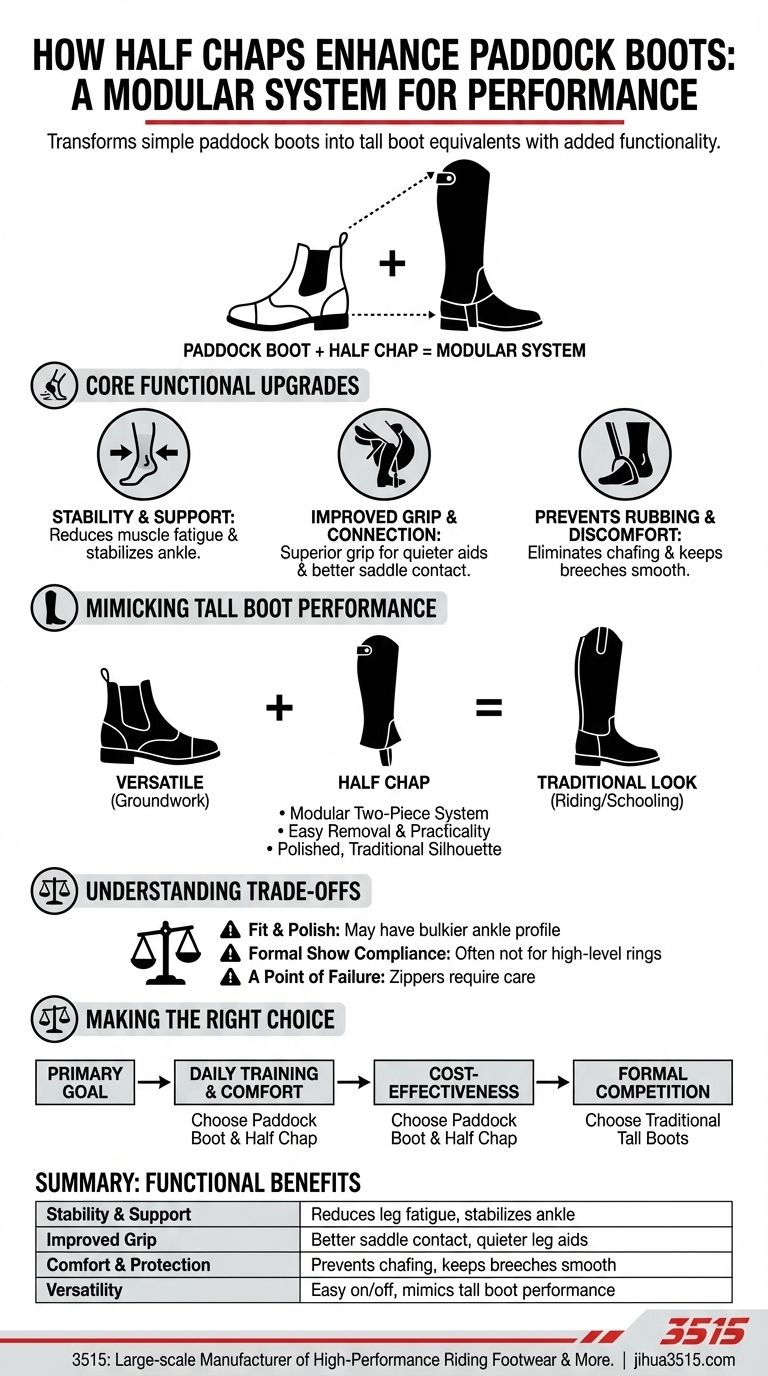
Visual Guide
Related Products
- Wholesale Lightweight Tactical Boots Custom Manufacturer for Desert & Combat Use
- Durable Military Combat Boots with Water Drainage for Wholesale & OEM
- Wholesale Durable Mid-Cut Tactical Boots for Custom & Private Label Brands
- Durable Leather Tactical Boots Wholesale & Custom Manufacturing for Brands
- High-Traction Suede Tactical Boots Wholesale & Custom Manufacturing
People Also Ask
- What are the common types of combat boots? Find the Right Boot for Your Mission
- What specialized protections do tactical boots offer? Maximize Endurance with High-Performance Footwear
- How is the compatibility of polymer materials demonstrated in smart footwear? Enhancing Tactical & Training Performance
- What are the different types of tactical boots available? Find the Right Boot for Your Mission
- What is the role of high-frequency acquisition hardware in technical skill analysis for outdoor and tactical boots?


















