
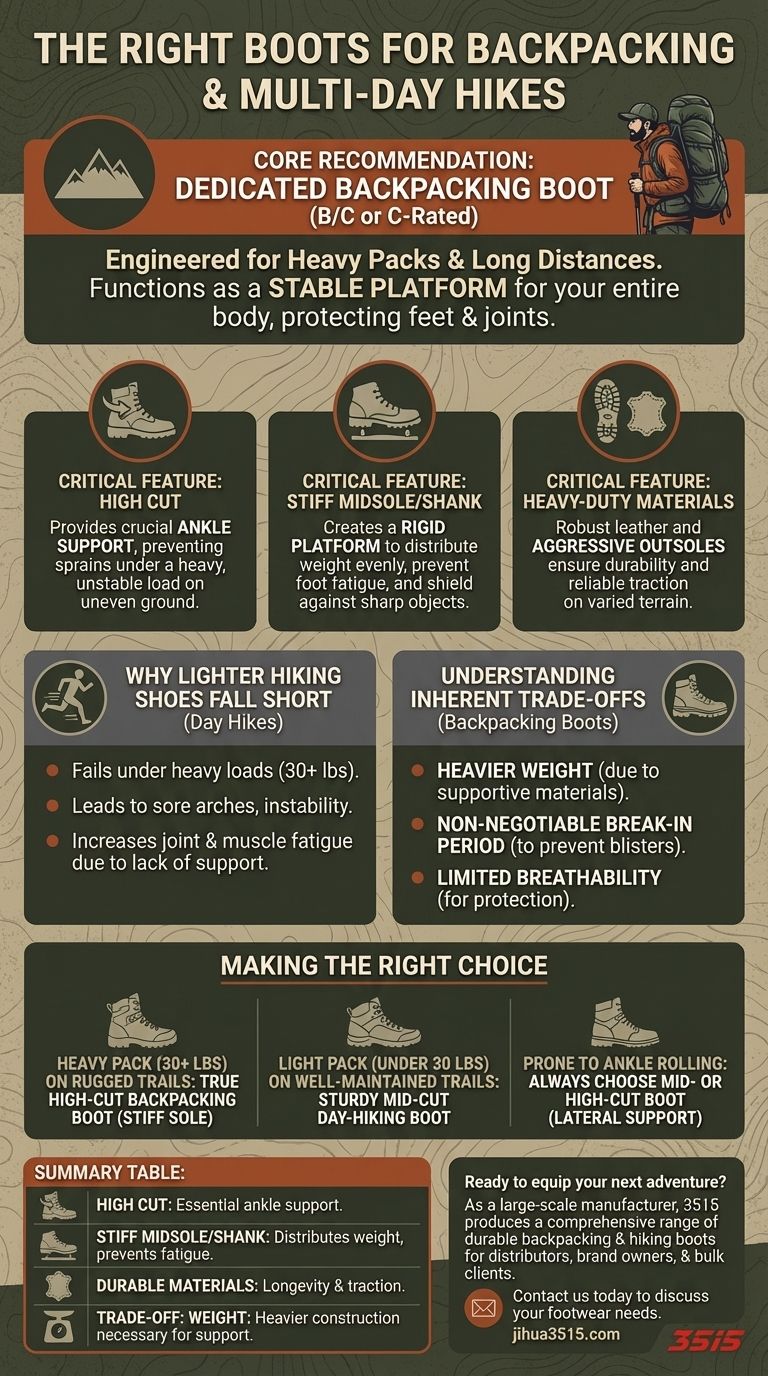
For multi-day backpacking trips, the clear recommendation is a dedicated backpacking boot. These are typically categorized as B/C or C-rated boots and are specifically engineered for the unique stresses of carrying a heavy pack over long distances. Their defining features—a high cut for ankle support, a stiff midsole, and highly durable materials—are not optional extras but essential components for safety and comfort on unpredictable terrain.
The core principle to understand is that a backpacking boot's primary job is to function as a stable platform for your entire body. Its rigidity and weight are not design flaws; they are the necessary features that protect your feet and joints from the amplified forces created by carrying a heavy load, step after step.
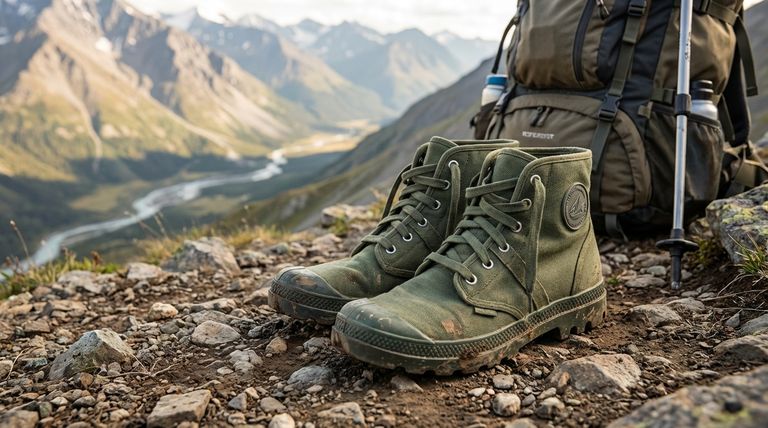
What Defines a True Backpacking Boot?
The term "backpacking boot" describes a specific set of features designed to work together as a system. Understanding these components helps clarify why they are so critical for multi-day trips.
The Critical Role of a High Cut
A high cut that extends over the ankle provides crucial support. When carrying a heavy pack, your center of gravity is higher and less stable. A high-cut boot helps prevent ankle sprains and twists, especially on uneven ground or rocky descents.
Stiff Midsoles and Shanks
The sole of a backpacking boot is intentionally stiff. This stiffness, often created by a full-length internal plate called a shank, creates a rigid platform. This structure distributes your weight and the pack's load evenly across your foot, preventing foot fatigue and protecting you from sharp objects underfoot.
Heavy-Duty Materials and Construction
Backpacking boots are built for durability. They often feature robust leather uppers and aggressive outsoles for reliable traction on varied surfaces like mud, rock, and loose dirt. The midsole is typically made from heavy-duty polyurethane, which provides lasting cushioning and support under heavy loads.
Why Lighter Hiking Shoes Often Fall Short
While excellent for day hikes, lighter hiking shoes and trail runners lack the fundamental structure needed for the demands of loaded backpacking.
The Problem of Load Bearing
The primary difference is support. A flexible day-hiking shoe is comfortable for walking with a light pack, but it will collapse and fail to provide adequate support under the weight of a 30+ pound pack. This leads directly to sore arches, bruised feet, and instability.
Joint and Muscle Fatigue
The stability offered by a backpacking boot does more than just protect your feet. By creating a solid foundation for each step, it reduces the small, corrective movements your muscles and joints in your ankles, knees, and hips must make, significantly reducing overall fatigue over a long trip.
Understanding the Inherent Trade-offs
Choosing a backpacking boot means accepting a specific set of compromises. Being aware of them allows you to make an informed decision.
The Cost of Support is Weight
There is no way around it: backpacking boots are heavier than other hiking footwear. This weight is a direct result of the durable materials, thick midsoles, and supportive shanks required to do their job effectively.
The Break-In Period is Non-Negotiable
Because of their stiff construction, new backpacking boots require a dedicated break-in period. You must wear them for shorter walks before a long trip to allow the materials to soften and conform to the unique shape of your foot, preventing painful blisters on the trail.
Limited Breathability
The same durable and often water-resistant materials that protect your feet from the elements also limit airflow. Compared to lightweight trail runners, backpacking boots are less breathable, which can be a consideration in very hot and dry climates.
Making the Right Choice for Your Trip
Your final decision should be based on the specific demands of your planned hikes.
- If your primary focus is multi-day backpacking with a heavy pack (30+ lbs) on rugged trails: You need a true, high-cut backpacking boot with a stiff sole for maximum support and injury prevention.
- If your primary focus is light backpacking (under 30 lbs) on well-maintained trails: A sturdy, mid-cut day-hiking boot may provide sufficient support, but prioritize models known for their stability.
- If you are prone to ankle rolling, regardless of pack weight: Always choose a mid- or high-cut boot to provide the essential lateral support your ankles require.
Ultimately, selecting the correct boot is the foundational investment in a safe, comfortable, and successful backcountry experience.
Summary Table:
| Feature | Why It's Critical for Backpacking |
|---|---|
| High Cut | Provides essential ankle support under a heavy pack's unstable center of gravity. |
| Stiff Midsole/Shank | Creates a rigid platform to distribute weight, prevent foot fatigue, and protect from sharp objects. |
| Durable Materials | Robust leather and aggressive outsoles ensure longevity and traction on varied, rugged terrain. |
| Trade-off: Weight | Heavier construction is necessary for the support and durability required for multi-day trips. |
Ready to equip your next adventure with the right support?
As a large-scale manufacturer, 3515 produces a comprehensive range of durable backpacking and hiking boots for distributors, brand owners, and bulk clients. Our production capabilities ensure you receive footwear engineered for performance, safety, and comfort on the trail.
Contact us today to discuss your specific needs and discover how we can support your business with high-quality, reliable footwear solutions.
Visual Guide
Related Products
- Wholesale High-Traction Camo Boots - Custom Manufacturer for Brands
- Durable Rubber Sole Outdoor Shoes Wholesale & Custom Manufacturing
- Wholesale Waterproof Tactical Boots Custom Suede & High-Traction Soles
- Wholesale Lightweight Tactical Boots Custom Manufacturer for Desert & Combat Use
- Wholesale Tactical Boots High-Traction & Reflective for Bulk & Brand Orders
People Also Ask
- What are the key features of the new line of camo boots? Built for Extreme Cold & Rugged Terrain
- Are camo boots necessary for hunting success? Prioritize Performance Over Pattern
- What is the technical logic behind using closed-eye testing for tactical boots? Unlocking Peak Footwear Stability
- How does the Rank Score Test identify the primary causes of premature failure in tactical and work boots? Key Insights
- What shoes to wear for a security job? Durable, Protective Footwear for Long Shifts


















