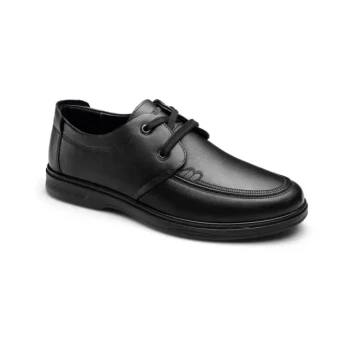
3D bioprinting equipment offers a distinct technical advantage by enabling the precise spatial distribution of bio-inks to create customized footwear components. Unlike traditional molding, this technology utilizes anatomical scan data to regulate microscopic mechanical properties—such as hardness gradients—and integrate functional nano-components directly into the material structure.
The core value of 3D bioprinting lies in its ability to engineer material properties at a microscopic level. It transcends simple shape matching to provide functional, biomechanical customization that uniform mold-based manufacturing cannot achieve.
Precision Control of Mechanical Properties
Spatial Distribution of Bio-Inks
The primary technical differentiator is the ability to control the spatial distribution of bio-inks. Traditional injection molding forces a single material into a pre-set shape, resulting in uniform properties throughout the component.
Microscopic Hardness Gradients
Bioprinting allows for the microscopic regulation of local mechanical properties. Manufacturers can create hardness gradients within a single insole or midsole, providing stiffer support where needed and softer cushioning in impact zones, all based on the user's specific biomechanics.
Complex Geometric Structures
This technology supports the creation of complex internal geometries. While traditional molds struggle with undercuts or varying internal densities, bioprinting can fabricate intricate lattice structures that optimize weight and performance without tooling limitations.
Integration of Functional Elements
Functional Nano-Components
Bioprinting facilitates the inclusion of functional nano-components directly into the ink matrix. This allows the material itself to possess specific characteristics—such as conductivity or antimicrobial properties—rather than relying on surface coatings.
Embedded Flexible Sensors
The equipment enables the seamless integration of flexible sensors during the fabrication process. This capability transforms the footwear from a passive protective layer into an active system capable of monitoring gait or pressure distribution in real-time.
The Data-Driven Manufacturing Foundation
Leveraging Anatomical Scan Data
The bioprinting process is driven by high-precision anatomical data obtained through 3D scanning. This ensures that the material distribution corresponds exactly to the user's unique foot topology, including arch structure and specific foot types (e.g., Egyptian or Roman).
Dynamic Digital Lasts
Scanning technology allows for the creation of digital shoe last models that can be dynamically adjusted. This eliminates the human error associated with manual measurement and creates a consistent data foundation for the printer to execute its precise instructions.
Understanding the Trade-offs: Molds vs. Prints
Inventory vs. Flexibility
Traditional manufacturing relies on mass production to amortize the high cost of metal molds, leading to inventory buildup. Bioprinting operates on a demand-driven model, eliminating the need for physical inventory of finished goods but requiring a shift in supply chain management.
Speed vs. Customization Depth
While traditional molding is optimized for rapid, identical output, bioprinting prioritizes depth of personalization. The advantage shifts from volume speed to the ability to shorten the development cycle for complex, high-end custom products that require no tooling adjustments.
Making the Right Choice for Your Goal
To maximize the value of 3D bioprinting technology, align your manufacturing strategy with your specific product objectives:
- If your primary focus is Biomechanical Correction: Leverage the ability to print hardness gradients to create insoles that mechanically correct gait without bulky external supports.
- If your primary focus is Smart Footwear: Utilize the capability to integrate functional elements like flexible sensors directly into the sole for seamless data tracking.
- If your primary focus is Operational Efficiency: Adopt the demand-driven model enabled by digital lasts to reduce physical inventory and eliminate mold storage costs.
Bioprinting transforms footwear manufacturing from a process of mass replication to one of precision bio-engineering.
Summary Table:
| Feature | Traditional Molding | 3D Bioprinting Advantage |
|---|---|---|
| Material Control | Uniform properties throughout | Spatial distribution of bio-inks |
| Hardness Regulation | Single hardness per mold | Microscopic local hardness gradients |
| Functionality | Surface coatings only | Integrated nano-components & sensors |
| Inventory Model | Mass production & stock buildup | Demand-driven; no physical mold storage |
| Customization | Based on standard lasts | Driven by 3D anatomical scan data |
Elevate Your Footwear Production with 3515
As a premier large-scale manufacturer serving distributors and brand owners globally, 3515 delivers the future of footwear manufacturing today. We bridge the gap between traditional craftsmanship and cutting-edge technology to provide comprehensive production for all footwear types.
By partnering with us, you gain access to our flagship Safety Shoes series and an extensive portfolio including tactical boots, outdoor gear, and formal shoes. Whether you need bulk traditional manufacturing or precision-engineered components, our capabilities ensure your brand stays ahead of market trends.
Ready to scale your footwear business with an industry leader?
Contact Us Today to Discuss Your Requirements
References
- Keyla Fuentes, Leopoldo Naranjo. Nanomaterials in the future biotextile industry: A new cosmovision to obtain smart biotextiles. DOI: 10.3389/fnano.2022.1056498
This article is also based on technical information from 3515 Knowledge Base .
Related Products
- Lightweight Breathable Training Shoes for Wholesale & Custom OEM Manufacturing
- Lightweight Breathable Sneakers with Wet-Traction Grip for Wholesale & Private Label
- Wholesale Comfortable Business Casual Shoes Custom Manufacturing
- Wholesale Durable Safety Boots Manufacturer Customizable Steel Toe Work Boots
- Wholesale Durable & Breathable Training Shoes for Custom Brands
People Also Ask
- Why are lightweight training shoes often preferred over professional hiking boots in urban walking? Maximize City Comfort
- What is the primary role of specialized training or orthopedic shoes? Enhance Safety in Elderly Balance Training
- Why are professional-grade training shoes essential for physical therapy? Ensure Patient Safety and Gait Stability
- Why are the slip-resistance and stability performance of training shoes critical in gait analysis? Ensure Data Accuracy
- Why is the use of flat-soled or professional training shoes essential for WBV? Maximize Vibration Energy Transfer