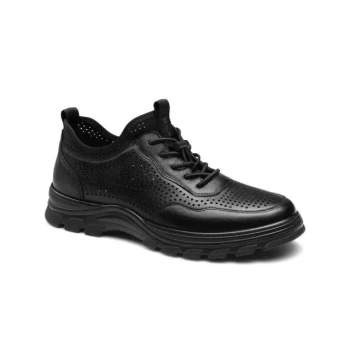
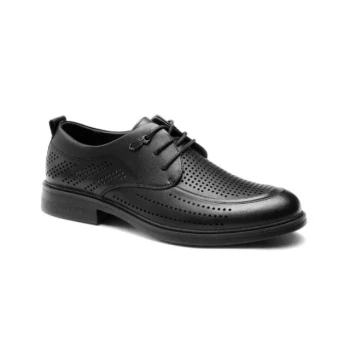
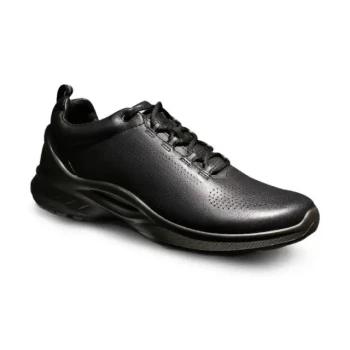
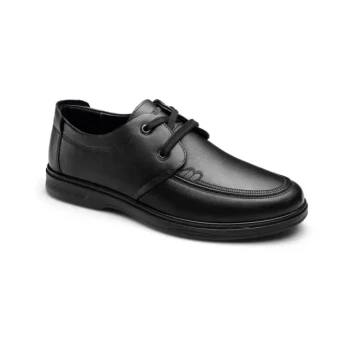
Those final, unused eyelets at the top of your shoes are not decorative. They are specifically designed to create a "heel lock" or "runner's loop," a lacing technique that dramatically improves fit by securing your ankle and preventing your heel from slipping. This simple adjustment leverages mechanical advantage to snug the shoe's collar around your foot.
The extra eyelets enable a lacing technique that acts like a pulley system. This pulls the shoe's upper material inward around the ankle, locking the heel in place far more effectively than simply pulling the laces tighter.
Why a Secure Heel is Non-Negotiable
A shoe that fits well at the heel is the foundation for comfort, performance, and injury prevention. When your heel is not secure, a cascade of negative effects can occur.
The Problem of Heel Slippage
Heel slippage is the slight but constant lifting of your heel away from the insole with each step. This movement creates friction, which is the primary cause of painful blisters on the back of your heel.
Instability and Wasted Energy
An unsecured heel means your foot is not moving as one unit with the shoe. This subtle instability forces the small muscles in your feet and ankles to work harder to stabilize you, leading to fatigue and reducing your efficiency.
Limitations of Standard Lacing
Simply tightening the laces across the top of your foot often fails to solve heel slip. This approach can create uncomfortable pressure on the tendons of your instep without actually securing the back of the shoe.
The Mechanics of the Heel Lock
The genius of the heel lock is that it changes the direction of force. Instead of just pulling the two sides of the shoe down onto your foot, it cinches the entire ankle collar inward.
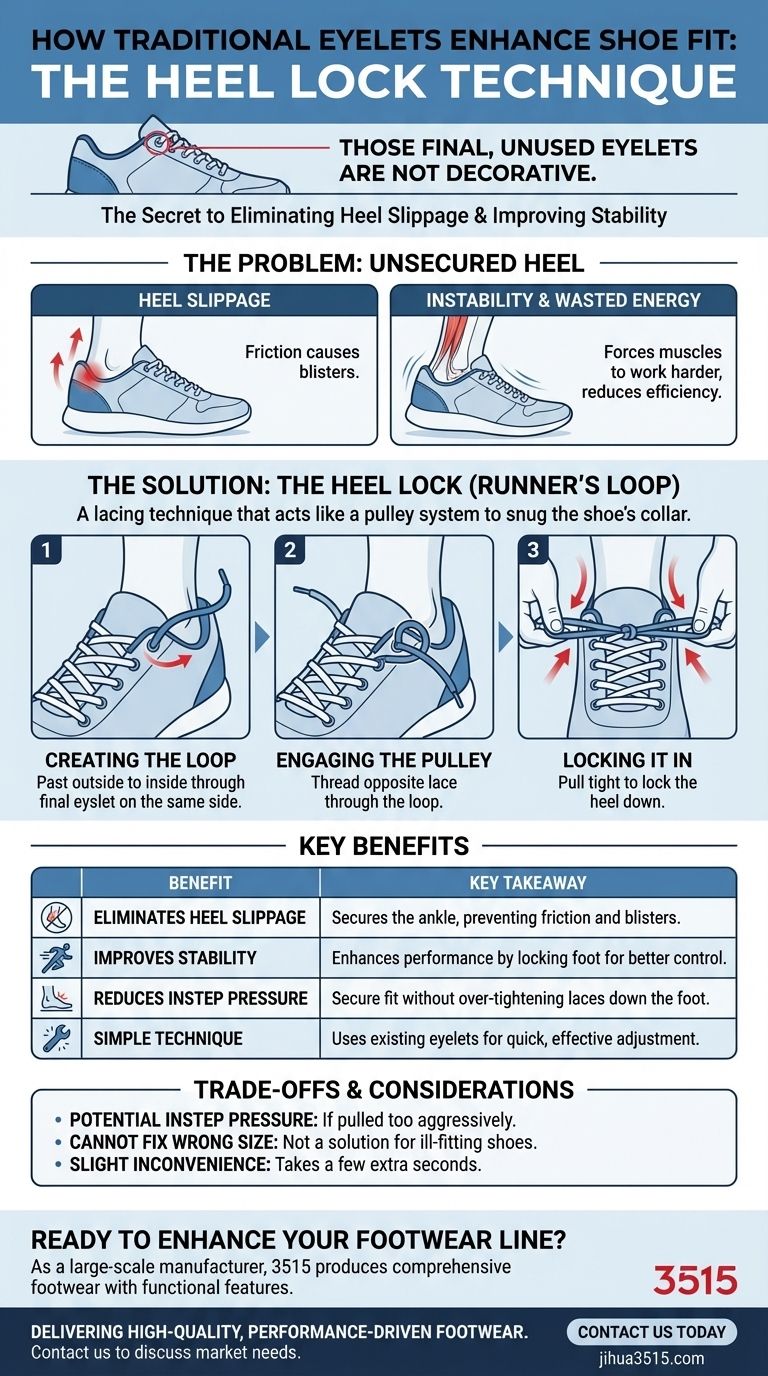
Step 1: Creating the Loop
The technique begins by using the final eyelet on each side. Instead of crossing over, you pass the lace from the outside to the inside on the same side, creating a small loop.
Step 2: Engaging the "Pulley"
Next, you take the end of the lace from the opposite side and thread it through the loop you just created. You do this for both sides.
Step 3: Locking It In
When you pull the ends of the laces, the loops are drawn tight. This new arrangement acts like a pulley, pulling the sides of the shoe’s collar snugly and securely around your ankle. This locks your heel down into the back of the shoe.
Understanding the Trade-offs
While incredibly effective, the heel lock is a specific tool for a specific problem. It's not always necessary and has a few considerations.
Potential for Pressure on the Instep
If pulled too aggressively, the lock can still create pressure on the tendons at the front of your ankle. The goal is to pull until the heel feels secure, not to crank it down with maximum force.
It Cannot Fix a Badly Sized Shoe
The heel lock is a fit-enhancement technique, not a solution for a shoe that is fundamentally the wrong size or shape for your foot. If the shoe is too long or wide, the lock can only do so much.
A Slight Inconvenience
Using this method takes a few extra seconds when putting on and taking off your shoes. For most, the benefit in comfort and stability far outweighs this minor inconvenience.
Making the Right Choice for Your Goal
Using this lacing technique is a tactical decision based on your activity and fit issues.
- If your primary focus is eliminating heel blisters: The heel lock is the single most effective lacing trick for preventing friction-related blisters.
- If your primary focus is stability for running or sports: Use the heel lock to create a more connected feel between your foot and the shoe, improving confidence during cuts and changes of direction.
- If your primary focus is relieving pressure on your instep: The lock allows you to secure your ankle without having to excessively tighten the laces further down your foot.
By understanding how to use these eyelets, you gain direct control over your shoe's performance and comfort.
Summary Table:
| Benefit | Key Takeaway |
|---|---|
| Eliminates Heel Slippage | Secures the ankle, preventing friction and blisters. |
| Improves Stability | Enhances performance in sports by locking the foot in place. |
| Reduces Instep Pressure | Allows for a secure fit without over-tightening laces. |
| Simple Technique | Uses existing eyelets for a quick, effective adjustment. |
Ready to enhance your footwear line with superior fit and performance? As a large-scale manufacturer, 3515 produces a comprehensive range of footwear for distributors, brand owners, and bulk clients. Our production capabilities encompass all types of shoes and boots, including designs optimized with functional features like heel-lock eyelets. Contact us today to discuss how we can deliver high-quality, performance-driven footwear tailored to your market needs.
Visual Guide
Related Products
- Wholesale Durable Camouflage Canvas Shoes with High-Traction Cleated Rubber Sole
- Advanced KPU Athletic Safety Shoe with Steel Toe Cap Anti-Slip Rotary Lacing System
- Wholesale Modern Perforated Leather Derby Shoes with Chunky Sole for Custom Branding
- Wholesale Modern Business Shoes with Dial Closure System for Bulk Orders
- Factory Direct Wholesale Leather Comfort Shoes with Dial Closure
People Also Ask
- Why is the selection of high-strength fabric materials necessary in the production of canvas shoes and training shoes?
- What are the properties of canvas as a shoe material? A Guide to Lightweight Comfort & Style
- Can canvas shoes be worn in rainy conditions? The Truth About Water Resistance
- What are some examples of vulcanized shoes? Discover the Flexibility and Board Feel of Classic Sneakers
- What are the characteristics of canvas as a shoe material? A Guide to Lightweight, Breathable Footwear