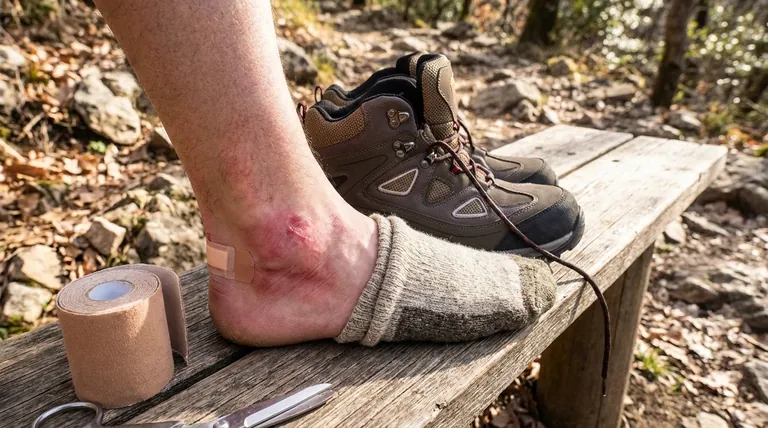
To address skin irritation from a boot, you must immediately reduce the friction causing the problem. The most effective method is to pad the hard edges of the boot with a soft material like moleskin or to cover the irritated skin with medical tape to create a protective barrier.
The core principle is proactive management. Preventing skin irritation through daily checks, proper fit, and maintaining a dry environment is far more effective than treating sores after they have already formed.
Understanding the Causes of Skin Irritation
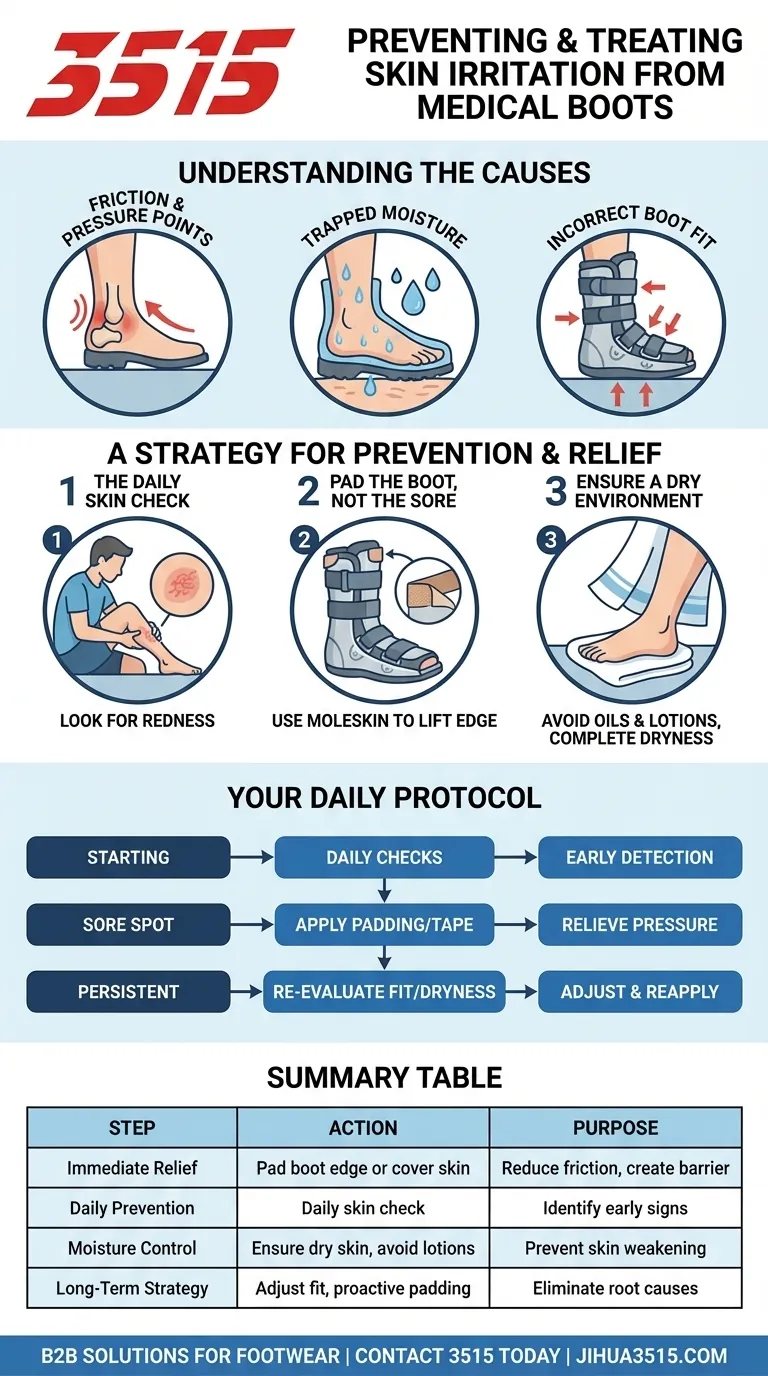
To solve this problem permanently, you first need to understand why it's happening. The hard shell of a medical boot creates an environment where skin is uniquely vulnerable to breakdown from three primary factors.
Friction and Pressure Points
The rigid edges of the boot constantly rub against your skin. This repeated friction, especially over bony areas like the ankle or shin, creates pressure points that lead to redness, soreness, and blisters.
Trapped Moisture
Your skin will naturally perspire inside the boot. Without adequate airflow, this moisture becomes trapped, softening the skin and making it significantly more fragile and susceptible to damage from friction.
Incorrect Boot Fit
A boot that is fastened too tightly concentrates pressure, quickly creating sores. Conversely, a boot that is too loose allows your foot to slide, generating widespread friction and irritation.
A Strategy for Prevention and Relief
A consistent daily routine is the key to maintaining skin health while wearing a boot. Focus on removing the sources of irritation before they cause significant issues.
The Daily Skin Check
Each day, remove the boot and carefully inspect your skin. Look for any new areas of redness or soreness, which are the earliest warning signs of a developing pressure spot.
Pad the Boot, Not the Sore
If you find a red or sore spot, apply padding directly to the inside edge of the boot adjacent to the area. Use a soft material like moleskin. This lifts the boot off the irritated skin, relieving the pressure.
Ensure a Dry Environment
Never apply the boot to damp skin. Always ensure the area is completely dry first. Crucially, avoid using oils or lotions, as they can trap moisture and weaken the skin's integrity, making it more prone to breakdown.
Your Daily Boot and Skin Care Protocol
Integrate these steps into your daily routine to take control of your skin health during your recovery.
- If you are just starting to wear the boot: Make daily skin checks your highest priority to identify and address potential pressure spots before they become painful.
- If you already have a red or sore spot: Immediately apply padding like moleskin to the boot's edge to relieve pressure and cover the spot with a bandage or tape for protection.
- If you are dealing with persistent irritation: Re-evaluate how tightly you are securing the straps and be absolutely certain your skin is completely dry before putting the boot on.
By being proactive, you can ensure your recovery is focused on your injury, not on preventable skin complications.
Summary Table:
| Step | Action | Purpose |
|---|---|---|
| Immediate Relief | Pad the boot's hard edge with moleskin or cover skin with medical tape. | Create a protective barrier to reduce friction. |
| Daily Prevention | Perform a daily skin check when the boot is removed. | Identify early warning signs like redness. |
| Moisture Control | Ensure skin is completely dry before putting the boot on; avoid lotions. | Prevent skin softening and weakening. |
| Long-Term Strategy | Adjust boot fit to be snug but not tight, and pad potential pressure points proactively. | Eliminate the root causes of irritation. |
Are you a distributor or brand owner seeking reliable, comfortable footwear for your customers? As a large-scale manufacturer, 3515 produces a comprehensive range of high-quality shoes and boots designed with user comfort and durability in mind. We can help you provide superior products that minimize issues like skin irritation. Contact our team today to discuss your manufacturing needs and how we can support your business.
Visual Guide
Related Products
- Durable Military Combat Boots with Water Drainage for Wholesale & OEM
- High-Traction Suede Tactical Boots Wholesale & Custom Manufacturing
- Wholesale Waterproof Tactical Boots Custom Suede & High-Traction Soles
- Durable High-Ankle Tactical Boots for Wholesale & Custom Manufacturing
- Durable Leather Tactical Boots Wholesale & Custom Manufacturing for Brands
People Also Ask
- Why must gait validation for military applications be conducted in combat boots? Ensure Data Accuracy for Soldiers
- What are the common types of combat boots? Find the Right Boot for Your Mission
- What factors should be considered when choosing military boots for hiking? Durability vs. Weight for Your Terrain
- What are the key considerations when choosing military boots? Prioritize Compliance, Environment & Fit
- How should the midfoot and heel fit in military boots? Achieve a Snug, Secure Fit for Blister Prevention