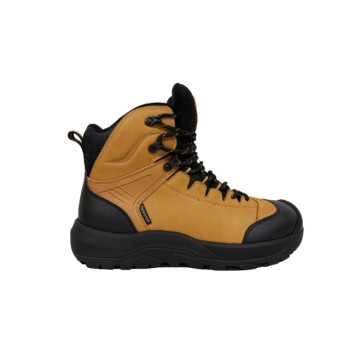
Choosing the right winter boot is about matching its specific features to your daily reality. The most critical factors to consider are insulation for warmth, waterproofing for dryness, sole design for traction, and a proper fit for comfort. How you prioritize these elements depends entirely on whether you're navigating an icy city sidewalk, hiking a snowy trail, or simply trying to stay warm in extreme cold.
The most effective way to choose winter boots is to first define your primary activity and environment. This context is the lens through which you should evaluate every feature, ensuring you invest in a boot that truly serves your specific needs for warmth, dryness, and stability.
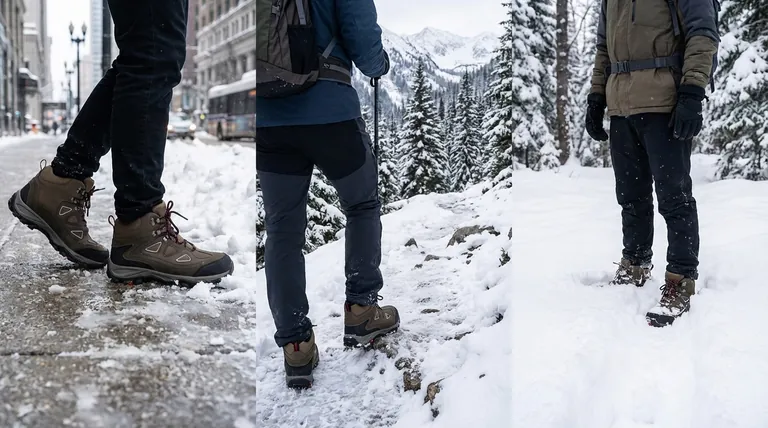
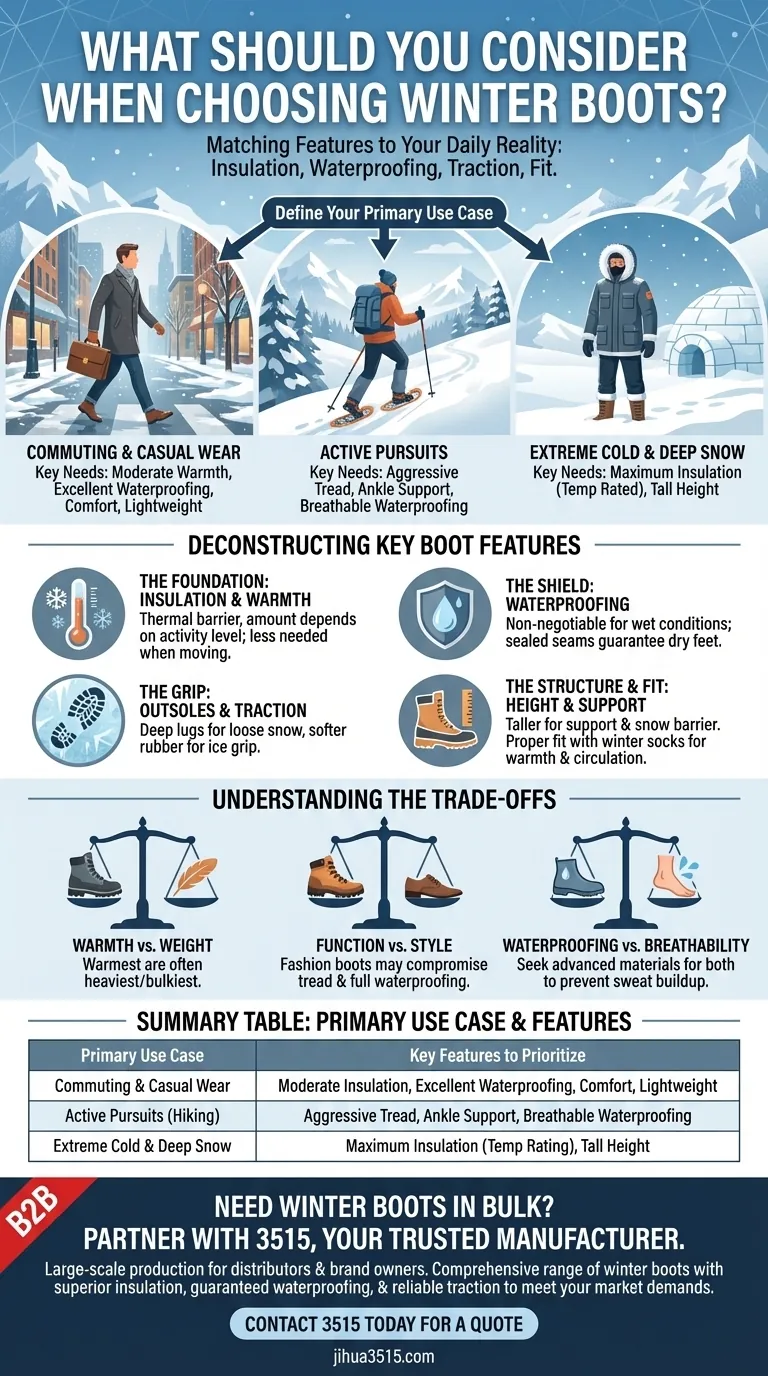
Define Your Primary Use Case
Before examining any boot, you must first clarify its purpose. A boot designed for extreme cold will be overkill for a mild, slushy commute, and a stylish city boot will fail you in deep snow.
Commuting and Casual Wear
For daily use on cleared or slushy sidewalks, your primary needs are moderate warmth and excellent waterproofing. You should also prioritize comfort and a weight that doesn't cause fatigue during your travels.
Active Pursuits
If you plan on winter hiking, snowshoeing, or other high-exertion activities, your needs shift. Look for boots with aggressive tread for traction, strong ankle support for uneven terrain, and materials that balance waterproofing with breathability to manage sweat.
Extreme Cold and Deep Snow
For prolonged periods in freezing temperatures or deep snow, your absolute priority is insulation. Look for boots with a temperature rating. Boot height also becomes critical to prevent snow from getting inside.
Deconstructing Key Boot Features
Understanding the core components of a winter boot allows you to make an informed decision based on your defined needs.
The Foundation: Insulation and Warmth
Insulation creates a thermal barrier between your feet and the cold ground. It is the single most important feature for staying warm. The amount you need is directly related to your activity level—less is needed when you're moving and generating body heat.
The Shield: Waterproofing
Waterproofing is non-negotiable for wet, slushy conditions. Wet feet lose heat exponentially faster than dry feet. Look for materials and construction methods (like sealed seams) that guarantee your feet will stay dry.
The Grip: Outsoles and Traction
The sole of the boot is your connection to the ground. A deep, aggressive tread pattern is designed to grip loose snow, while softer rubber compounds provide better traction on ice. Evaluate the likely surfaces you'll be walking on.
The Structure: Height and Support
Taller boots serve a dual purpose. They provide better ankle support on unstable ground and create a physical barrier to keep deep snow from entering the boot from the top.
The Fit: Sizing and Comfort
A proper fit is crucial for warmth and comfort. Always try on boots with the type of thick socks you'll wear in winter. There should be enough room to wiggle your toes, as a tight fit can restrict blood flow and lead to colder feet.
Understanding the Trade-offs
No single boot is perfect for every situation. Being aware of the inherent compromises is key to choosing wisely.
Warmth vs. Weight
The warmest boots, packed with heavy insulation, are often the heaviest and bulkiest. This can be perfectly fine for low-exertion activities but can lead to fatigue on a long winter hike.
Function vs. Style
Formal or fashion-oriented winter boots often use high-quality materials but may compromise on core functional features. They typically have less aggressive tread patterns and may offer water resistance rather than full waterproofing.
Waterproofing vs. Breathability
A fully waterproof boot can sometimes trap sweat during intense activity, leading to damp socks and cold feet. For active users, look for boots made with advanced materials that offer both waterproofing and breathability.
Making the Right Choice for Your Goal
Use your primary activity as your guide to focus on the features that matter most to you.
- If your primary focus is commuting on cleared or slushy city streets: Prioritize robust waterproofing and moderate insulation in a comfortable, lightweight design.
- If your primary focus is active winter hiking or snowshoeing: You need excellent traction from a deep-lugged sole, strong ankle support, and materials that balance waterproofing with breathability.
- If your primary focus is staying warm during low-activity use in deep cold: Maximize insulation by choosing a boot with a temperature rating and ensure it is tall enough to keep deep snow out.
By aligning a boot's technical specifications with your real-world needs, you can confidently select a pair that will keep your feet warm, dry, and secure all winter.
Summary Table:
| Primary Use Case | Key Features to Prioritize |
|---|---|
| Commuting & Casual Wear | Moderate insulation, excellent waterproofing, comfort, lightweight |
| Active Pursuits (Hiking) | Aggressive tread, ankle support, breathable waterproofing |
| Extreme Cold & Deep Snow | Maximum insulation (temperature rating), tall height |
Need Winter Boots in Bulk? Partner with 3515, Your Trusted Manufacturer.
As a large-scale manufacturer, 3515 produces a comprehensive range of footwear for distributors, brand owners, and bulk clients. Our production capabilities encompass all types of winter boots, engineered with the precise features outlined in this guide—superior insulation, guaranteed waterproofing, and reliable traction.
We help you source high-quality winter footwear that meets the specific demands of your target market, ensuring customer satisfaction and driving your business growth.
Contact 3515 today to discuss your bulk winter boot needs and request a quote.
Visual Guide
Related Products
- Premium Insulated Safety Boots and Shoes for Wholesale & Bulk Orders
- Factory Direct Wholesale Rain Boots Durable Waterproof & Fully Customizable
- Durable Waterproof Rain Boots | Custom Manufacturer for Wholesale & Brands
- Wholesale Waterproof Tactical Boots Custom Suede & High-Traction Soles
- High Performance Fire-Retardant Waterproof Safety Boots
People Also Ask
- What are the recommended insulation ratings for mild winter conditions? A Guide for Active & Stationary Workers
- How does insulation thickness correlate with temperature ranges? A Guide to Choosing the Right Warmth
- What insulation level is needed for severe cold and stationary work? 1200g or Higher is Essential
- What safety advantages do insulated boots offer beyond warmth? Dielectric Protection & Superior Grip
- How does fleece lining contribute to the warmth of insulated boots? Trapping Air for Superior Cold Protection