
To fix heel slip in your boots, the most common solutions are adding adhesive heel grips to fill empty space or using a "heel lock" lacing technique to secure your ankle. However, it's critical to first understand that a slight slip of about a quarter-inch is normal and expected in new, stiff leather boots like cowboy boots, as it allows the sole to break in and mold to your foot.
The core issue is distinguishing between normal "break-in" slip and problematic "fit" slip. For new pull-on boots, a slight lift is part of the process. For any other boot, or for excessive movement, the slip indicates a fit issue that needs to be corrected.
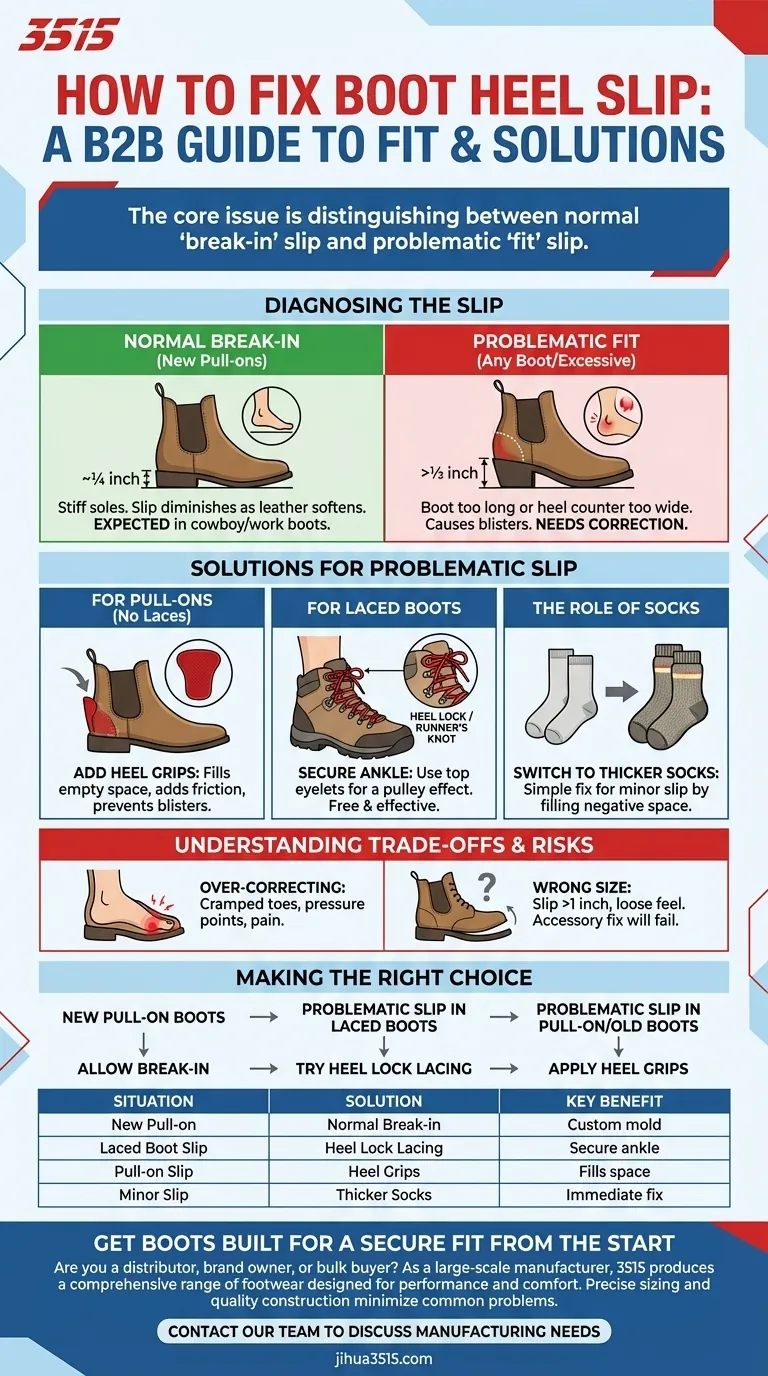
Diagnosing the Slip: Problem vs. Normal Break-in
Before applying a solution, you must determine the nature of the slip. Applying a fix when none is needed can create discomfort and pressure points.
When Heel Slip is Normal
A small amount of heel lift is a necessary part of breaking in certain types of boots, particularly those without a lacing system like cowboy boots or some pull-on work boots.
This occurs because the sole is stiff and doesn't bend with your foot yet. As you walk, your heel lifts slightly while the rigid sole remains flat on the ground.
A normal break-in slip is typically no more than a quarter to half an inch. This movement will naturally decrease as the leather softens and the sole gains flexibility, creating a custom fit.
When Heel Slip is a Problem
Heel slip is a sign of a poor fit if you experience it in boots that are already broken-in, in boots with a lacing system, or if the movement is excessive.
Signs of a problematic fit include your heel lifting more than half an inch, your foot sliding forward, or the slip causing rubbing and blisters.
This usually means the boot is either too long or the heel counter is too wide for the shape of your foot.
Solutions for Problematic Heel Slip
If you've determined the slip is a fit issue, several effective methods can create a more secure feel.
For Boots Without Laces (Pull-ons, Chelsea Boots)
The best solution for boots you can't tighten is to add material inside the boot to fill the excess volume.
Heel grips are small, adhesive pads (often leather or suede) that stick to the inside back of the boot. They add friction and take up a small amount of space, locking your heel in place. This also helps reduce internal wear on the boot's lining.
For Boots With Laces (Hiking, Work Boots)
For any boot with laces, your first step should be to change your lacing technique. This is free and often more effective than any insert.
The "heel lock" or "runner's knot" technique creates a secure cinch around the ankle, preventing your heel from lifting without having to overtighten the rest of the boot. It uses the top two eyelets to form a loop, which the laces then pass through to create a pulley-like effect.
The Role of Socks
Never underestimate the impact of your socks. If the heel slip is minor, simply switching to a thicker pair of socks can often fill the negative space and provide the necessary grip.
Understanding the Trade-offs
While these solutions are effective, it's important to be aware of the potential downsides to avoid creating new problems.
The Risk of Over-Correcting
Adding too many pads or thick insoles can fix the heel slip but create other issues.
Over-filling the boot can push your foot forward, cramping your toes against the front. It can also create pressure points on the top of your foot, leading to pain or numbness.
When a Boot is Simply the Wrong Size
These fixes are designed to solve minor fit imperfections. They cannot fix a boot that is fundamentally the wrong size or shape for your foot.
If your heel slips an inch or more, or if the boot feels loose in multiple areas, no accessory will solve the problem. In this case, the boot is simply too large.
Making the Right Choice for Your Goal
Your approach should depend entirely on the type of boot and the severity of the slip.
- If you have new leather pull-on boots: Give them time to break in, as a slight slip is expected and will diminish as the sole becomes more flexible.
- If your laced boots are slipping at the heel: First, try a heel-lock lacing technique before purchasing any inserts.
- If your well-worn boots have started to slip: The internal lining has likely compressed; adhesive heel grips are an excellent way to restore a snug fit.
By correctly diagnosing the cause of the slip, you can apply the right solution to achieve a secure and comfortable fit for the life of your boots.
Summary Table:
| Situation | Recommended Solution | Key Benefit |
|---|---|---|
| New Pull-on Boots (e.g., Cowboy Boots) | Allow for normal break-in (up to 1/2" slip is normal) | Sole will mold to your foot for a custom fit |
| Problematic Slip in Laced Boots | Use the "Heel Lock" lacing technique | Secures ankle without overtightening; free and effective |
| Problematic Slip in Pull-on Boots | Apply adhesive heel grips | Fills excess space, adds friction, and prevents blisters |
| Minor Slip in Any Boot | Switch to thicker socks | Simple, immediate fix by filling negative space |
Get Boots Built for a Secure Fit from the Start
Are you a distributor, brand owner, or bulk buyer tired of dealing with fit issues like heel slip? As a large-scale manufacturer, 3515 produces a comprehensive range of footwear designed for performance and comfort. Our production capabilities encompass all types of shoes and boots, ensuring precise sizing and quality construction that minimizes common problems.
Let us help you provide your customers with superior footwear. Contact our team today to discuss your manufacturing needs.
Visual Guide
Related Products
- Wholesale Durable Safety Boots | Custom Steel Toe & Puncture-Resistant Manufacturing
- Premium Wholesale Tactical Style Safety Shoes Boots with Quick Lacing
- Durable Goodyear Welt Leather Work Boots for Wholesale & Private Label
- Durable Leather Work Boots for Wholesale & Custom Manufacturing
- Premium Wholesale Waterproof Safety Boots High Performance Protection for Industrial Markets
People Also Ask
- What are the consequences of not wearing safety boots? Protect Your Finances and Career
- What are the key features of safety boots? Essential Protection for Hazardous Workplaces
- What are the risks of using ordinary rubber boots in forest clearing? Why professional safety boots are essential
- What materials are commonly used for outsoles in safety boots? A Guide to Durability, Grip, and Comfort
- How should safety boots be cleaned to avoid damage? A Gentle Guide to Preserve Your Boots



















