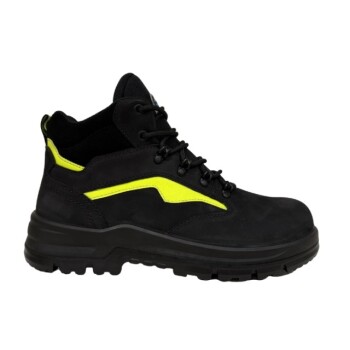
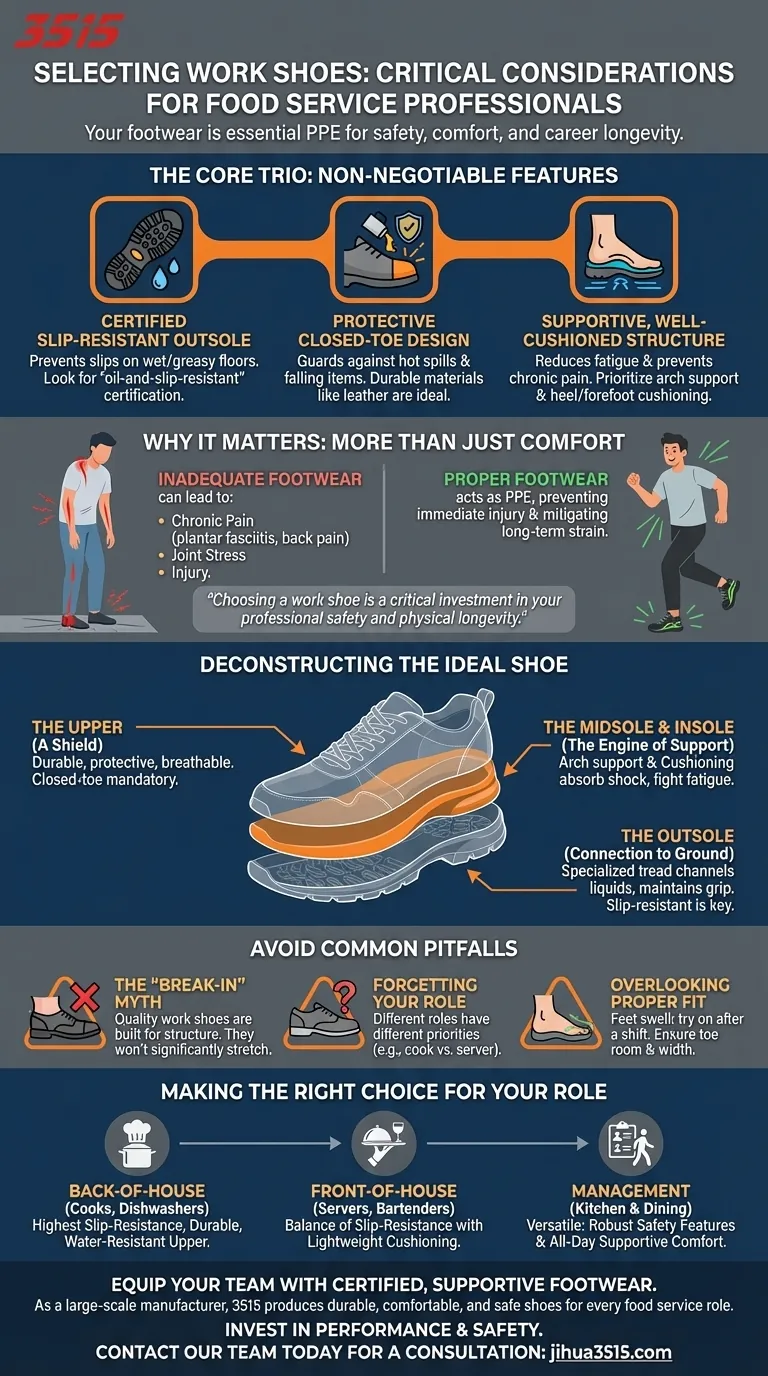
For food service professionals, the most critical features to consider when selecting work shoes are certified slip-resistant outsoles, a protective closed-toe design, and a supportive, well-cushioned structure. These elements are non-negotiable for navigating the demanding and hazardous environments of kitchens and dining rooms safely and comfortably.
Choosing a work shoe is not a matter of comfort alone; it is a critical investment in your professional safety and physical longevity. The right footwear acts as essential personal protective equipment (PPE) that prevents immediate injury and mitigates the long-term strain of standing for extended shifts.
The Foundation: Why Your Shoe is a Career Tool
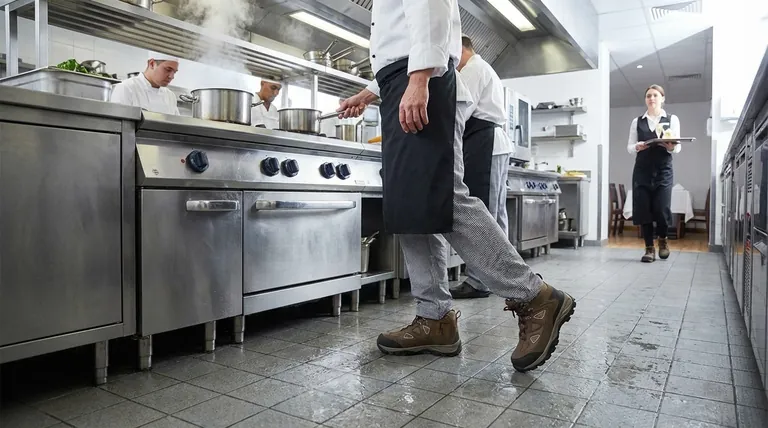
Working in food service means spending countless hours on your feet, often on hard, unpredictable surfaces. The choice of footwear directly impacts not only your daily comfort but also your long-term health and ability to perform your job effectively.
Beyond Daily Comfort: Preventing Chronic Injury
Constant standing and walking on hard floors puts immense stress on your feet, joints, and back. Inadequate footwear can lead to chronic conditions like plantar fasciitis, shin splints, and persistent lower back pain.
A properly supportive shoe distributes your weight evenly and absorbs impact, significantly reducing the cumulative physical toll of a long shift.
The Unseen Dangers: Slips, Spills, and Drops
The kitchen is a high-risk environment. Wet floors from spills, grease splatters, and dropped utensils are everyday hazards.
Your shoes are your first and most important line of defense. A shoe with a certified slip-resistant sole provides the necessary traction, while a durable, closed-toe upper protects your feet from hot liquids and falling objects.
Deconstructing the Ideal Food Service Shoe
To make an informed decision, you must understand the key components of a work shoe and how they contribute to your safety and well-being.
The Outsole: Your Connection to the Ground
The outsole is the part of the shoe that makes direct contact with the floor. For food service, its primary job is to prevent slips.
Look for shoes explicitly labeled as slip-resistant or oil-and-slip-resistant. These outsoles have specialized tread patterns designed to channel liquids away and maintain grip on slick surfaces.
The Midsole and Insole: The Engine of Support
The midsole provides cushioning and stability, while the insole offers direct underfoot comfort. Together, they absorb shock and fight foot fatigue.
Prioritize shoes with substantial arch support that matches your foot type and ample cushioning in both the heel and forefoot. This combination is crucial for dissipating the pressure from standing for hours on end.
The Upper: A Shield of Protection
The upper is the material that covers your foot. It must be durable and protective.
A closed-toe design is mandatory to guard against spills and dropped items. Materials like leather or water-resistant synthetics are ideal for longevity and ease of cleaning, while some breathability helps manage sweat during a hot shift.
Understanding the Trade-offs and Common Pitfalls
Selecting the right shoe involves more than just picking features from a list. Awareness of common misconceptions and trade-offs is key to avoiding a poor investment.
The Myth of the "Break-In" Period
A common mistake is buying a shoe that feels slightly too tight, assuming it will stretch. Unlike casual footwear, quality safety and work shoes are built for structure and will not "break in" significantly over time.
If a shoe is not comfortable from the moment you try it on in the store, it will not become comfortable during a ten-hour shift.
Forgetting Your Specific Role
While all food service shoes need core safety features, your specific job may alter your priorities.
A line cook may prioritize maximum water and heat resistance, while a server who walks several miles per shift might place a higher value on a lightweight design and responsive cushioning.
Overlooking Proper Fit
Proper sizing is paramount. Your feet can swell throughout the day, so it's best to try on shoes in the afternoon or after a shift.
Ensure there is enough room to wiggle your toes and that the shoe is wide enough for your foot. A poor fit negates all other features and can cause blisters, bunions, and other foot ailments.
Making the Right Choice for Your Role
Use your specific job demands as the final filter for your decision.
- If your primary focus is working in the back-of-house (line cook, prep cook, dishwasher): Prioritize shoes with the highest rating for slip-resistance and a durable, water-resistant upper to protect against hot spills and constant moisture.
- If your primary focus is working in the front-of-house (server, bartender, host): Seek a balance of excellent slip-resistance with lightweight cushioning to minimize fatigue from constant walking and standing.
- If your primary focus is management (moving between kitchen and dining room): Look for a versatile shoe that offers robust safety features for the kitchen and all-day supportive comfort for extensive walking.
Ultimately, investing in the right work shoe is a direct investment in your own professional well-being and career endurance.
Summary Table:
| Key Feature | Why It Matters | What to Look For |
|---|---|---|
| Slip-Resistant Outsole | Prevents dangerous slips and falls on wet, greasy floors. | Certified oil-and-slip-resistant treads. |
| Supportive Structure | Reduces foot fatigue and prevents chronic pain from long shifts. | Ample cushioning and proper arch support. |
| Closed-Toe Design | Protects feet from hot spills, sharp objects, and heavy drops. | Durable, protective upper material (e.g., leather). |
| Proper Fit | Ensures all safety features function correctly and prevents blisters. | Comfortable from the first wear, with room for toe movement. |
Ready to equip your team with the right footwear?
As a large-scale manufacturer, 3515 produces a comprehensive range of certified slip-resistant and supportive footwear for distributors, brand owners, and bulk clients. We understand the unique demands of the food service industry, and our production capabilities ensure durable, comfortable, and safe shoes for every role—from kitchen staff to servers.
Invest in footwear that protects your team and supports their performance. Let's discuss your specific needs and how we can deliver the perfect solution for your business.
Contact our team today for a consultation
Visual Guide
Related Products
- Wholesale Durable 6-Inch Work Boots | Custom & Private Label Manufacturer
- Durable Leather Moc Toe Work Boots for Wholesale & Custom Manufacturing
- Durable Goodyear Welt Leather Work Boots for Wholesale & Private Label
- Premium Suede Sport Safety Shoes for Wholesale & Bulk Orders
- Durable High-Traction Canvas Sneakers Wholesale & Custom Manufacturing
People Also Ask
- What are the pros and cons of steel toe work boots? A Guide to Maximum Protection vs. Comfort
- What is the history of steel toe work boots? From German Invention to Modern Safety Standard
- What are the different types of steel toe work boots? Choose the Right Boot for Your Job
- How much weight can steel toe work boots withstand? Unpacking the 3,372 lb. Safety Standard
- Is there any truth to the myth about steel toe boots causing toe injuries upon impact? Debunking Common Safety Concerns