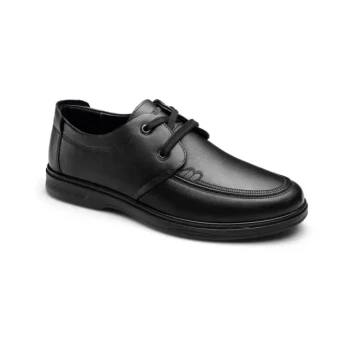
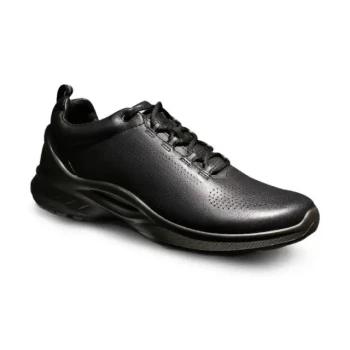
For those with narrow feet, the best shoe styles are those that offer superior adjustability and a structured, slimmer profile. Styles with laces, buckles, or straps, such as classic low-top sneakers or Oxfords, allow you to create a secure, customized fit and prevent your foot from sliding.
The search for the right shoe isn't about finding a single "best style," but rather understanding the key features that provide a secure fit. For narrow feet, adjustability and structure are far more important than any specific shoe category.
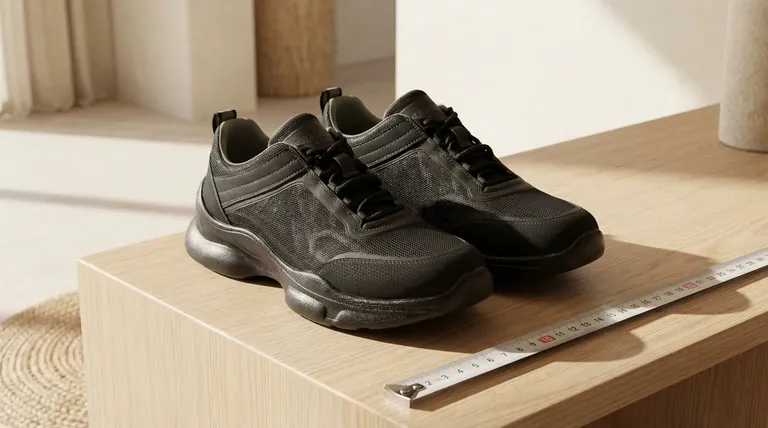
Why Standard Shoes Often Fail Narrow Feet
Finding shoes that fit a narrow foot can be a persistent challenge. The majority of mass-market shoes are built on a standard (B) width last, which can feel cavernous if your foot is slimmer.
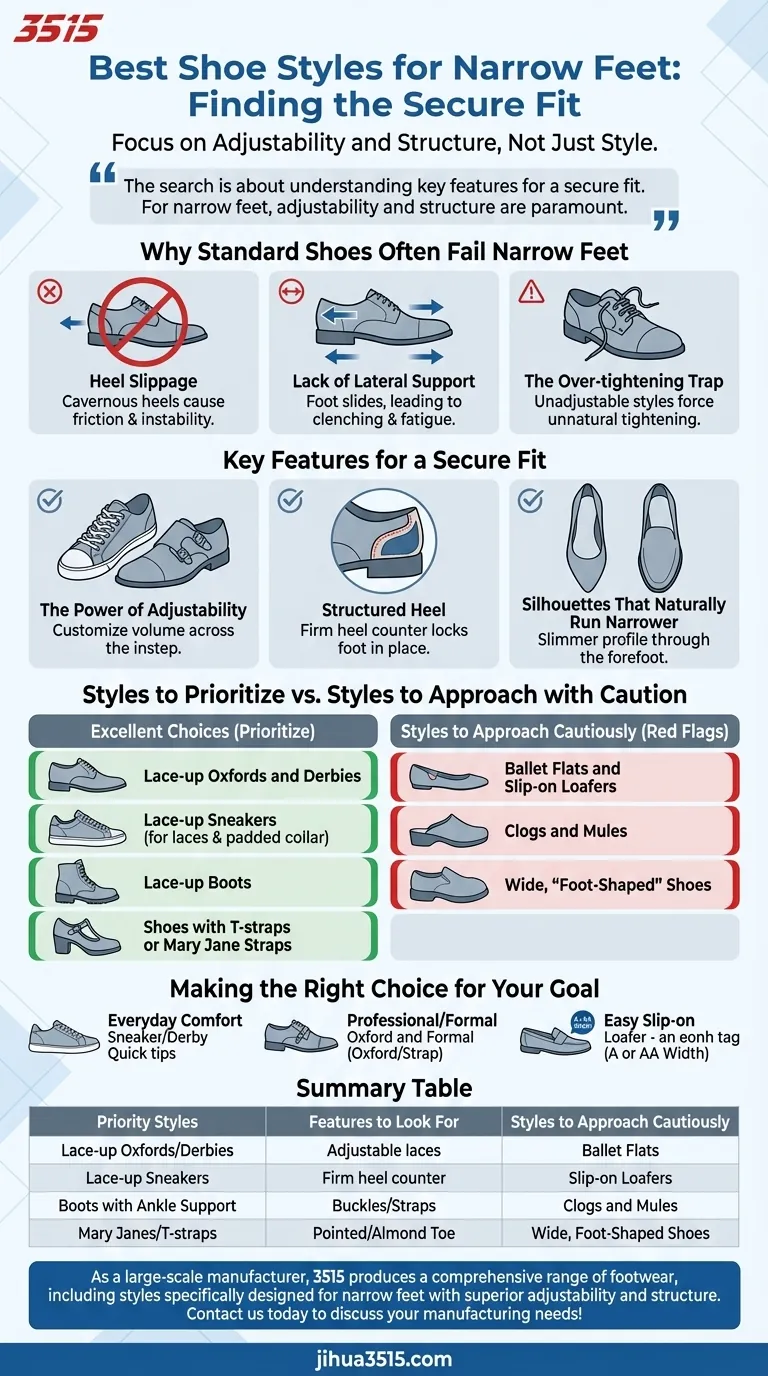
The Problem of Heel Slippage
This is the most common complaint. A heel that is too wide allows your foot to lift out of the shoe with every step, causing friction, blisters, and instability.
Lack of Lateral Support
When a shoe is too wide, your foot can slide from side to side. To compensate, you might unconsciously clench your toes to grip the shoe, leading to foot fatigue and discomfort.
The Over-tightening Trap
With styles like loafers or ballet flats, there's no way to adjust the fit. With poorly fitting lace-ups, you might pull the laces so tight that the eyelets touch, which distorts the shoe's appearance and can create pressure points on the top of your foot.
Key Features for a Secure Fit
Instead of focusing on a brand or style name, train your eye to look for specific structural features that cater to a narrower foot.
The Power of Adjustability
The ability to customize the shoe's volume across the instep is your greatest asset.
- Laces: Classic lace-up designs (like sneakers, Oxfords, and Derbies) are the gold standard for a tailored fit. They allow you to lock your foot securely against the back of the shoe.
- Buckles and Straps: Styles like Mary Janes or monk-strap shoes provide a fixed point of security across the instep, preventing forward slide.
The Importance of a Structured Heel
A well-constructed heel is critical for preventing slippage. Look for a firm heel counter—the stiff material that cups your heel. This structure provides support and helps lock your foot in place.
Silhouettes That Naturally Run Narrower
The overall shape of the shoe matters. Styles with a pointed or almond toe tend to have a slimmer profile through the forefoot compared to shoes with a very wide, round toe box.
Styles to Prioritize vs. Styles to Approach with Caution
Based on these principles, some shoe categories are inherently more suitable for narrow feet than others.
Excellent Choices for Narrow Feet
- Lace-up Oxfords and Derbies: These are ideal for both professional and casual wear due to their superior lacing systems.
- Lace-up Sneakers: The quintessential adjustable shoe. The combination of laces and a padded collar provides a snug, secure fit. This aligns with the "low top" recommendation.
- Most Lace-up Boots: The boot shaft provides additional support around the ankle, further reducing any chance of heel slippage.
- Shoes with T-straps or Mary Jane Straps: These are excellent options for dressier footwear, as the strap performs the critical job of holding your foot securely in the shoe.
Styles That Require a Cautious Approach
- Ballet Flats and Slip-on Loafers: These styles lack any adjustability. Their fit is entirely dependent on the shape of the last they were made on, and they frequently gap at the sides for narrow feet.
- Clogs and Mules: The backless nature of these shoes offers no heel support, making them a very difficult fit for a foot that needs to be held securely.
- Wide, "Foot-Shaped" Shoes: While prized for comfort by those with wider feet, shoes designed with an intentionally roomy, rounded toe box will often feel unstable and loose.
Making the Right Choice for Your Goal
Ultimately, the best shoe is the one that feels secure and comfortable for your intended activity. Use these principles as your guide.
- If your primary focus is everyday comfort and versatility: A classic lace-up sneaker or a well-structured Derby is your most reliable choice.
- If your primary focus is professional or formal wear: Prioritize lace-up Oxfords, monk-strap shoes, or elegant styles with a secure ankle or instep strap.
- If your primary focus is finding an easy slip-on style: Seek out brands that specifically offer narrow (A or AA) width options in their loafers or boots.
Focus on the architecture of the shoe, not just its label, to finally find a fit that feels made for you.
Summary Table:
| Priority Styles | Features to Look For | Styles to Approach Cautiously |
|---|---|---|
| Lace-up Oxfords/Derbies | Adjustable laces | Ballet Flats |
| Lace-up Sneakers | Firm heel counter | Slip-on Loafers |
| Boots with Ankle Support | Buckles/Straps | Clogs and Mules |
| Mary Janes/T-straps | Pointed/Almond Toe | Wide, Foot-Shaped Shoes |
As a large-scale manufacturer, 3515 produces a comprehensive range of footwear for distributors, brand owners, and bulk clients. Our production capabilities encompass all types of shoes and boots, including styles specifically designed for narrow feet with superior adjustability and structure. We can help you source or develop the perfect, secure-fitting footwear for your customers. Contact us today to discuss your manufacturing needs!
Visual Guide
Related Products
- Wholesale Leather Apron Toe Derby Shoes Custom Factory Production
- Premium Lightweight Safety Shoes for Wholesale & Bulk Orders
- Premium Wheat Nubuck Safety Shoes for Bulk Distribution
- Wholesale Breathable Perforated Leather Derby Shoes with Modern Comfort Sole
- Wholesale Durable Camouflage Canvas Shoes with High-Traction Cleated Rubber Sole
People Also Ask
- What historical figure is associated with the Derby shoe? The Earl of Derby's Comfort Revolution
- What are the features and appropriate occasions for wearing derby shoes? A Guide to Versatile Style
- What is the main difference between Derby Shoes and Oxford Shoes? It's All in the Lacing.
- How do Derby shoes fit into business casual attire? Master the Perfect Balance of Professional Style
- What are Derbies and how do they differ from Oxfords? A Guide to Lacing and Formality