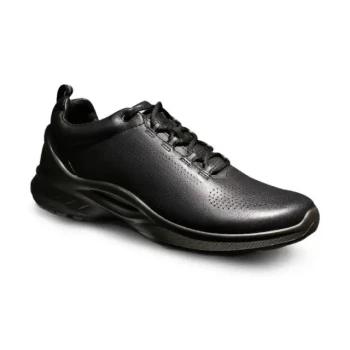
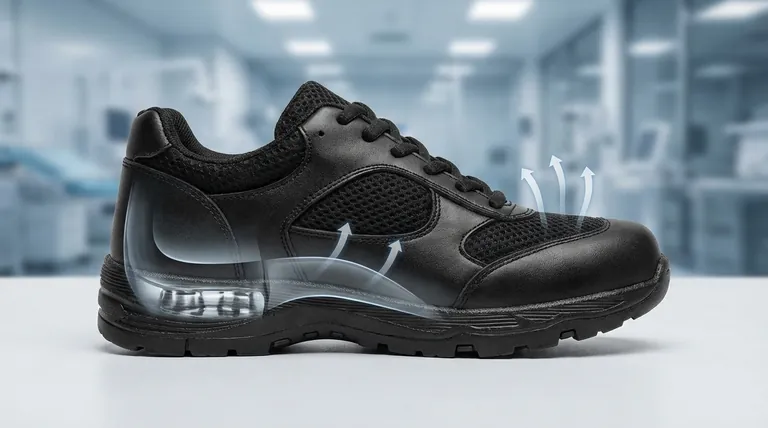
To alleviate heel spur pain, the most effective shoes combine features that cushion the heel, support the foot's structure, and distribute pressure evenly. Key elements to look for are a deep heel cup, substantial cushioning specifically in the heel, and a firm, supportive midsole to prevent the arch from collapsing and straining the plantar fascia.
The goal is not simply to pad the painful spot, but to create a stable environment for the entire foot. Effective footwear offloads stress from the heel by controlling motion and supporting the foot's natural arch, which is the true source of relief.
The Core Principles: Cushioning, Support, and Alignment
Understanding why certain features work is crucial for finding lasting relief. The right shoe addresses the underlying biomechanical issues that cause heel spur pain, which is almost always linked to plantar fasciitis.
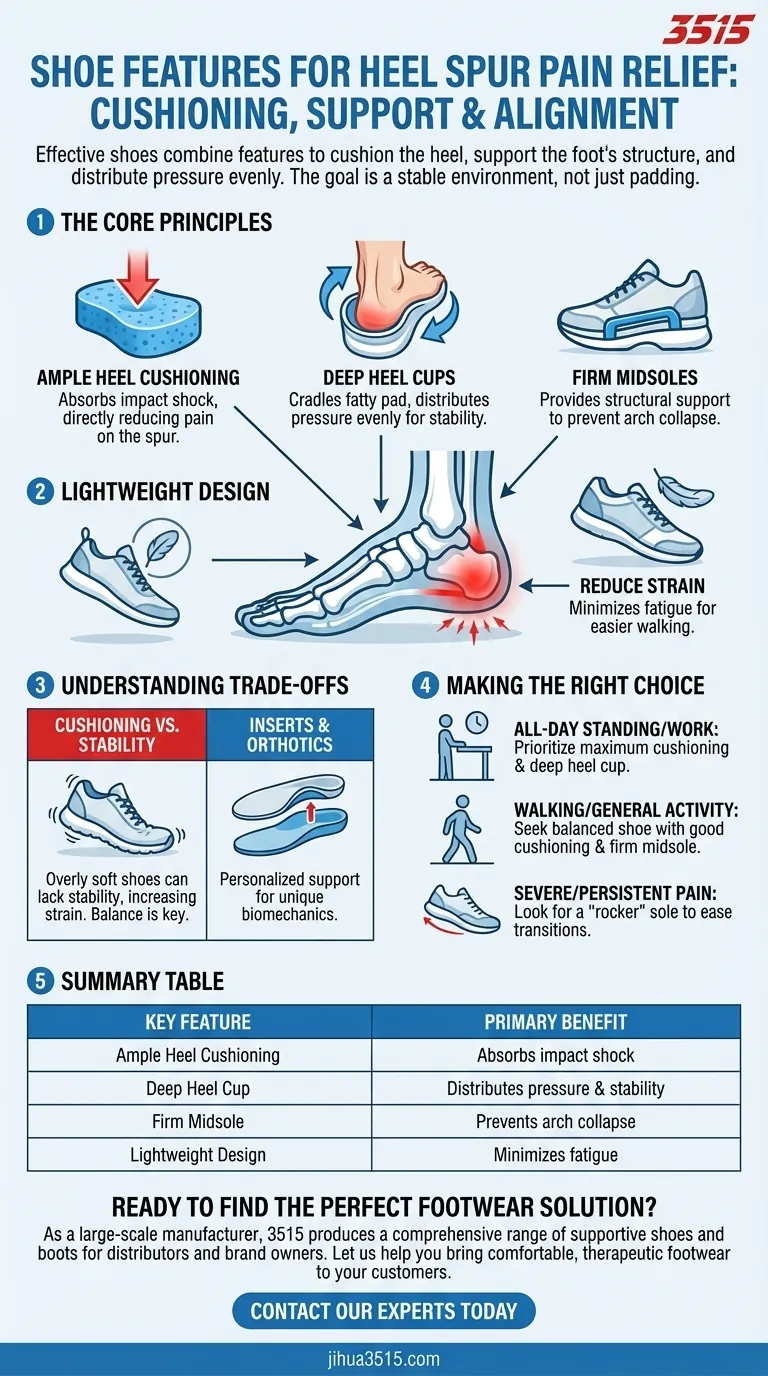
Ample Cushioning to Absorb Impact
The most direct way to reduce pain is to absorb the shock that travels through your heel with every step. Extra cushioning, especially in the heel, acts as a shock absorber.
This feature directly lessens the impact force on the bony spur and the inflamed plantar fascia tissue connected to it.
Deep Heel Cups for Stability
A deep heel cup physically cradles the fatty pad under your heel. This prevents the pad from flattening out under your body weight.
By containing this natural cushioning, the shoe helps distribute pressure more evenly across the entire heel instead of concentrating it on one painful point.
Firm Midsoles for Structural Support
While cushioning feels good, support is what prevents the problem from getting worse. A firm midsole prevents the shoe from bending or twisting too easily in the middle.
This structural integrity supports your arch, reducing the strain on the plantar fascia—the ligament that connects your heel to your toes and is the root cause of the pain.
Lightweight Design to Reduce Strain
Every step requires you to lift your shoe. A heavy shoe adds to the cumulative workload on your feet and leg muscles over the course of a day.
Choosing a lightweight design reduces this overall strain, making it easier to walk without fatiguing the structures that support your heel.
Understanding the Trade-offs
Choosing the right shoe involves balancing competing needs. No single feature is a magic bullet, and what works for one person may not work for another.
Cushioning vs. Stability
The softest, most cushioned shoe is not always the best. Overly soft shoes can lack stability, allowing your foot to pronate or roll inward excessively.
This instability can increase the strain on your plantar fascia, counteracting the benefits of the cushioning. The ideal shoe has a cushioned heel combined with a firm, supportive arch and midfoot.
The Role of Inserts and Orthotics
Even the best shoe may not perfectly match your foot's unique biomechanics. Shoes with removable insoles allow you to add your own arch supports or custom orthotics.
This provides a personalized level of support that can be more effective than the shoe's built-in features alone.
Secondary Features for Overall Comfort
While not primary solutions for pain, other features contribute to a better overall experience. Breathable materials keep your feet dry and prevent blisters.
Similarly, a slip-resistant sole enhances stability and confidence, preventing sudden movements or slips that could jar the heel and cause a sharp spike in pain.
Making the Right Choice for Your Goal
Select your footwear based on your primary activity, as the demands on your feet will change accordingly.
- If your primary focus is all-day standing or work: Prioritize maximum heel cushioning and a deep, stable heel cup to distribute sustained pressure.
- If your primary focus is walking or general activity: Seek a balanced shoe with good cushioning, a firm midsole for support, and a lightweight design to minimize fatigue.
- If you are managing severe or persistent pain: Look for a shoe with a "rocker" sole, which is curved to reduce bending stress on the foot and ease the transition from heel-strike to toe-off.
Ultimately, finding the right shoe is about creating a protective and supportive environment that offloads stress and gives your heel the chance to heal.
Summary Table:
| Key Feature | Primary Benefit |
|---|---|
| Ample Heel Cushioning | Absorbs impact shock to directly lessen pain on the heel spur. |
| Deep Heel Cup | Cradles the heel's fat pad to distribute pressure evenly and enhance stability. |
| Firm Midsole | Provides structural support to prevent arch collapse and reduce strain on the plantar fascia. |
| Lightweight Design | Minimizes overall foot and leg fatigue during daily activities. |
Ready to find the perfect footwear solution for your heel spur pain?
As a large-scale manufacturer, 3515 produces a comprehensive range of footwear designed for distributors, brand owners, and bulk clients. Our production capabilities encompass all types of supportive shoes and boots, engineered with the precise features—like deep heel cups and firm midsoles—that provide lasting relief.
Let us help you bring comfortable, therapeutic footwear to your customers. Contact our experts today to discuss your manufacturing needs.
Visual Guide
Related Products
- Wholesale Anti-Smash & Puncture-Proof Safety Shoes Custom Manufacturing for Brands
- Premium Suede Sport Safety Shoes for Wholesale & Bulk Orders
- Wholesale Durable Safety Boots | Custom Steel Toe & Puncture-Resistant Manufacturing
- Durable Steel Toe Safety Boots Wholesale & Custom Manufacturing
- Advanced KPU Athletic Safety Shoe with Steel Toe Cap Anti-Slip Rotary Lacing System
People Also Ask
- Why do operations involving heavy fruit bunches and 'gancu' require anti-smash and anti-puncture safety boots?
- What makes a safety shoe a safety shoe? Essential Protection for Hazardous Work
- What are the advantages of water-based polyurethane spray coatings for safety shoe slip resistance? Enhanced Traction
- What additional features can a good safety shoe offer? Maximize Protection and Comfort
- How do safety shoes and tactical boots support physiological maintenance? Protect Your Health in Toxic Environments