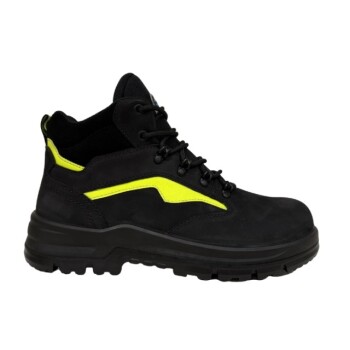
For electricians and HVAC technicians, the most important safety features in a work boot are a certified Electrical Hazard (EH) rating, a non-conductive safety toe (preferably composite), and slip-resistant outsoles. These features work together to provide comprehensive protection against the distinct hazards of these trades, from live circuits to unpredictable surfaces.
The central challenge is selecting a boot that addresses two different types of risk simultaneously: the invisible threat of electric shock and the physical dangers of impact and slips. The best choice is not just a protective boot, but one with the correct type of protection for a high-voltage environment.
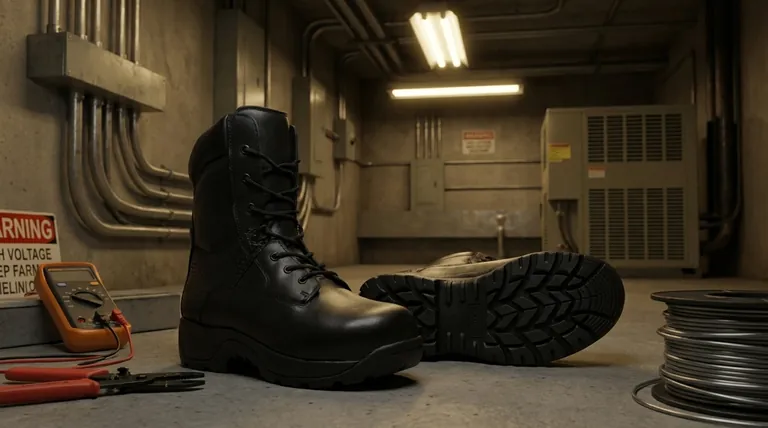
The Primary Defense: Electrical Hazard (EH) Protection
The single most critical feature for anyone working near live electrical currents is the EH rating. This is a non-negotiable safety standard.
What is an EH Rating?
An Electrical Hazard (EH) rating is an official safety standard. It certifies that the footwear has been tested to withstand the application of 18,000 volts at 60 Hz for one minute with no current flow or leakage current.
How Non-Conductive Materials Work
EH-rated boots are constructed with non-conductive materials, primarily in the sole and heel. These materials, like rubber, prevent the wearer's foot from completing an electrical circuit to the ground.
Think of the boot's outsole as the primary insulator between you and a potentially energized floor. This feature is designed to be a secondary source of protection in case you accidentally step on a live wire.
The Safety Toe Dilemma: Composite vs. Steel
While safety toes protect against falling objects and compression, the material they are made from is a critical consideration for electricians and HVAC technicians.
The Case for Composite Toes
For these trades, composite safety toes are the superior choice. They are made from non-metallic materials like carbon fiber, plastic, or Kevlar, meaning they do not conduct electricity.
This provides an additional layer of defense against electrical shock. As a secondary benefit, composite toes are also lighter than steel, which reduces fatigue over a long workday.
When Steel Toes Are Acceptable
Traditional steel toes can be used, but only if they are properly designed for this work. The steel component must be fully encased and cannot be exposed on the outside of the boot or be in contact with the foot on the inside.
If the steel is exposed, it could inadvertently make contact with an energized source and conduct electricity, negating the boot's other safety features.
Stability and Traction: The Outsole's Role
The environments for electricians and HVAC technicians are incredibly varied, from clean residential basements to slippery mechanical rooms or unfinished construction sites.
The Mandate for Slip Resistance
A slip-resistant outsole is essential for maintaining a secure footing on wet, smooth, or uneven surfaces. This helps prevent the falls that can lead to serious injury or cause you to make contact with a live electrical component.
The Importance of Oil Resistance
Many HVAC technicians work in mechanical rooms where oils and lubricants may be present on the floor. An oil-resistant sole will not degrade when exposed to these substances and will maintain its traction.
Practicality of Non-Marking Soles
For professionals who frequently enter finished homes and businesses, a non-marking outsole is a practical feature. It prevents leaving scuffs and black marks on client floors, reflecting a higher level of professionalism.
Understanding the Trade-offs
Choosing the perfect boot involves balancing competing needs. Being aware of these compromises allows you to make a more informed decision.
Protection vs. Agility
Heavily armored, highly protective boots can sometimes be stiff and heavy. HVAC technicians, in particular, often require more flexibility and ease of movement for crouching and climbing. Look for a boot that provides certified protection in a lightweight design.
Cost vs. Certification
A boot might be marketed as "safe for electrical work," but only an official EH rating guarantees it has passed standardized testing. Investing in certified footwear is a critical part of your personal protective equipment (PPE), not a place to cut corners.
Making the Right Choice for Your Role
Use your specific job demands to guide your final selection.
- If your primary focus is electrical work: Prioritize a certified EH rating above all else and strongly prefer a boot with a composite safety toe.
- If your primary focus is HVAC service: Balance a required EH rating with features that support mobility, such as a lightweight design and excellent slip resistance for varied surfaces.
- If you work mainly in new construction: Your need for a robust safety toe and deep-tread, slip-resistant outsoles is just as high as your need for an EH rating.
Ultimately, your work boots are one of the most important tools you own, providing a constant defense against the daily hazards of your profession.
Summary Table:
| Essential Safety Feature | Why It's Critical for Electricians & HVAC Techs |
|---|---|
| EH (Electrical Hazard) Rating | Certified protection against live electrical circuits (18,000 volt test). |
| Composite Safety Toe | Non-conductive protection from impacts without the risk of electrical shock. |
| Slip & Oil-Resistant Outsole | Prevents falls on wet, oily, or uneven surfaces common in mechanical rooms. |
| Non-Marking Sole | Maintains professionalism by not scuffing client floors in homes and businesses. |
Equip your team with the right protection from a trusted manufacturer.
As a large-scale manufacturer, 3515 produces a comprehensive range of certified safety footwear for distributors, brand owners, and bulk clients. Our production capabilities encompass all types of EH-rated boots with composite toes, superior slip resistance, and durable designs built for the demands of electrical and HVAC work.
Let's discuss your specific needs and how we can deliver high-quality, safe, and reliable work boots for your customers.
Contact our team today for a consultation
Visual Guide

Related Products
- Durable Leather Moc Toe Work Boots for Wholesale & Custom Manufacturing
- Wholesale Durable 6-Inch Work Boots | Custom & Private Label Manufacturer
- Durable Goodyear Welt Leather Work Boots for Wholesale & Private Label
- Durable Leather Work Boots Wholesale Manufacturer & Custom Factory
- Heavy-Duty Waterproof Nubuck Safety Boots Safety Shoes for Bulk Supply
People Also Ask
- What are moc toe work boots designed for? Superior Comfort and Mobility for Tradespeople
- What are the key features to look for when purchasing moc toe boots? A Guide to Durability & Fit
- How did moc toe boots originate? A Legacy of Workwear Durability and Style
- What clothing items complement the Outdoorsman/Heritage Look with moc toe boots? Build a Timeless, Rugged Wardrobe
- What types of outfits can moc toe boots be worn with? Versatile Style Guide