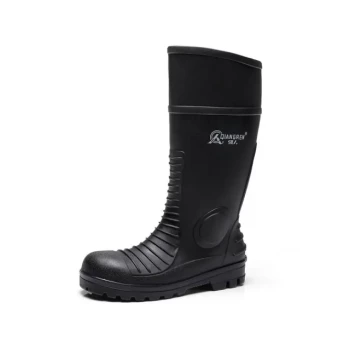
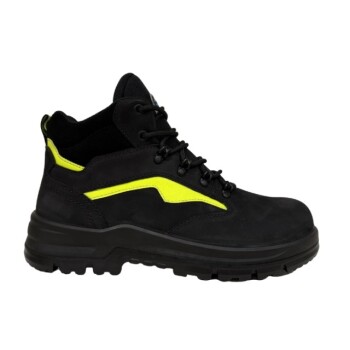
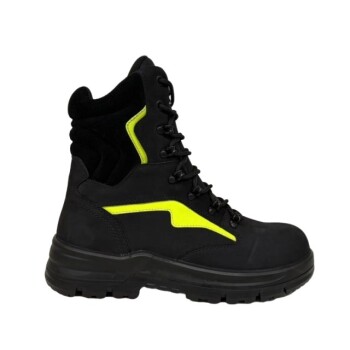
When choosing Wellington work boots, the most critical safety considerations are the type of protective toe cap, the design and material of the outsole for slip resistance, and any specialized ratings required for your specific work environment, such as electrical hazard protection. These features must align directly with the known risks of your job site, as mandated by standards from organizations like OSHA and ASTM.
The safest Wellington boot isn't the one with the most features; it's the one with the right features for your specific workplace hazards. Your primary goal is to match the boot's protective capabilities directly to the risks you face daily.
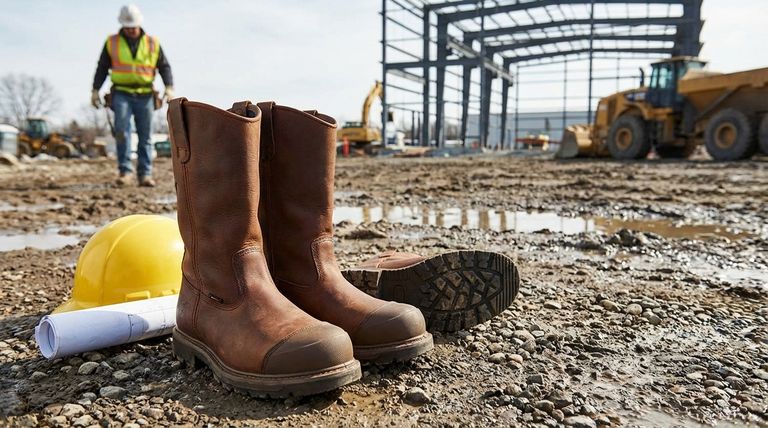
Protection from Physical Impacts
The most common workplace hazards involve impacts from above and punctures from below. Your boots are the first line of defense.
Protective Toe Caps
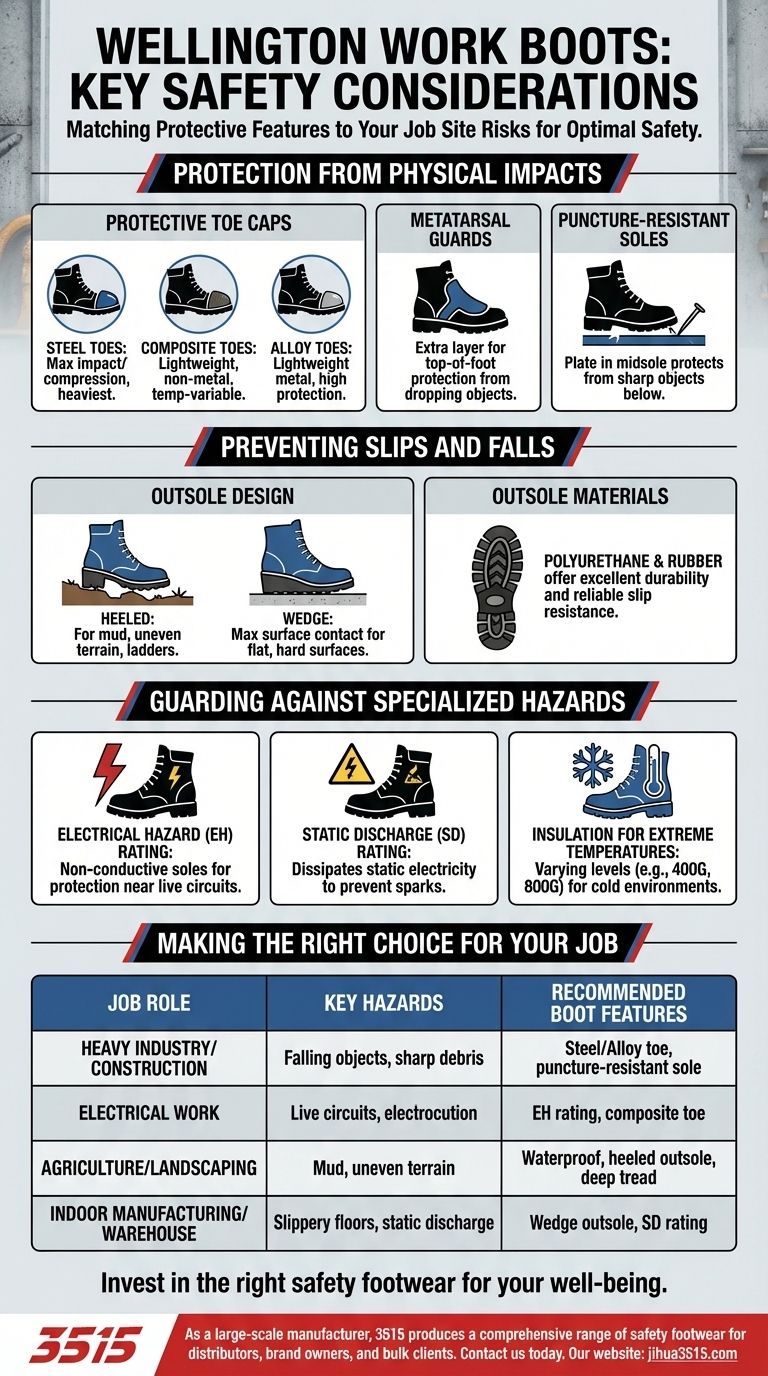
A reinforced toe cap is non-negotiable in environments with risks from falling objects or compression. The main types differ in material and weight.
- Steel Toes are the traditional standard, offering maximum protection against impact and compression. They are often the heaviest option.
- Composite Toes are made from non-metal materials like Kevlar, carbon fiber, or plastic. They are lighter than steel, don't conduct electricity, and are better for temperature-variable environments.
- Alloy Toes are crafted from lightweight metals like aluminum or titanium, providing high protection at a lower weight than steel, but often at a higher cost.
Metatarsal Guards
For jobs with a high risk of objects dropping on the top of your foot, a metatarsal guard provides an essential extra layer of protection that extends beyond the toe cap.
Puncture-Resistant Soles
If you work around nails, scrap metal, or other sharp objects, a puncture-resistant plate in the midsole is crucial to protect the underside of your foot from penetration.
Preventing Slips and Falls
Traction is a fundamental safety feature determined by the outsole's design and material.
Outsole Design
The tread pattern directly impacts stability on different surfaces.
- A Heeled Outsole provides excellent traction in muddy, uneven, or outdoor terrain and is ideal for climbing ladders.
- A Wedge Outsole has a flatter, more uniform sole that offers maximum surface contact, making it perfect for flat, hard surfaces like concrete or asphalt, especially when wet.
Outsole Materials
The material composition dictates grip and longevity. Look for outsoles made of polyurethane or rubber, as both offer excellent durability and reliable slip resistance.
Guarding Against Specialized Hazards
Many job sites have invisible dangers that require specific boot certifications.
Electrical Hazard (EH) Rating
If you work near live electrical conductors or circuits, EH-rated boots are essential. They are designed with non-conductive soles and heels to provide a secondary source of protection against electrocution.
Static Discharge (SD) Rating
In environments with sensitive electronics or flammable materials, Static Discharge (SD) boots are required. They are designed to dissipate static electricity from your body to the ground, preventing a sudden spark.
Insulation for Extreme Temperatures
For work in cold environments, insulated boots are a matter of safety, not just comfort. Insulation levels, often measured in grams (e.g., 400G or 800G), provide varying degrees of protection against cold-related injuries.
Understanding the Trade-offs
Choosing the right boot always involves balancing competing factors. There is no single "best" boot for every situation.
Protection vs. Weight
Steel toes offer maximum impact resistance but add significant weight, which can cause fatigue over a long shift. Composite toes are lighter but may have a bulkier profile to achieve the same safety rating.
Sole Design vs. Environment
A deep-lugged, heeled outsole that excels in mud will be less stable and comfortable on a flat concrete floor. A wedge sole that is ideal for a factory floor will quickly clog with mud and lose traction outdoors.
Specialized Features vs. Cost
Boots with multiple ratings (e.g., EH, SD, insulated, puncture-resistant) offer comprehensive protection but come at a higher price. Over-investing in features you don't need is inefficient.
Making the Right Choice for Your Job
Tailor your selection to your most common tasks and biggest risks.
- If your primary focus is heavy industry or construction: Prioritize a steel or alloy toe for maximum impact protection and a puncture-resistant sole.
- If your primary focus is electrical work: An EH-rated boot with a composite toe is your non-negotiable starting point.
- If your primary focus is agriculture or landscaping: Choose a waterproof boot with a heeled, deep-tread outsole for superior grip on mud and uneven ground.
- If your primary focus is indoor manufacturing or warehouse work: A wedge outsole offers the best slip resistance on flat surfaces, and an SD rating may be necessary.
Ultimately, investing in the right safety footwear is a direct investment in your own well-being on the job.
Summary Table:
| Job Role | Key Hazards | Recommended Boot Features |
|---|---|---|
| Heavy Industry/Construction | Falling objects, sharp debris | Steel/Alloy toe, puncture-resistant sole |
| Electrical Work | Live circuits, electrocution | EH rating, composite toe |
| Agriculture/Landscaping | Mud, uneven terrain | Waterproof, heeled outsole, deep tread |
| Indoor Manufacturing/Warehouse | Slippery floors, static discharge | Wedge outsole, SD rating |
As a large-scale manufacturer, 3515 produces a comprehensive range of safety footwear for distributors, brand owners, and bulk clients. Our production capabilities encompass all types of Wellington boots, ensuring you get the exact safety features—from protective toes and specialized ratings to durable outsoles—that match your specific work hazards. Contact us today (#ContactForm) to discuss your needs and benefit from our expertise in creating reliable, compliant safety footwear.
Visual Guide
Related Products
- Durable Waterproof Rain Boots | Custom Manufacturer for Wholesale & Brands
- Durable Leather Work Boots for Wholesale & Custom Manufacturing
- Durable Goodyear Welt Leather Work Boots for Wholesale & Private Label
- Durable Leather Work Boots Wholesale Manufacturer & Custom Factory
- Durable Leather Work Boots for Wholesale & Custom OEM Manufacturing
People Also Ask
- What are the main materials for waterproof rain boots? Choose the Right Material for Durability & Comfort
- What is the overall recommendation for choosing rain boot materials? A Guide to Rubber vs. PVC
- How does boot height affect waterproofing? Choose the Right Height for Ultimate Protection
- Why are rain boots more flexible and comfortable than snow boots? The Key Differences Explained
- What are the best types of shoes for different gardening conditions? Find Your Perfect Match.