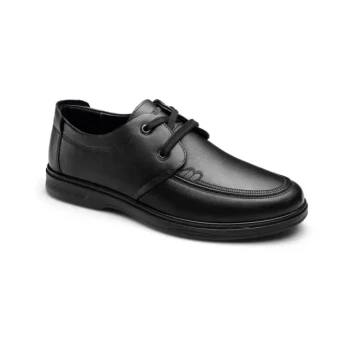
Industrial-grade corrugated boxes and high-tenacity wrapping paper serve as the primary defensive layer in the logistics of professional footwear. They function as an integrated system designed to provide physical protection against compression, friction, and environmental contaminants, ensuring the product maintains its factory condition from the assembly line to the customer.
Core Takeaway: Beyond simple containment, these industrial materials are essential for preventing structural deformation and surface damage while satisfying modern technical requirements for recyclable, sustainable manufacturing.
The Mechanics of Physical Protection
Resisting Compression Deformation
Industrial-grade corrugated boxes are engineered to withstand significant vertical pressure. This structural rigidity prevents the packaging from collapsing when stacked in warehouses or shipping containers, ensuring the footwear inside is not crushed or misshapen.
Mitigating Friction Damage
High-tenacity wrapping paper acts as a crucial buffer between the footwear and the rigid box walls. This protective layer prevents the shoes from rubbing against the corrugated material or each other, eliminating scuffs and abrasions caused by vibration during transit.
Blocking Environmental Contaminants
Together, the box and wrapping paper create a sealed environment that isolates the product from external elements. This barrier effectively keeps the footwear free from dust accumulation and mitigates moisture ingress that could damage sensitive materials like leather or suede.
Technical Compliance and Sustainability
Ensuring Optimal Product Condition
The ultimate role of these materials is to guarantee the product reaches the customer in optimal condition. By preventing physical shifting and environmental exposure, the packaging upholds the manufacturer's quality standards throughout the distribution process.
Meeting Sustainability Standards
Using paper-based packaging aligns with technical requirements for sustainable manufacturing. Because these materials are recyclable, they allow companies to protect their goods robustly while adhering to environmental protocols and reducing waste.
Understanding the Trade-offs
Moisture Resistance vs. Waterproofing
While industrial-grade materials prevent moisture ingress, they are generally not fully waterproof. In scenarios involving extreme weather or submersion, paper-based packaging may eventually absorb water, potentially compromising its structural integrity unlike plastic alternatives.
Cost vs. Protection
High-tenacity paper and industrial-grade corrugation represent a higher material cost than standard cardboard or tissue. However, this investment is a calculated trade-off to avoid the much higher costs associated with product returns due to damage.
Making the Right Choice for Your Logistics
When selecting packaging for professional footwear, consider your primary objective:
- If your primary focus is Physical Integrity: Prioritize corrugated boxes with high crush test ratings to prevent compression deformation during heavy stacking.
- If your primary focus is Surface Preservation: Ensure you use high-tenacity wrapping paper to eliminate friction damage and maintain a pristine finish.
- If your primary focus is Sustainability: Select materials that are certified recyclable to meet technical environmental standards without sacrificing protection.
High-quality packaging is not just a container; it is an engineering decision that preserves the value of the product inside.
Summary Table:
| Feature | Industrial Packaging Role | Primary Benefit |
|---|---|---|
| Corrugated Boxes | Resisting Vertical Pressure | Prevents crushing and structural deformation |
| Wrapping Paper | High-Tenacity Buffer Layer | Eliminates scuffs, abrasions, and friction |
| Environmental Seal | Moisture & Dust Barrier | Keeps footwear pristine and factory-fresh |
| Sustainability | Recyclable Material | Meets technical environmental & CSR standards |
Secure Your Global Footwear Logistics with 3515
Preserving the integrity of your product is our priority. As a large-scale manufacturer serving distributors and brand owners, 3515 offers comprehensive production capabilities for all footwear types, anchored by our flagship Safety Shoes series. Our extensive portfolio covers work and tactical boots, outdoor shoes, training shoes, and sneakers, as well as Dress & Formal shoes to meet diverse bulk requirements.
From high-performance engineering to industrial-grade packaging that ensures every pair arrives in optimal condition, we provide the reliability your brand deserves. Partner with 3515 today—Contact us to discuss your bulk manufacturing needs!
References
- Alexandra Bodoga, Dorina Nicolina Isopescu. Environmental Impact of Footwear Using Life Cycle Assessment—Case Study of Professional Footwear. DOI: 10.3390/su16146094
This article is also based on technical information from 3515 Knowledge Base .
Related Products
- Wholesale Lightweight Tactical Boots Custom Manufacturer for Desert & Combat Use
- Wholesale Leather Apron Toe Derby Shoes Custom Factory Production
- Wholesale Comfortable Business Casual Shoes Custom Manufacturing
- Custom Manufactured Air Cushion Leather Business Shoes for Wholesale
- Wholesale Durable Camo Canvas Shoes with High-Traction Rubber Soles
People Also Ask
- What are the common types of combat boots? Find the Right Boot for Your Mission
- What specialized protections do tactical boots offer? Maximize Endurance with High-Performance Footwear
- How does additive manufacturing equipment reduce environmental risks? Sustainable Tactics for Modern Footwear Production
- What are the main construction similarities between tactical boots and tactical sneakers? Built for Performance & Durability
- How is the compatibility of polymer materials demonstrated in smart footwear? Enhancing Tactical & Training Performance