
"Regular shoes" is a broad term that encompasses the vast majority of conventional footwear designed for everyday activities. These typically include common styles like athletic sneakers, casual shoes, formal dress shoes, and work boots.
The defining characteristic of a "regular shoe" is not its style, but its fundamental structure: a raised heel, a supportive and often rigid sole, and a toe box that tapers toward the front. This design philosophy prioritizes cushioning and support over natural foot movement.
The Core DNA of a Regular Shoe
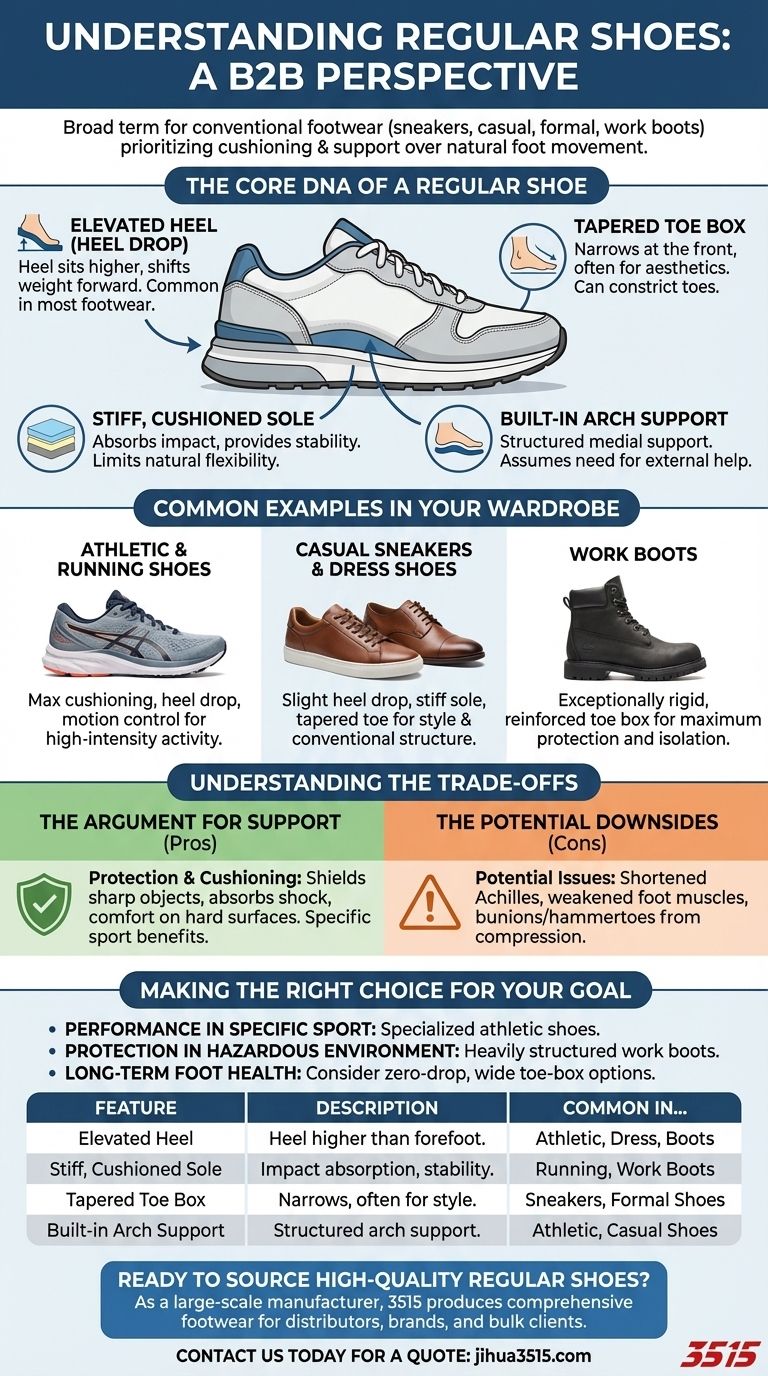
While styles vary dramatically, most conventional shoes share a few key structural elements. Understanding these components is crucial to understanding what makes a shoe "regular."
The Elevated Heel (Heel Drop)
Nearly all regular shoes feature some degree of heel drop, meaning the heel sits higher than the forefoot.
This elevation can be dramatic in running shoes and high heels or subtle in casual sneakers. It shifts your body weight slightly forward and is a hallmark of conventional footwear design.
The Stiff, Cushioned Sole
The sole of a regular shoe is engineered to absorb impact and provide stability.
This is often achieved with layers of foam (like EVA), rubber, and sometimes a rigid shank. This design protects the foot from the ground but also limits its natural flexibility and sensory feedback.
The Tapered Toe Box
A vast majority of regular shoes narrow at the front, creating a tapered or pointed shape.
This design is often driven by aesthetics and does not match the natural, wider shape of human toes when splayed. It can constrict the toes and limit their ability to function properly.
Built-in Arch Support
Many conventional shoes include structured arch support built directly into the footbed.
The goal is to support the foot's medial arch, preventing it from collapsing inward (pronation). This feature assumes the foot needs external support to maintain its shape.
Common Examples in Your Wardrobe
These structural principles are visible across the most common categories of footwear.
Athletic & Running Shoes
These are the archetype of a supportive regular shoe. They often feature a significant heel drop, maximum cushioning, and motion control features, all designed to manage impact during high-intensity activity.
Casual Sneakers & Dress Shoes
Even your daily-wear sneakers and formal office shoes fit this model. They almost always have a slight heel drop, a relatively stiff sole, and a toe box that narrows at the front, prioritizing style and conventional structure over natural foot shape.
Work Boots
Work boots represent an extreme example. They are built with exceptionally rigid, often puncture-proof soles and reinforced toe boxes for maximum protection, completely isolating the foot from the environment.
Understanding the Trade-offs
The design of a regular shoe is based on a specific philosophy with both intended benefits and potential downsides.
The Argument for Support
The core benefit of a regular shoe is protection and cushioning. The thick sole shields you from sharp objects and absorbs shock, which can provide significant comfort, especially on hard, artificial surfaces. For specific sports, this cushioning can reduce stress on joints.
The Potential Downsides
However, this structure can also create issues. A constantly elevated heel can shorten the Achilles tendon, a rigid sole can weaken the small muscles within the foot, and a narrow toe box can lead to conditions like bunions and hammertoes by compressing the foot's natural structure.
Making the Right Choice for Your Goal
Understanding this framework allows you to select footwear that aligns with your specific needs.
- If your primary focus is performance in a specific sport: A specialized regular athletic shoe is often engineered to handle the unique forces of that activity.
- If your primary focus is protection in a hazardous environment: Heavily structured work boots and safety shoes are the appropriate and necessary choice.
- If your primary focus is long-term foot health and natural movement: You may want to look beyond "regular shoes" to options with a zero-drop heel and a wide, foot-shaped toe box.
Ultimately, knowing the design principles of a regular shoe empowers you to make a more informed choice about what you put on your feet every day.
Summary Table:
| Feature | Description | Common in... |
|---|---|---|
| Elevated Heel (Heel Drop) | Heel sits higher than the forefoot. | Athletic shoes, dress shoes, boots |
| Stiff, Cushioned Sole | Designed for impact absorption and stability. | Running shoes, work boots |
| Tapered Toe Box | Toe area narrows, often for style. | Most sneakers, formal shoes |
| Built-in Arch Support | Structured support for the foot's arch. | Many athletic and casual shoes |
Ready to source high-quality regular shoes for your business?
As a large-scale manufacturer, 3515 produces a comprehensive range of footwear for distributors, brand owners, and bulk clients. Our production capabilities encompass all types of shoes and boots, from athletic sneakers and durable work boots to stylish casual and formal footwear.
We combine expert craftsmanship with scalable production to meet your specific needs. Contact us today to discuss your requirements and get a quote!
Visual Guide
Related Products
- Durable Canvas Work Shoes with Rubber Lug Sole | Wholesale Manufacturer
- Durable Leather Work Boots for Wholesale & Custom OEM Manufacturing
- Durable Leather Work Boots for Wholesale & Custom Manufacturing
- Durable Goodyear Welt Leather Work Boots for Wholesale & Private Label
- Durable Leather Work Boots Wholesale Manufacturer & Custom Factory
People Also Ask
- What are the properties of canvas as a shoe material? A Guide to Lightweight Comfort & Style
- Why is the selection of high-strength fabric materials necessary in the production of canvas shoes and training shoes?
- What types of jobs are canvas work boots suitable for? Ideal for Light-Duty, High-Mobility Roles
- Can canvas shoes be worn in rainy conditions? The Truth About Water Resistance
- What are the functional advantages of choosing rubber soles over leather soles for work boots? Superior Safety & Durability















