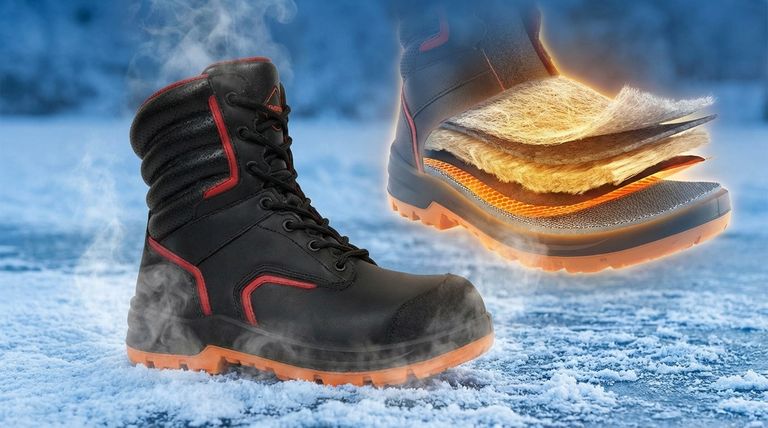
In short, the primary role of insulation in winter boots is to trap your body's heat, preventing it from escaping into the cold environment. This process is crucial for keeping your feet warm, which directly impacts your overall body temperature, comfort, and well-being during winter conditions.
The challenge with winter boot insulation isn't just about maximizing warmth; it's about achieving thermal regulation. The right insulation keeps your feet warm in freezing temperatures without causing them to overheat and sweat during activity, which would ultimately make you colder.
The Core Function: How Insulation Retains Heat
Insulation works by creating a thermal barrier between your foot and the outside cold. This isn't magic; it's a simple principle of trapping air.
Trapping Air as a Barrier
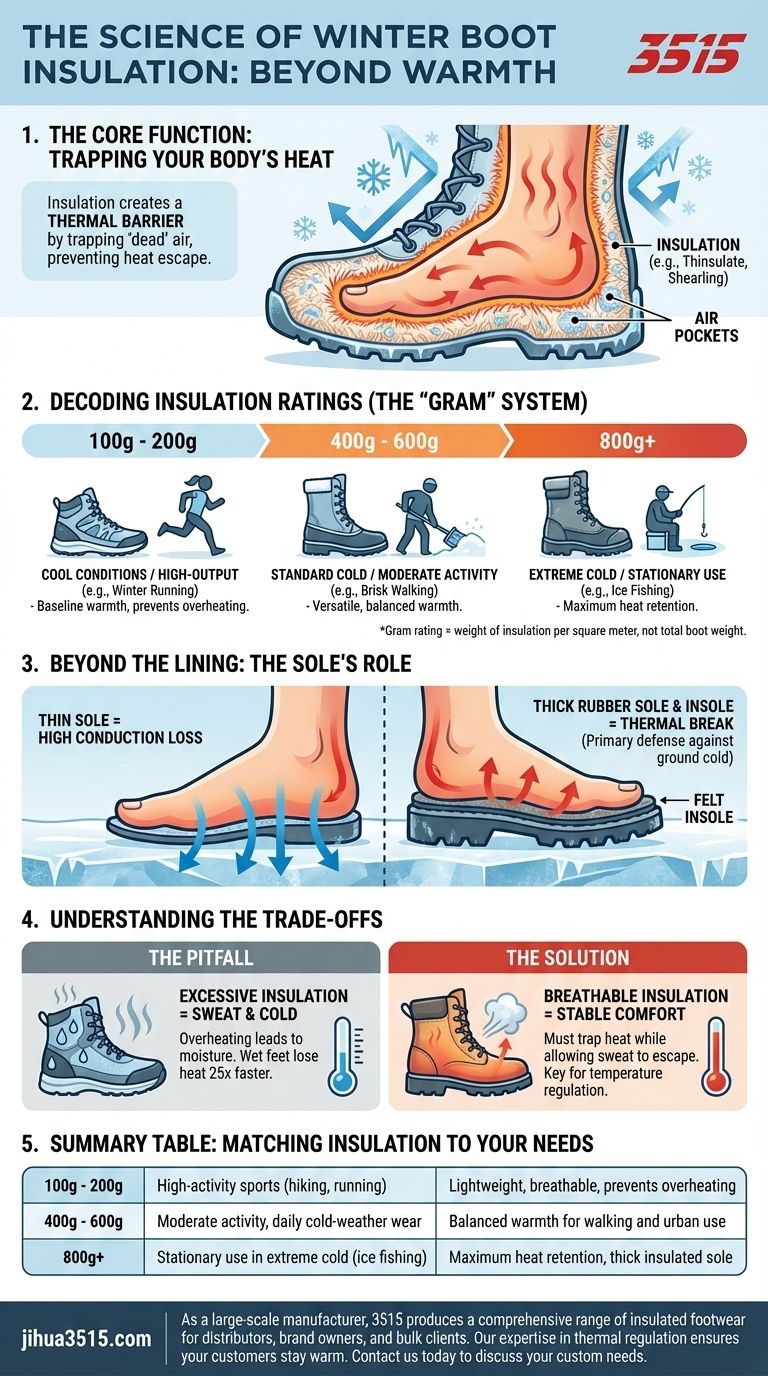
Insulation consists of a thick layer of material, like Thinsulate or shearling, filled with countless tiny fibers. These fibers create small air pockets. This trapped, "dead" air is a poor conductor of heat, dramatically slowing the rate at which warmth from your foot escapes the boot.
Why Foot Warmth Is So Important
Your feet play a significant role in regulating your body's core temperature. Insufficient insulation can make your entire body feel cold, regardless of how many layers you're wearing. Proper warmth is vital for comfort, preventing cold-related health issues, and ensuring safety during prolonged exposure.
Decoding Insulation Ratings
Manufacturers often quantify insulation to help you choose the right boot. Understanding this system is key to matching your footwear to the weather and your activity level.
Understanding the "Gram" System
Insulation is commonly rated in grams (g), such as 200g or 800g. This number does not refer to the total weight of the boot but rather the weight of the insulation material per square meter. A higher gram rating indicates a thicker, denser layer of insulation, which generally provides more warmth.
Matching Ratings to Conditions
- 100g to 200g: Best for cool conditions or high-output activities like winter running or hiking. This level prevents overheating while offering a baseline of warmth.
- 400g to 600g: A versatile choice for standard cold weather and moderate activity, like shoveling snow or brisk walking.
- 800g and above: Designed for extreme cold and low-activity situations, such as ice fishing or standing for long periods. This level provides maximum heat retention.
Beyond the Lining: The Underappreciated Role of the Sole
While the insulation in the boot's upper gets most of the attention, what's under your foot is equally, if not more, important.
Insulating from the Ground Up
You lose a significant amount of heat through conduction when standing on frozen ground, snow, or ice. A thick rubber sole with deep tread acts as a critical insulating layer, creating distance and a thermal break between your foot and the cold surface.
The Value of Insoles
Removable insoles, especially those made from materials like thick felt, can add a substantial amount of underfoot insulation. This is crucial because the insulation value of your socks is compromised when compressed by your body weight, making the sole and insole the primary defenders against ground cold.
Understanding the Trade-offs
Simply choosing the highest insulation rating is a common mistake that can lead to discomfort and cold feet.
The Pitfall of "More is Better"
Excessive insulation for your activity level will cause your feet to overheat and sweat. Moisture is the enemy of warmth; wet socks and feet lose heat up to 25 times faster than dry ones. This can paradoxically leave your feet colder and more vulnerable than if you had chosen less insulation.
The Critical Need for Breathability
Effective insulation must be breathable. It needs to trap heat while allowing water vapor (sweat) to escape. This moisture management is the key to maintaining a stable, comfortable temperature inside your boot, especially when you transition between periods of high and low activity.
Making the Right Choice for Your Goal
The ideal insulation level is not a single number but a function of your specific needs.
- If your primary focus is high-activity sports (winter hiking, snowshoeing): Opt for a lower rating (200g-400g) with excellent breathability to manage sweat and prevent overheating.
- If your primary focus is daily wear in cold urban environments: A moderate rating (200g-400g) provides a perfect balance of warmth for your commute without being too hot indoors.
- If your primary focus is stationary activity in extreme cold (ice fishing, spectating): Choose a high insulation rating (800g+) and prioritize a thick, well-insulated sole to combat sustained cold.
Ultimately, matching your insulation level to your activity and climate is the key to all-day winter comfort.
Summary Table:
| Insulation Rating (grams) | Ideal Use Case | Key Characteristics |
|---|---|---|
| 100g - 200g | High-activity sports (hiking, running) | Lightweight, breathable, prevents overheating |
| 400g - 600g | Moderate activity, daily cold-weather wear | Balanced warmth for walking and urban use |
| 800g+ | Stationary use in extreme cold (ice fishing) | Maximum heat retention, thick insulated sole |
As a large-scale manufacturer, 3515 produces a comprehensive range of insulated footwear for distributors, brand owners, and bulk clients. Our expertise in thermal regulation and breathable materials ensures your customers stay warm and comfortable, whether for high-activity sports or extreme cold conditions. Contact us today to discuss your custom winter boot needs and benefit from our full-scale production capabilities.
Visual Guide
Related Products
- Premium Insulated Safety Boots and Shoes for Wholesale & Bulk Orders
- Factory Direct Wholesale Rain Boots Durable Waterproof & Fully Customizable
- Durable Waterproof Rain Boots | Custom Manufacturer for Wholesale & Brands
- Wholesale Waterproof Tactical Boots Custom Suede & High-Traction Soles
- Premium Waterproof High-Cut Industrial Safety Boots for Wholesale and Bulk Orders
People Also Ask
- What are the recommended insulation ratings for mild winter conditions? A Guide for Active & Stationary Workers
- How does insulation thickness correlate with temperature ranges? A Guide to Choosing the Right Warmth
- What insulation level is needed for severe cold and stationary work? 1200g or Higher is Essential
- What safety advantages do insulated boots offer beyond warmth? Dielectric Protection & Superior Grip
- How does fleece lining contribute to the warmth of insulated boots? Trapping Air for Superior Cold Protection