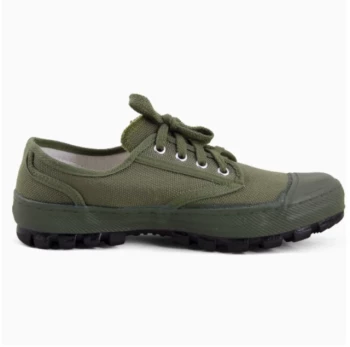
A specialized lift shoe serves as a critical mechanical equalizer. It is explicitly designed to compensate for the vertical height added by prosthetic simulator components, ensuring that the leg length of the user's natural side matches that of the prosthetic side. By neutralizing this discrepancy, the shoe maintains pelvic alignment and prevents artificial gait deviations.
The lift shoe is a fundamental control for experimental variables, not just a comfort accessory. By mitigating the leg length discrepancy caused by testing hardware, it isolates the performance of the prosthesis from compensatory user movements, ensuring both data validity and subject safety.
The Source of Testing Imbalance
Simulator Component Thickness
Testing ankle-foot prostheses often requires complex hardware. The simulator’s end-effectors and connecting components inevitably add physical thickness to the testing setup.
Induced Leg Length Discrepancy
This added hardware creates a significant vertical difference between the user's limbs. Without intervention, the leg fitted with the prosthesis becomes artificially longer than the natural leg, creating an immediate biomechanical imbalance.
Preserving Biomechanical Integrity
Leveling the Pelvis
The primary role of the lift shoe, which is worn on the natural leg, is to restore symmetry. It provides the exact elevation needed to keep the user's pelvis horizontal during standing and walking.
Eliminating Compensatory Movements
When legs are of unequal length, users instinctively alter their gait to maintain stability. This often manifests as unnatural trunk swaying or hiking of the hip. The lift shoe prevents these compensatory movements, ensuring the user walks as naturally as possible.
Protecting Scientific Rigor
For performance testing to be valid, the data must reflect the mechanics of the prosthesis, not the user's struggle to stay balanced. By removing the height variable, the lift shoe ensures the experimental data remains scientifically sound and uncorrupted by posture correction artifacts.
Understanding the Operational Trade-offs
Material Density Matters
Not all lift shoes are effective for this application. The shoe must be constructed from high-density composite materials. Soft materials would compress under the user's weight, re-introducing a height discrepancy during the stance phase of walking and invalidating the alignment.
The Safety Imperative
Ignoring this height difference is a safety hazard. Walking with significant leg length discrepancy increases the risk of stumbling and falling. The lift shoe is therefore a mandatory safety constraint, not optional equipment.
Ensuring Valid Results in Prosthetic Testing
To maximize the utility of your testing setup, you must prioritize the alignment of the user above all else.
- If your primary focus is subject safety: Ensure the lift shoe height exactly matches the fully loaded height of the prosthetic simulator to prevent trip hazards and joint strain.
- If your primary focus is data integrity: Verify that the lift shoe material is non-compressible to maintain a consistent pelvic level throughout the entire gait cycle.
Correcting leg length discrepancy is the foundational step toward capturing authentic, noise-free biomechanical data.
Summary Table:
| Feature | Role in Testing | Impact on Data |
|---|---|---|
| Vertical Equalization | Matches natural leg length to prosthetic hardware height. | Prevents artificial gait deviations. |
| Pelvic Alignment | Maintains a horizontal pelvic position during movement. | Eliminates hip hiking and trunk swaying. |
| High-Density Material | Resists compression under the user's body weight. | Ensures consistent height throughout the gait cycle. |
| Safety Constraint | Reduces the risk of stumbling and joint strain. | Minimizes injury risk during experimental trials. |
Partner with 3515 for High-Performance Testing Footwear Solutions
As a large-scale manufacturer serving distributors and brand owners, 3515 offers comprehensive production capabilities for all footwear types, anchored by our flagship Safety Shoes series. Our extensive portfolio covers work and tactical boots, outdoor shoes, training shoes, and sneakers, as well as Dress & Formal shoes to meet diverse bulk requirements.
Whether you need specialized footwear for medical testing or high-quality bulk manufacturing for your brand, 3515 delivers precision-engineered solutions tailored to your technical specifications. Contact us today to discuss your production needs and see how our manufacturing expertise can support your business growth.
References
- Michael S. Jacobson, Myunghee Kim. Foot contact forces can be used to personalize a wearable robot during human walking. DOI: 10.1038/s41598-022-14776-9
This article is also based on technical information from 3515 Knowledge Base .
Related Products
- Wholesale Durable Camouflage Canvas Shoes with High-Traction Cleated Rubber Sole
- Lightweight Breathable Training Shoes for Wholesale & Custom OEM Manufacturing
- Custom OEM Training Shoes Wholesale Manufacturer Durable & Breathable
- Wholesale Breathable Training Shoes Custom Athletic Footwear Manufacturer
- Advanced KPU Athletic Safety Shoe with Steel Toe Cap Anti-Slip Rotary Lacing System
People Also Ask
- Why is the selection of high-strength fabric materials necessary in the production of canvas shoes and training shoes?
- What are the properties of canvas as a shoe material? A Guide to Lightweight Comfort & Style
- Can canvas shoes be worn in rainy conditions? The Truth About Water Resistance
- What are some examples of vulcanized shoes? Discover the Flexibility and Board Feel of Classic Sneakers
- What are the characteristics of canvas as a shoe material? A Guide to Lightweight, Breathable Footwear