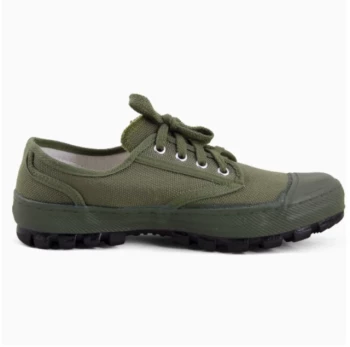
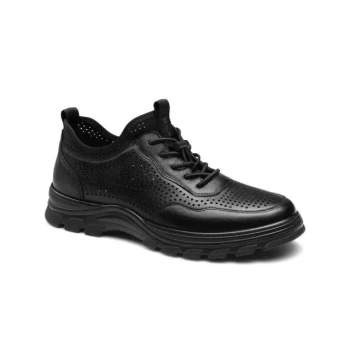
Precise control of the mixing ratio between polyurethane components is the fundamental mechanism for determining the mechanical properties of the final shoe sole. By adjusting the balance between component A and component B—such as a specific 100:80 ratio—manufacturers directly dictate the material's Shore hardness, which subsequently defines both the structural durability and the safety profile of the footwear.
The mixing ratio acts as the "master dial" for sole performance. It governs the critical balance between forming a dense, wear-resistant outer skin and maintaining enough pliability to ensure adequate ground contact and friction.
The Direct Link to Material Hardness
Defining Shore Hardness
The immediate chemical result of altering the mixing ratio is a change in Shore hardness. This metric defines how resistant the polyurethane material is to indentation and deformation under pressure.
The A/B Component Balance
In a typical production environment, components A and B are mixed at precise levels, such as a 100:80 ratio. Deviating from this specific balance allows manufacturers to "tune" the sole to be harder or softer depending on the intended application.
Manufacturing Implications: The Surface Layer
Criticality for Formal Footwear
For dress and formal shoes, the manufacturing goal is often longevity and aesthetics. A precise mixing ratio is required to ensure the injection molding process functions correctly.
Formation of the "Skin"
The correct hardness ratio facilitates the formation of a dense surface layer during molding. This outer "skin" is essential for protecting the inner foam structure and providing the sleek finish expected in high-end footwear.
Improving Wear Resistance
This dense surface layer is the primary defense against abrasion. By strictly controlling the mixing ratio to achieve the target hardness, manufacturers ensure the sole can withstand repeated scraping against pavement without degrading prematurely.
Performance Mechanics: Friction and Safety
The Friction Coefficient
The mixing ratio has a downstream effect on safety. The hardness of the sole directly influences the basic friction coefficient, which determines how slippery the shoe is in various environments.
Contact Area Dynamics
Hardness dictates how much the sole compresses when a user steps down. A softer mixture increases the actual contact area between the sole and the ground, improving grip. Conversely, a harder mixture reduces this contact area, potentially altering traction profiles.
Understanding the Trade-offs
The Durability vs. Traction Conflict
There is an inherent inverse relationship managed through the mixing ratio. Increasing hardness (via ratio adjustment) improves the dense surface layer and wear resistance, making the shoe last longer.
The Risk of Over-Hardening
However, maximizing hardness reduces the ground contact area. If the mixing ratio creates a sole that is too rigid, the friction coefficient may drop, resulting in reduced grip and stability for the wearer.
Making the Right Choice for Your Goal
To optimize your manufacturing process, you must select a mixing ratio that aligns with the specific end-use of the footwear.
- If your primary focus is longevity and formal aesthetics: Prioritize a mixing ratio that yields higher Shore hardness to ensure the formation of a dense, wear-resistant surface layer.
- If your primary focus is safety and grip: Adjust the ratio to allow for lower hardness, maximizing the actual contact area to increase the friction coefficient.
Mastering the chemistry of the mixing ratio is the only way to guarantee a shoe sole that meets both durability standards and safety requirements.
Summary Table:
| Parameter | High Shore Hardness Ratio | Low Shore Hardness Ratio |
|---|---|---|
| Material Density | Higher (Dense surface skin) | Lower (Softer foam structure) |
| Wear Resistance | Excellent (Abrasion resistant) | Moderate |
| Contact Area | Reduced | Increased |
| Grip/Traction | Lower Friction Coefficient | Higher Friction Coefficient |
| Best Use Case | Dress & Formal Shoes | Safety & Athletic Footwear |
Partner with 3515 for Precision-Engineered Footwear Solutions
As a large-scale manufacturer serving distributors and brand owners worldwide, 3515 leverages advanced polyurethane injection technology to deliver superior performance. Our mastery of chemical mixing ratios ensures that every sole—from our flagship Safety Shoes series to our Dress & Formal collection—achieves the perfect balance of durability and traction.
Whether you need robust Work and Tactical Boots or high-performance Sneakers and Training Shoes, our comprehensive production capabilities are designed to meet your bulk requirements with uncompromising quality.
Ready to elevate your product line? Contact us today to discuss your manufacturing needs and discover how our expertise can add value to your brand.
References
- Shubham Gupta, Arnab Chanda. Frictional Characteristics of Progressively Worn Footwear Outsoles on Slippery Surfaces. DOI: 10.24874/ti.1434.01.23.05
This article is also based on technical information from 3515 Knowledge Base .
Related Products
- Durable Rubber Sole Outdoor Shoes Wholesale & Custom Manufacturing
- Durable Rubber-Soled Utility Shoes for Wholesale & Custom Brand Manufacturing
- Durable Canvas Work Shoes with Rubber Lug Sole | Wholesale Manufacturer
- Wholesale Durable Camouflage Canvas Shoes with High-Traction Cleated Rubber Sole
- Wholesale Durable Camo Canvas Shoes with High-Traction Rubber Soles
People Also Ask
- What is the function of the sole in outdoor shoes? Find the Perfect Grip and Support
- What role do outdoor shoes and sneakers play in navigating external terrains? Engineered Stability for Every Surface
- How is AI utilized in the design of outdoor and safety footwear? Harnessing Big Data for Market-Driven Shoe Innovation
- Why is durability important when selecting outdoor shoes? A Guide to Safety & Long-Term Value
- What are the key components of outdoor shoes that affect comfort and sturdiness? A Guide to Durable, High-Performance Footwear