
The right socks are your first line of defense against foot problems. Far from being a simple accessory, they play a critical and active role in preventing the two primary causes of walking discomfort: friction and excess moisture. A properly chosen sock wicks sweat away from your skin, minimizes rubbing, and helps regulate temperature, directly preventing issues like blisters and hot spots.
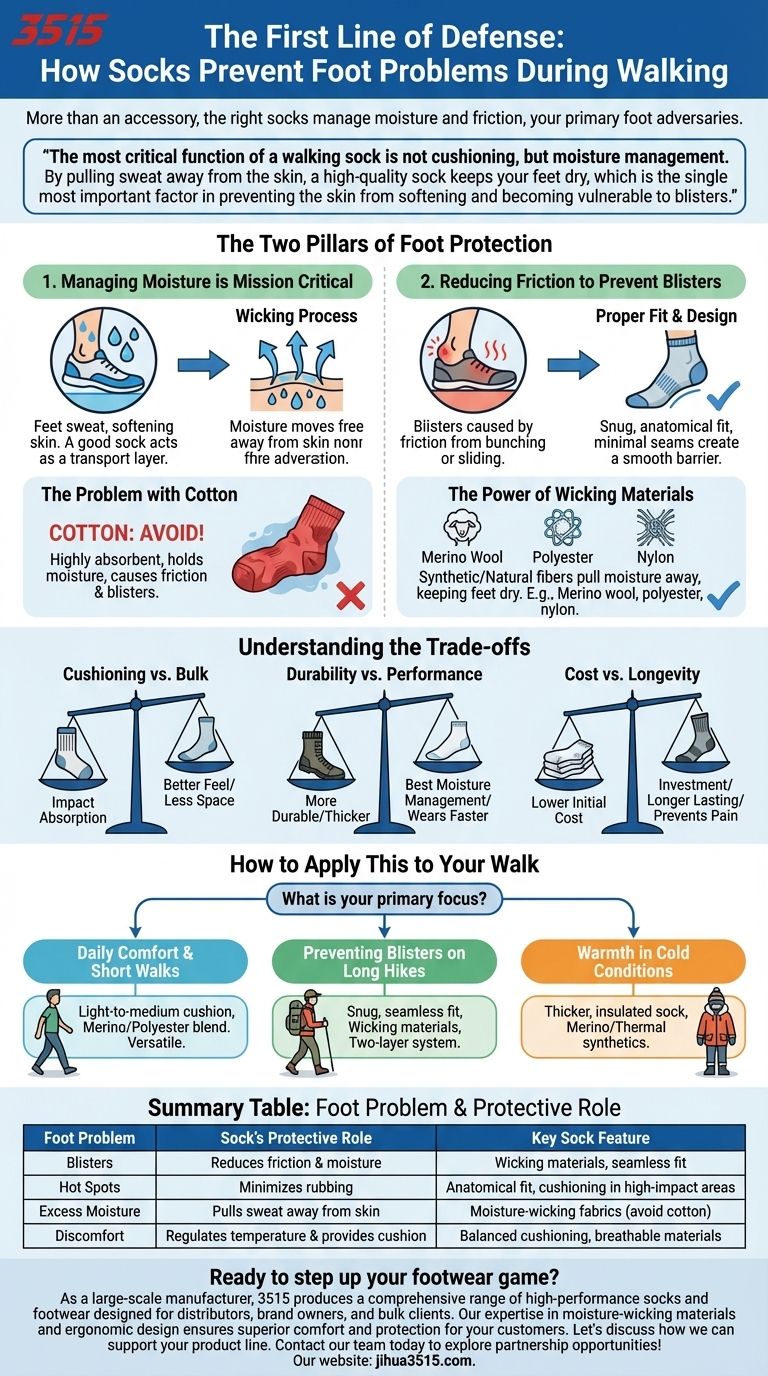
The most critical function of a walking sock is not cushioning, but moisture management. By pulling sweat away from the skin, a high-quality sock keeps your feet dry, which is the single most important factor in preventing the skin from softening and becoming vulnerable to blisters.
The Two Pillars of Foot Protection
Your feet face two main adversaries inside a shoe: moisture from sweat and friction from movement. An effective sock is engineered to defeat both.
Managing Moisture is Mission Critical
Your feet are one of the sweatiest parts of your body. When that sweat is trapped against your skin, it softens the epidermis, making it incredibly fragile and susceptible to tearing and blistering.
The primary job of a good sock is to act as a transport layer, moving this moisture away from the skin to the outer layer of the sock, where it can evaporate. This process is known as wicking.
The Problem with Cotton
Cotton is a common sock material, but it is the worst choice for any kind of activity. It is highly absorbent and acts like a sponge, holding moisture directly against your skin.
A wet cotton sock loses its shape, bunches up, and creates a perfect environment for friction and blisters to form. For foot health, cotton should always be avoided.
The Power of Wicking Materials
Modern performance socks use synthetic materials or natural fibers known for their wicking properties.
Materials like merino wool, polyester, and nylon do not absorb moisture. Instead, they pull it away from your skin, keeping your feet significantly drier and more comfortable.
Reducing Friction to Prevent Blisters
Blisters are the direct result of friction. A sock that fits poorly will bunch or slide, creating pressure points and hot spots where the material rubs against your skin.
A well-designed sock has a snug, anatomical fit with minimal seams. This ensures it stays in place, creating a smooth, protective barrier between your foot and your shoe.
Understanding the Trade-offs
Choosing the right sock involves balancing competing factors. Understanding these trade-offs will help you select the best option for your specific needs.
Cushioning vs. Bulk
Heavily cushioned socks provide excellent impact absorption but can feel bulky and affect how your shoes fit. Lighter socks offer a better "feel" and take up less space but provide less padding.
Durability vs. Performance
Ultra-light, high-performance running or hiking socks may offer the best moisture management but can wear out more quickly than thicker, more rugged models.
Cost vs. Longevity
High-quality technical socks made from merino wool or advanced synthetics are more expensive than a multi-pack of cotton socks. However, this is an investment in preventing pain and discomfort, and they often last significantly longer.
How to Apply This to Your Walk
Your choice of sock should be directly guided by your activity and environment.
- If your primary focus is daily comfort and short walks: A light-to-medium cushion sock made from a merino wool or polyester blend is a versatile and effective choice.
- If your primary focus is preventing blisters on long hikes: Prioritize a snug, seamless fit with proven wicking materials and consider a two-layer system for maximum protection.
- If your primary focus is warmth in cold conditions: Choose a thicker, insulated sock made from merino wool or thermal synthetics to manage moisture while retaining heat.
Investing in the right socks is the simplest and most effective step you can take to ensure your feet remain healthy and comfortable on any walk.
Summary Table:
| Foot Problem | Sock's Protective Role | Key Sock Feature |
|---|---|---|
| Blisters | Reduces friction & moisture | Wicking materials (e.g., Merino wool), seamless fit |
| Hot Spots | Minimizes rubbing | Anatomical fit, cushioning in high-impact areas |
| Excess Moisture | Pulls sweat away from skin | Moisture-wicking fabrics (avoid cotton) |
| Discomfort | Regulates temperature & provides cushion | Balanced cushioning, breathable materials |
Ready to step up your footwear game? As a large-scale manufacturer, 3515 produces a comprehensive range of high-performance socks and footwear designed for distributors, brand owners, and bulk clients. Our expertise in moisture-wicking materials and ergonomic design ensures superior comfort and protection for your customers. Let's discuss how we can support your product line. Contact our team today to explore partnership opportunities!
Visual Guide
Related Products
- Lightweight Breathable Sneakers with Wet-Traction Grip for Wholesale & Private Label
- Wholesale Durable & Breathable Training Shoes for Custom Brands
- Durable Waterproof Rain Boots | Custom Manufacturer for Wholesale & Brands
- Lightweight Breathable Training Shoes for Wholesale & Custom OEM Manufacturing
- Wholesale Breathable & Cushioned Training Shoes Custom Factory Production
People Also Ask
- Why are breathable sneakers necessary for tropical commuting? Stay Cool and Dry in High Humidity
- What role do lightweight training shoes play in urban traffic? Boost Agility and Reaction for Safer City Navigation
- How do lightweight shoes provide support? The Science of Efficient Cushioning & Stability
- How do lightweight shoes contribute to healthier feet? Reduce Fatigue & Prevent Foot Problems
- How do lightweight shoes improve breathability? Discover the Science of Cool, Dry Feet














