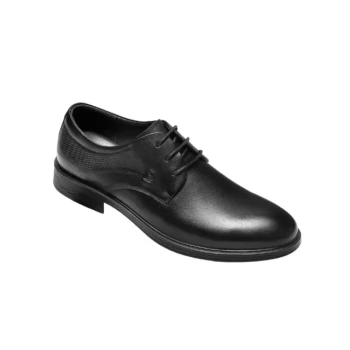
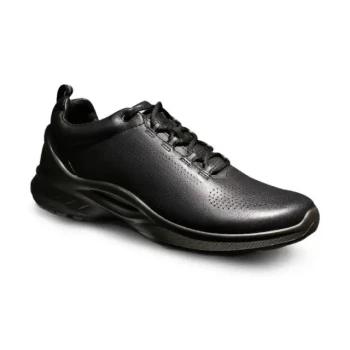
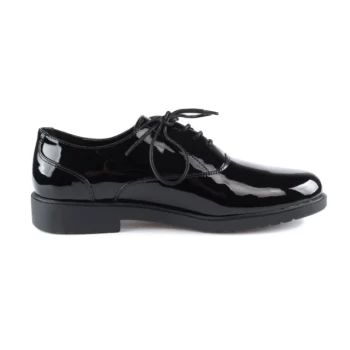
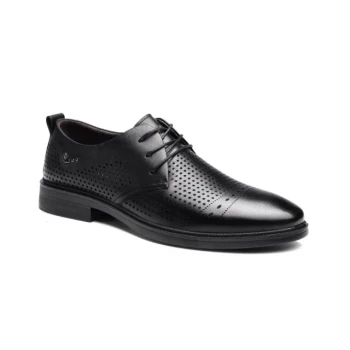
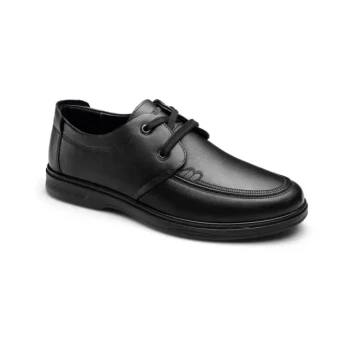
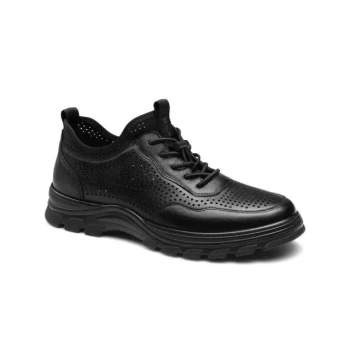
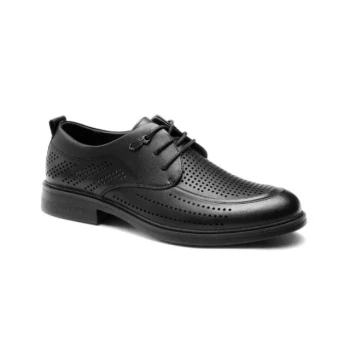
In the world of traditional men's footwear, the most significant recent trend influencing classic designs is the quiet integration of modern comfort. This is primarily seen in the move toward more comfortable and practical rubber soles on timeless silhouettes like oxfords and loafers, though these changes are intentionally slow and subtle to preserve the shoe's formal heritage.
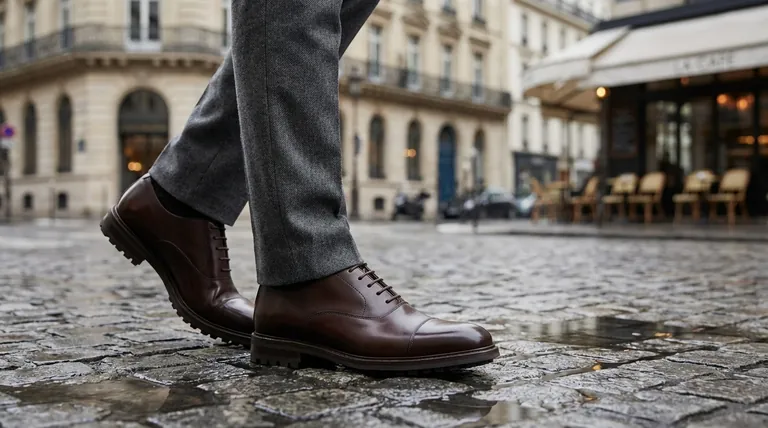
The core evolution in dress shoes is not a change in style, but a change in foundation. Designers are increasingly building classic, conservative uppers on modern, comfort-oriented rubber soles to meet the demands of a more versatile and casual professional world.
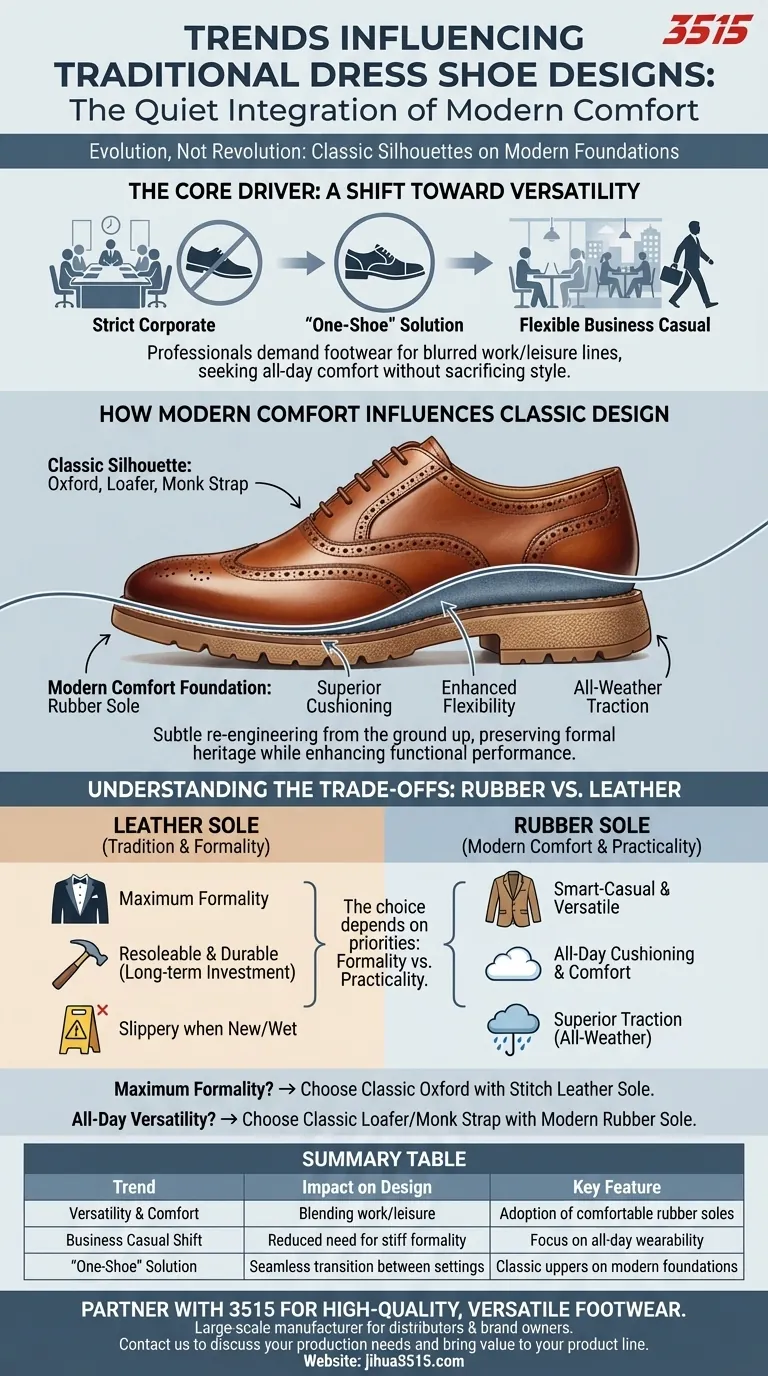
The Core Driver: A Shift Toward Versatility
The modern professional's needs have changed, and footwear has adapted accordingly. The line between work and leisure has blurred, demanding a shoe that can perform in multiple contexts.
The New Workplace Standard
Strict corporate dress codes have given way to more flexible "business casual" environments. This cultural shift reduces the need for stiff, formal footwear and opens the door for enhanced, all-day comfort.
The Demand for a "One-Shoe" Solution
Professionals want footwear that can transition seamlessly from a client meeting to a city commute or a casual dinner. A shoe that looks formal but feels comfortable meets this need for versatility, reducing the number of shoes one needs to own.
How Modern Comfort Influences Classic Design
While the fundamental aesthetics of dress shoes remain, the functional elements are being re-engineered from the ground up. The change is felt more than it is seen.
The Sole: The Center of Innovation
The most prominent change is the adoption of rubber soles. Unlike traditional leather, rubber provides superior cushioning, flexibility, and traction, making the shoe far more comfortable for walking and standing over long periods.
Preserving the Classic Silhouettes
This innovation in comfort does not come at the expense of style. The uppers—the main body of the shoe—adhere to proven, traditional patterns. Classic forms like the Oxford, Monk Strap, and Loafer remain the standard, ensuring the shoe is appropriate for professional settings.
Evolution, Not Revolution
It is critical to understand that these changes are gradual. The goal is to enhance the wearing experience without disrupting the shoe's timeless visual appeal. The new designs are an evolution of a classic, not a radical departure from it.
Understanding the Trade-offs: Rubber vs. Leather
Choosing a modern, rubber-soled dress shoe over a traditional leather-soled one involves a clear set of trade-offs. Neither is universally superior; the right choice depends entirely on your specific needs and priorities.
Formality and Tradition
A sleek leather sole is the undisputed hallmark of a formal dress shoe. While modern rubber soles can be low-profile, they are inherently more casual and may not be suitable for the most stringent "black tie" or boardroom environments.
Durability and Repairability
High-quality, traditionally made shoes with leather soles are often designed to be resoled multiple times, significantly extending their lifespan. Many modern shoes with cemented rubber soles cannot be repaired, making them a shorter-term investment.
All-Weather Practicality
Rubber soles offer vastly superior traction on wet or slick surfaces. Leather soles, especially when new, can be slippery and are susceptible to damage from excessive moisture, making rubber the more practical choice for daily commuters.
Making the Right Choice for Your Goal
Your specific needs should dictate your footwear selection. The key is to align the shoe's construction with its intended purpose.
- If your primary focus is maximum formality and tradition: Choose a classic Oxford with a stitched leather sole for board meetings, weddings, and other formal events.
- If your primary focus is all-day comfort and daily versatility: Opt for a classic Loafer or Monk Strap built on a modern, high-quality rubber sole for office wear and smart-casual settings.
By understanding the balance between sole construction and classic style, you can confidently select a dress shoe that meets both timeless standards and modern demands.
Summary Table:
| Trend | Impact on Design | Key Feature |
|---|---|---|
| Versatility & Comfort | Blending of work/leisure wear | Adoption of comfortable rubber soles |
| Business Casual Shift | Reduced need for stiff formality | Focus on all-day wearability |
| "One-Shoe" Solution | Seamless transition between settings | Classic uppers on modern foundations |
Looking for High-Quality Dress Shoes That Blend Timeless Style with Modern Comfort?
As a large-scale manufacturer, 3515 produces a comprehensive range of footwear for distributors, brand owners, and bulk clients. Our production capabilities encompass all types of shoes and boots, including classic oxfords, loafers, and monk straps built with the modern comfort features discussed in this article.
We help our partners meet the growing demand for versatile professional footwear. Contact our team today to discuss your manufacturing needs and how we can bring value to your product line.
Visual Guide
Related Products
- Wholesale Leather Derby Dress Shoes Custom Manufacturer for Brands
- Wholesale Comfort Dress Shoes with Dial Closure for Custom Manufacturing
- Classic Leather Derby Dress Shoes Wholesale & Custom Manufacturing
- Wholesale Perforated Comfort Dress Shoes | Custom Derby Shoe Manufacturer
- Wholesale Patent Oxford Dress Shoes | Custom & Bulk Manufacturing
People Also Ask
- What occasions are Derby shoes best suited for? A Guide to Versatile Men's Style
- What are the features of Derby shoes? A Guide to Versatile and Comfortable Footwear
- How do Derby shoes differ from Oxford shoes? A Guide to Formality, Fit & Style
- What is the main difference between Derby Shoes and Oxford Shoes? It's All in the Lacing.
- What are the features and appropriate occasions for wearing derby shoes? A Guide to Versatile Style