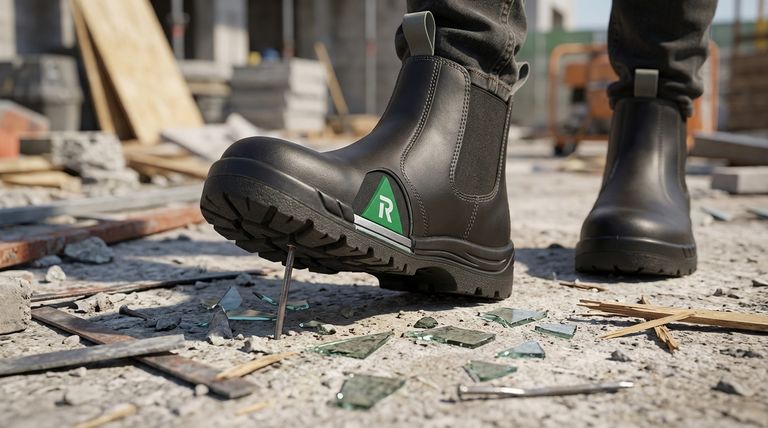
Puncture-resistant (PR) footwear is designed to create an impenetrable barrier between the sole of your foot and hazardous ground debris. These boots utilize a reinforced plate—typically made of steel or a durable composite material—embedded within the midsole to stop sharp objects like nails, glass shards, screws, and scrap metal from piercing through the shoe. To ensure compliance with safety standards, legitimate PR footwear is clearly marked, most commonly with a green triangle containing a white 'R'.
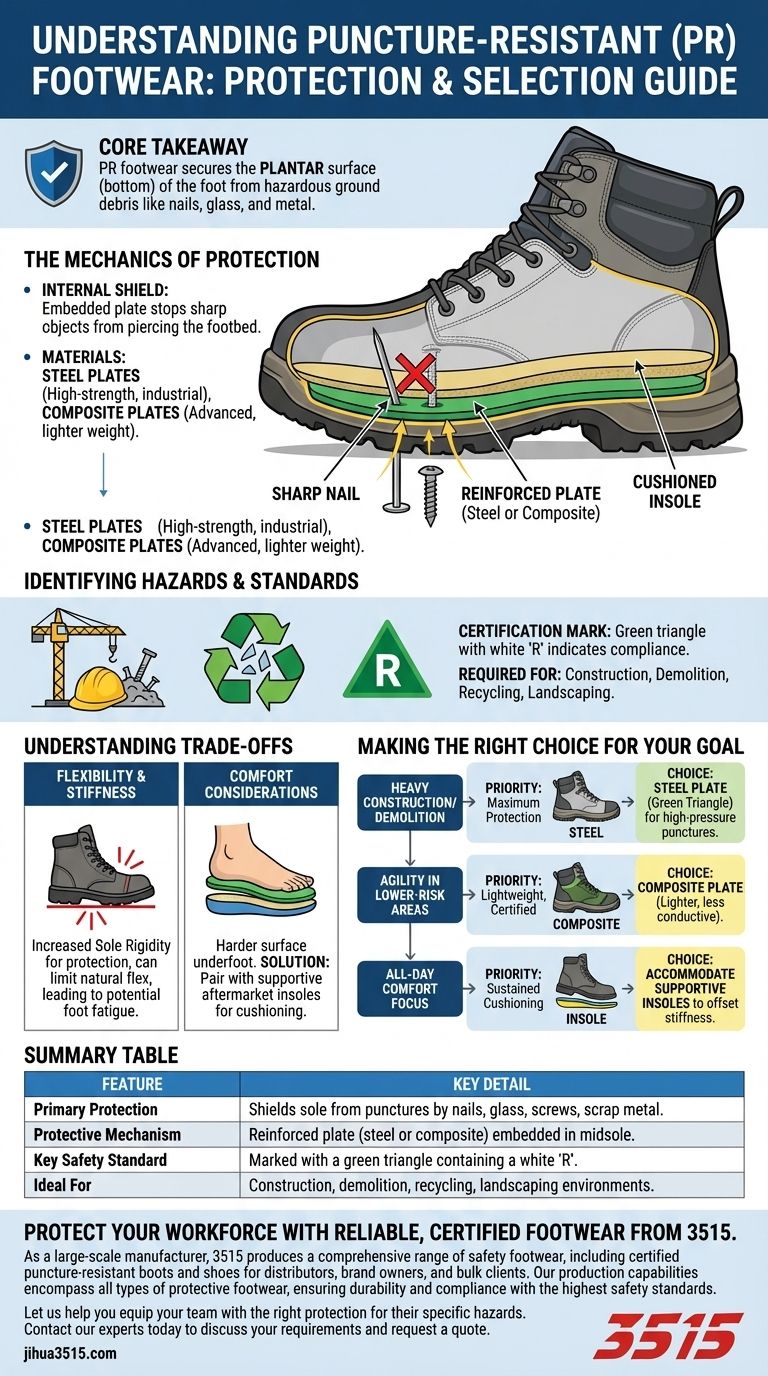
Core Takeaway While standard safety boots often prioritize toe protection, puncture-resistant footwear specifically secures the plantar surface (bottom) of the foot. By integrating a protective plate between the insole and outsole, these boots mitigate the risk of debilitating puncture wounds in unpredictable environments like construction sites and demolition zones.
The Mechanics of Protection
The Internal Shield
The primary defense mechanism in PR footwear is not merely the thickness of the rubber sole. It is a dedicated protective plate positioned between the insole and the outsole.
This internal layer acts as a shield. It engages the moment you step on a sharp object, distributing the force and preventing penetration into the footbed.
Material Composition
Manufacturers achieve this resistance using two main materials: steel or composites.
Steel plates offer traditional, high-strength protection and are often found in heavy-duty industrial boots. Composite plates use advanced synthetic materials to provide similar resistance, often with less weight.
Identifying Hazards and Standards
Environments Requiring PR Gear
Puncture risks are highest where debris is uncontrolled or hidden.
Construction and demolition sites are the most common use cases, where stray nails and screws are ubiquitous. Recycling centers and landscaping environments also pose significant risks from glass shards and scrap metal.
Visual Verification
You generally cannot determine if a boot is puncture-resistant just by looking at the tread. You must look for the certification label.
In many jurisdictions, this is indicated by a green triangle on the boot, which houses a white letter 'R'. This symbol guarantees the footwear has met specific testing standards for reducing injury risks from sharp hazards.
Understanding the Trade-offs
Flexibility and Stiffness
Because PR boots contain a reinforced plate, the sole is naturally more rigid than a standard work boot.
This rigidity is necessary to stop a nail, but it can limit the natural flex of your foot while walking. This may lead to foot fatigue during long shifts if you are walking significant distances.
Comfort Considerations
The internal plate changes the feel of the footbed. It creates a harder surface underfoot compared to a standard foam midsole.
To counteract this, it is often recommended to pair PR boots with supportive aftermarket insoles. This restores cushioning without compromising the safety function of the puncture plate.
Making the Right Choice for Your Goal
Selecting the right footwear depends on balancing the severity of the hazard with your daily mobility requirements.
- If your primary focus is heavy construction or demolition: Prioritize boots with a steel plate and the green triangle symbol to ensure maximum protection against high-pressure punctures like upturned nails.
- If your primary focus is agility in lower-risk areas: Consider boots with composite plates, which offer certified protection but may be lighter and slightly less conductive to temperature than steel.
- If your primary focus is all-day comfort: Ensure you size your boots to accommodate high-quality, supportive insoles to offset the stiffness of the protective plate.
True safety comes from understanding that the sole of your boot is your only shield against the unseen hazards beneath you.
Summary Table:
| Feature | Key Detail |
|---|---|
| Primary Protection | Shields the sole from punctures by nails, glass, screws, and scrap metal. |
| Protective Mechanism | A reinforced plate (steel or composite) embedded in the midsole. |
| Key Safety Standard | Marked with a green triangle containing a white 'R'. |
| Ideal For | Construction, demolition, recycling, and landscaping environments. |
Protect your workforce with reliable, certified footwear from 3515.
As a large-scale manufacturer, 3515 produces a comprehensive range of safety footwear, including certified puncture-resistant boots and shoes for distributors, brand owners, and bulk clients. Our production capabilities encompass all types of protective footwear, ensuring durability and compliance with the highest safety standards.
Let us help you equip your team with the right protection for their specific hazards. Contact our experts today to discuss your requirements and request a quote.
Visual Guide
Related Products
- Wholesale Durable Safety Boots | Custom Steel Toe & Puncture-Resistant Manufacturing
- Wholesale Anti-Smash & Puncture-Proof Safety Shoes Custom Manufacturing for Brands
- Athletic Safety Shoes with Dial Closure & Steel Toe for Wholesale & Custom Manufacturing
- Wholesale Durable Breathable Safety Boots Custom OEM Manufacturer
- Premium High-Cut Waterproof Safety Boots Manufacturing & Wholesale Solutions
People Also Ask
- What are the risks of using ordinary rubber boots in forest clearing? Why professional safety boots are essential
- What materials are commonly used for outsoles in safety boots? A Guide to Durability, Grip, and Comfort
- Why is proper storage important for safety boots? Preserve Protection and Extend Lifespan
- What are the consequences of not wearing safety boots? Protect Your Finances and Career
- What makes durable safety boots? The Ultimate Guide to Long-Lasting Work Footwear