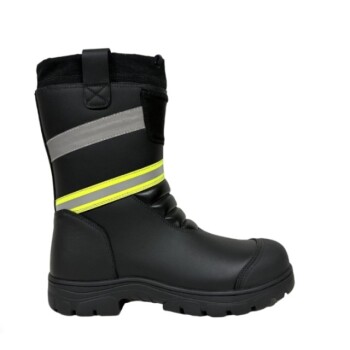
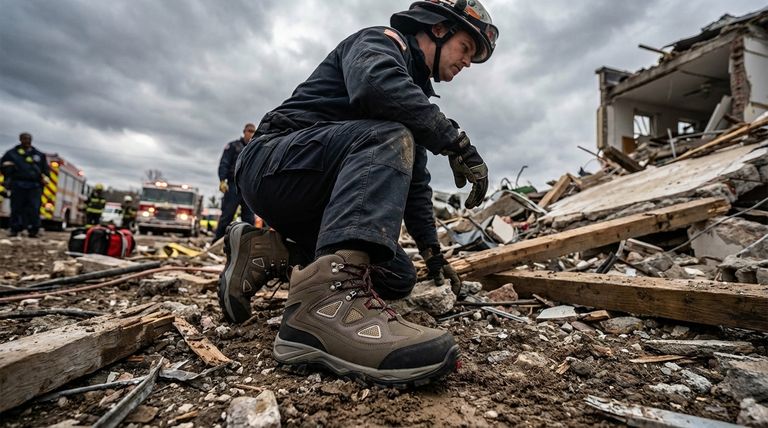
Beyond the battlefield, combat boots are essential equipment for any profession demanding exceptional durability, protection, and foot stability. Primarily, they are worn by armed services personnel, law enforcement officers, first responders, security guards, and various outdoor or industrial workers who operate in hazardous or unpredictable environments.
The decision to wear combat boots is fundamentally a risk assessment. They are the ideal choice when the need for robust protection from physical hazards, environmental extremes, and ankle injury outweighs the need for lightweight flexibility.
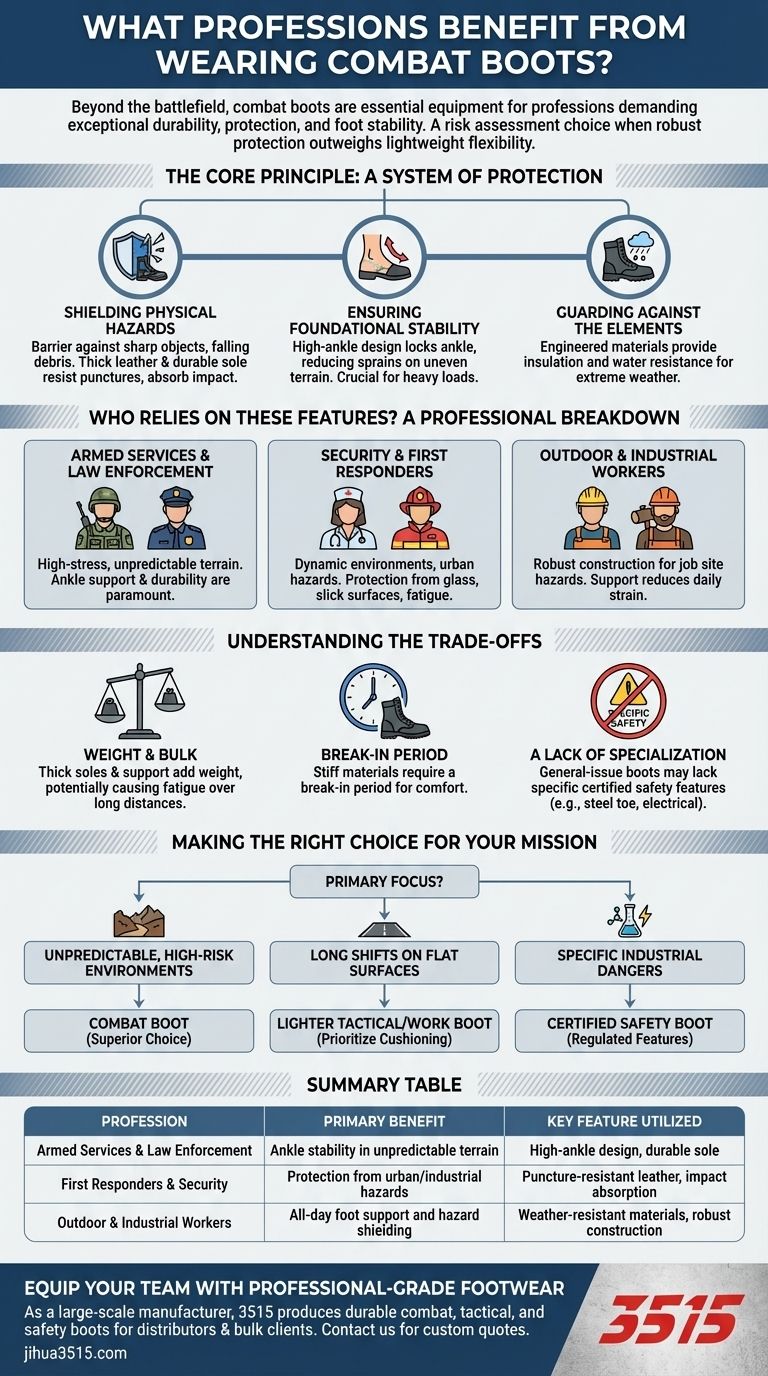
The Core Principle: A System of Protection
The benefit of a combat boot isn't a single feature but rather how its components work together to shield the wearer. Understanding this system is key to knowing if it’s right for your profession.
Shielding from Physical Hazards
A primary function of a combat boot is to create a barrier between your foot and the environment. This includes protection from sharp objects like glass or rebar on a construction site, as well as falling debris.
The thick leather and durable sole construction are designed to resist punctures and absorb impacts that would easily compromise standard footwear.
Ensuring Foundational Stability
Many high-risk professions require movement over uneven, unstable, or slippery terrain. The high-ankle design is not for style; it is a critical feature.
This design locks the ankle in place, drastically reducing the risk of sprains and twists that can be debilitating in the field. This stability is crucial for anyone carrying heavy gear or working long hours on their feet.
Guarding Against the Elements
Modern combat boots are often engineered to handle extreme weather. Materials can provide insulation against the cold or offer water resistance to keep feet dry in wet conditions.
This environmental protection is vital for anyone who cannot simply go indoors when the weather turns, such as a police officer on patrol or a forestry worker.
Who Relies on These Features? A Professional Breakdown
While their origins are military, the core benefits of combat boots have been adopted by a range of professions where the operational environment is demanding.
Armed Services and Law Enforcement
This is the most traditional user for obvious reasons. These roles involve high-stress situations, unpredictable terrain, and the need for footwear that will not fail under extreme duress. Ankle support and durability are paramount.
Security and First Responders
Paramedics, firefighters, and security personnel face similarly dynamic environments. They require protection from urban and industrial hazards, from shattered glass to slick surfaces, often during long, demanding shifts where foot fatigue and injury are constant risks.
Outdoor and Industrial Workers
Professions like construction, logging, landscaping, and heavy equipment operation benefit immensely from the combat boot's design. The robust construction protects against the daily hazards of a job site, while the support reduces strain over a full day's work.
Understanding the Trade-offs
No single piece of equipment is perfect for every situation. Being an effective professional means understanding the limitations of your tools.
Weight and Bulk
The features that provide immense protection—thick soles, durable leather, and ankle support—also add significant weight and bulk. Compared to a standard work shoe or hiking boot, combat boots can feel heavy and may contribute to fatigue over very long distances.
Break-in Period
The stiff, durable materials that protect your feet often require a "break-in" period. Initially, the boots can feel rigid and may cause discomfort until the leather conforms to the shape of your foot.
A Lack of Specialization
While versatile, a general-issue combat boot may not have specific safety features required for certain industrial jobs, such as a certified steel toe or electrical hazard protection. Always verify that the boot meets the specific safety standards required for your trade.
Making the Right Choice for Your Mission
Ultimately, your choice of footwear should be a direct response to the demands of your job.
- If your primary focus is operating in unpredictable, high-risk environments: The all-around protection and stability of a combat boot make it the superior choice.
- If your primary focus is working long shifts on flat, predictable surfaces: You might benefit more from a lighter-weight tactical or work boot that prioritizes cushioning over rigid support.
- If your primary focus is protection from specific industrial dangers: You must select a certified safety boot, which may share traits with a combat boot but includes specific, regulated protective features.
Selecting the right boot means accurately matching its protective capabilities to the challenges you face every day.
Summary Table:
| Profession | Primary Benefit | Key Feature Utilized |
|---|---|---|
| Armed Services & Law Enforcement | Ankle stability in unpredictable terrain | High-ankle design, durable sole |
| First Responders & Security | Protection from urban/industrial hazards | Puncture-resistant leather, impact absorption |
| Outdoor & Industrial Workers | All-day foot support and hazard shielding | Weather-resistant materials, robust construction |
Ready to equip your team with professional-grade footwear?
As a large-scale manufacturer, 3515 produces a comprehensive range of durable combat, tactical, and safety boots for distributors, brand owners, and bulk clients. Our production capabilities ensure your personnel get the exact combination of protection, stability, and durability their missions demand.
Contact 3515 today to discuss your specific needs and receive a custom quote.
Visual Guide
Related Products
- Durable Military Combat Boots with Water Drainage for Wholesale & OEM
- Durable Leather Tactical Boots Wholesale & Custom Manufacturing for Brands
- High-Traction Suede Tactical Boots Wholesale & Custom Manufacturing
- Wholesale Lightweight Tactical Boots Custom Manufacturer for Desert & Combat Use
- Durable Mid-Cut Tactical Boots for Wholesale & Private Label
People Also Ask
- Why must gait validation for military applications be conducted in combat boots? Ensure Data Accuracy for Soldiers
- What are the common types of combat boots? Find the Right Boot for Your Mission
- What factors should be considered when choosing military boots for hiking? Durability vs. Weight for Your Terrain
- What are the key considerations when choosing military boots? Prioritize Compliance, Environment & Fit
- How should the midfoot and heel fit in military boots? Achieve a Snug, Secure Fit for Blister Prevention