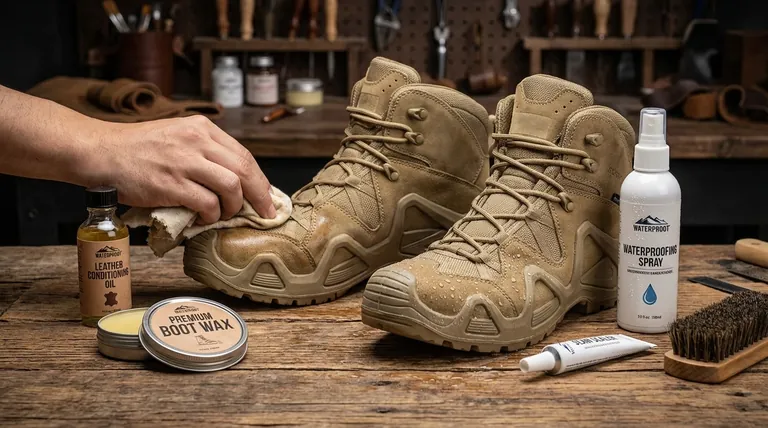
To effectively waterproof leather boots, you can use one of four primary product types: waxes, sprays, oils, or seam sealers. Each serves a distinct purpose, with waxes providing a durable physical barrier, sprays offering quick application, oils conditioning the leather as they protect, and seam sealers targeting the most vulnerable points of failure.
Choosing the right waterproofing product is a matter of balancing durability with convenience and appearance. Waxes offer the most robust and long-lasting protection, while sprays provide a quick, invisible finish, and oils condition the leather but will almost always change its color.
The Foundation: Why Preparation is Critical
Before applying any product, you must prepare the leather. Skipping this step will trap dirt and prevent the waterproofing agent from bonding correctly, rendering your efforts ineffective.
Step 1: Thoroughly Clean Your Boots
First, remove the laces to ensure full access to the tongue and eyelets. Use a brush to knock off any loose dirt, mud, or debris from the exterior surfaces and soles.
Step 2: Ensure Boots are Completely Dry
Leather is porous and must be completely dry before treatment. Let the boots air dry in a warm, well-ventilated area, using a fan to speed up the process if necessary, but avoid direct heat from radiators or fires which can damage and crack the leather.
Choosing Your Waterproofing Agent
Your choice of product depends entirely on the type of boot, its intended use, and your priorities for maintenance.
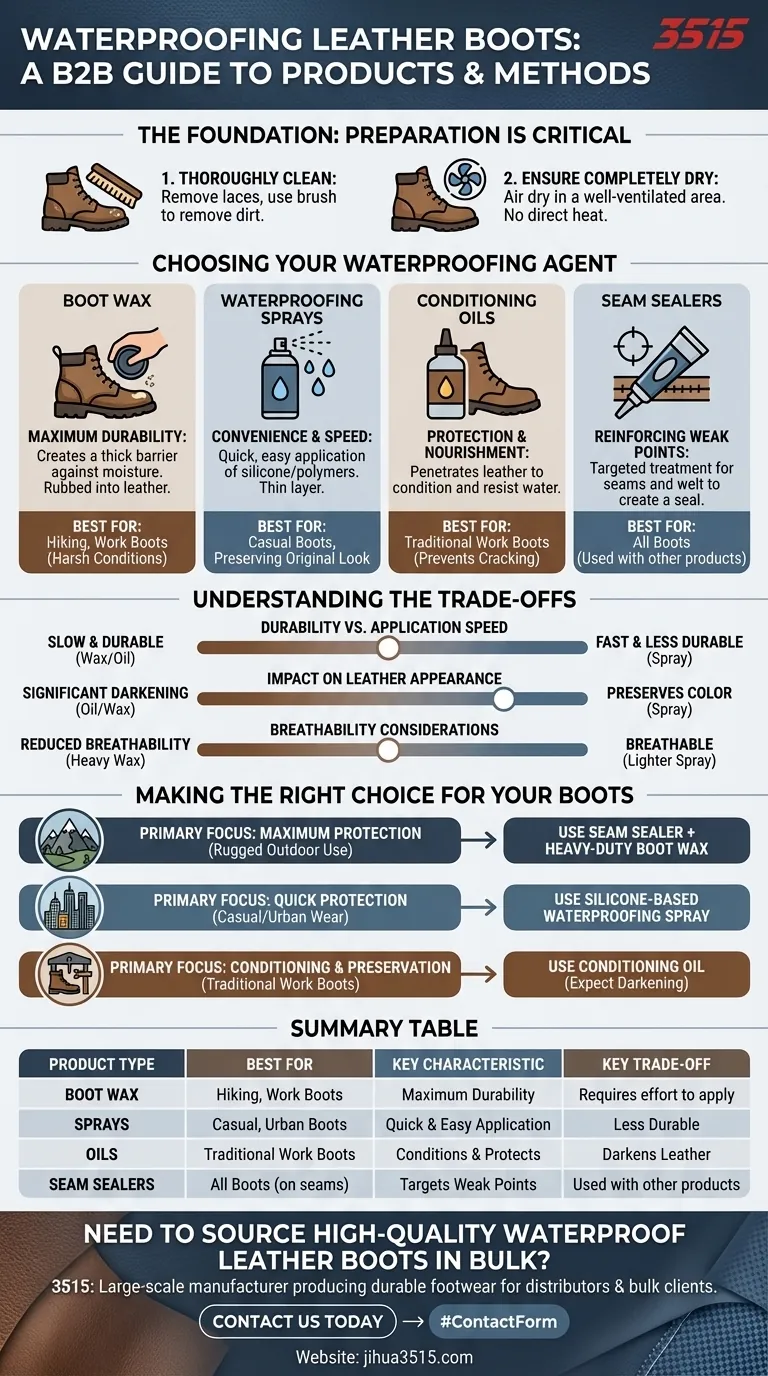
Boot Wax: For Maximum Durability
Boot wax is rubbed into the leather, melting slightly from friction to create a thick, durable barrier against moisture. This method provides the most heavy-duty and long-lasting protection, making it ideal for hiking or work boots exposed to harsh conditions.
Waterproofing Sprays: For Convenience and Speed
Spray-on treatments are the fastest and easiest to apply. They coat the leather with a thin layer of silicone or other polymers that repel water. While less durable than wax and requiring more frequent reapplication, they are excellent for preserving the original look of casual boots.
Conditioning Oils: For Protection and Nourishment
Products like mink oil or neatsfoot oil penetrate the leather to both condition its fibers and provide water resistance. This is an excellent choice for traditional leather work boots, as it keeps the material supple and prevents cracking.
Seam Sealers: For Reinforcing Weak Points
Water often finds its way in through the stitching. A dedicated seam sealer is a targeted treatment applied directly to the seams and welt—where the upper is joined to the sole—to create a waterproof seal at these vulnerable points.
Understanding the Trade-offs
No single solution is perfect. You must consider the compromises inherent in each method to select the best one for your gear.
Durability vs. Application Speed
Waxes and oils require more time and effort to apply correctly but last significantly longer. Sprays are very fast to apply but wear off much more quickly, especially with heavy use.
Impact on Leather Appearance
This is a critical consideration. Oils will reliably darken leather, giving it a richer, deeper tone. Many waxes will also slightly darken the material. If preserving the original color is your top priority, a spray is the safest choice. Always perform a patch test on a small, inconspicuous area first.
Breathability Considerations
Heavily waxing a boot creates a formidable barrier against water getting in, but it can also reduce the leather's ability to breathe and let sweat vapor out. For boots with a waterproof membrane liner (like GORE-TEX), a lighter spray is often recommended to avoid impeding the liner's performance.
Making the Right Choice for Your Boots
To select the ideal method, match the product to your primary goal for the footwear.
- If your primary focus is maximum protection for rugged outdoor use: Use a seam sealer on all stitching, followed by a thorough application of a heavy-duty boot wax.
- If your primary focus is quick protection for casual or urban wear: A silicone-based waterproofing spray is your most efficient option and will best preserve the boot's original appearance.
- If your primary focus is conditioning and preserving traditional work boots: A conditioning oil is ideal for keeping the leather healthy and water-resistant, but be prepared for it to darken.
Properly treating your boots transforms them from simple footwear into reliable, long-lasting gear.
Summary Table:
| Product Type | Best For | Key Characteristic | Key Trade-off |
|---|---|---|---|
| Boot Wax | Hiking, Work Boots | Maximum Durability | Requires effort to apply |
| Sprays | Casual, Urban Boots | Quick & Easy Application | Less Durable |
| Oils | Traditional Work Boots | Conditions & Protects | Darkens Leather |
| Seam Sealers | All Boots (on seams) | Targets Weak Points | Used with other products |
Need to source high-quality waterproof leather boots in bulk?
As a large-scale manufacturer, 3515 produces a comprehensive range of durable footwear for distributors, brand owners, and bulk clients. Our production capabilities encompass all types of waterproof shoes and boots, built to last.
Contact us today to discuss your specific needs and get a quote.
Visual Guide
Related Products
- Premium Wholesale Waterproof Safety Boots High Performance Protection for Industrial Markets
- Wholesale Waterproof Tactical Boots Custom Suede & High-Traction Soles
- Premium High-Cut Waterproof Safety Boots Manufacturing & Wholesale Solutions
- Premium Flame-Retardant Waterproof Safety Boots and Shoes
- Wholesale Premium Waterproof Nubuck Safety Shoes Boots
People Also Ask
- What weather and chemical protections do premium boots offer? Your Complete Guide to Safety & Performance
- Why are waterproof safety boots recommended for certain work environments? Essential Protection for Wet & Hazardous Jobs
- What are the primary protective functions of industrial safety boots in oil palm plantations? Master Rough Terrain Safety
- Why are oil-resistant and anti-slip properties critical for industrial safety boots? Expert Outsole Engineering Guide
- What are the best types of shoes for different gardening conditions? Find Your Perfect Match.