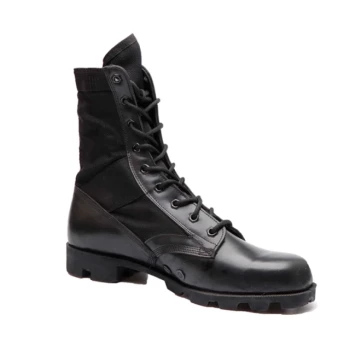
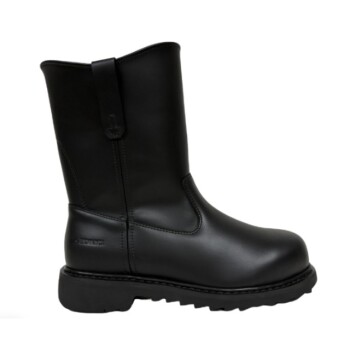
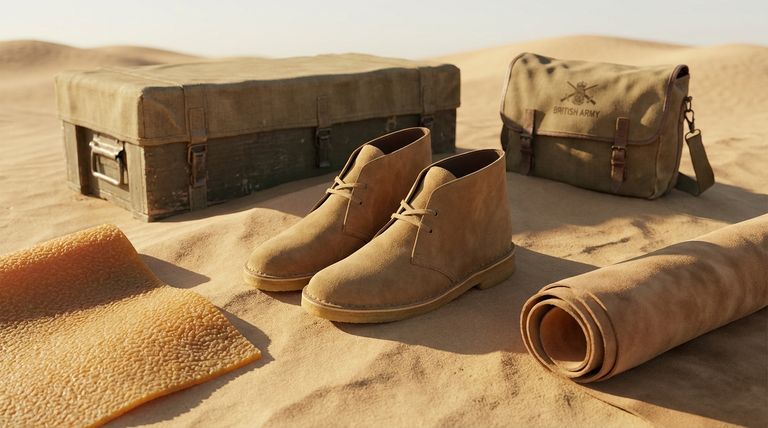
The original desert boot was a radical innovation built from two core materials. Nathan Clark of Clarks selected a soft suede for the upper and a natural crepe rubber for the sole. This pairing was a direct response to the needs of British Army officers in Burma, creating a boot that stood in stark contrast to the stiff, polished leather footwear of the era.
The selection of suede and crepe rubber was not a stylistic choice, but a functional solution. It was engineered to provide comfort, flexibility, and durability for soldiers navigating the harsh conditions of the desert.
The Problem: Conventional Boots vs. a Demanding Environment
To understand the genius of the desert boot, you first have to understand the problem it solved. The footwear available at the time was simply not suited for the task at hand.
The Standard of the Era
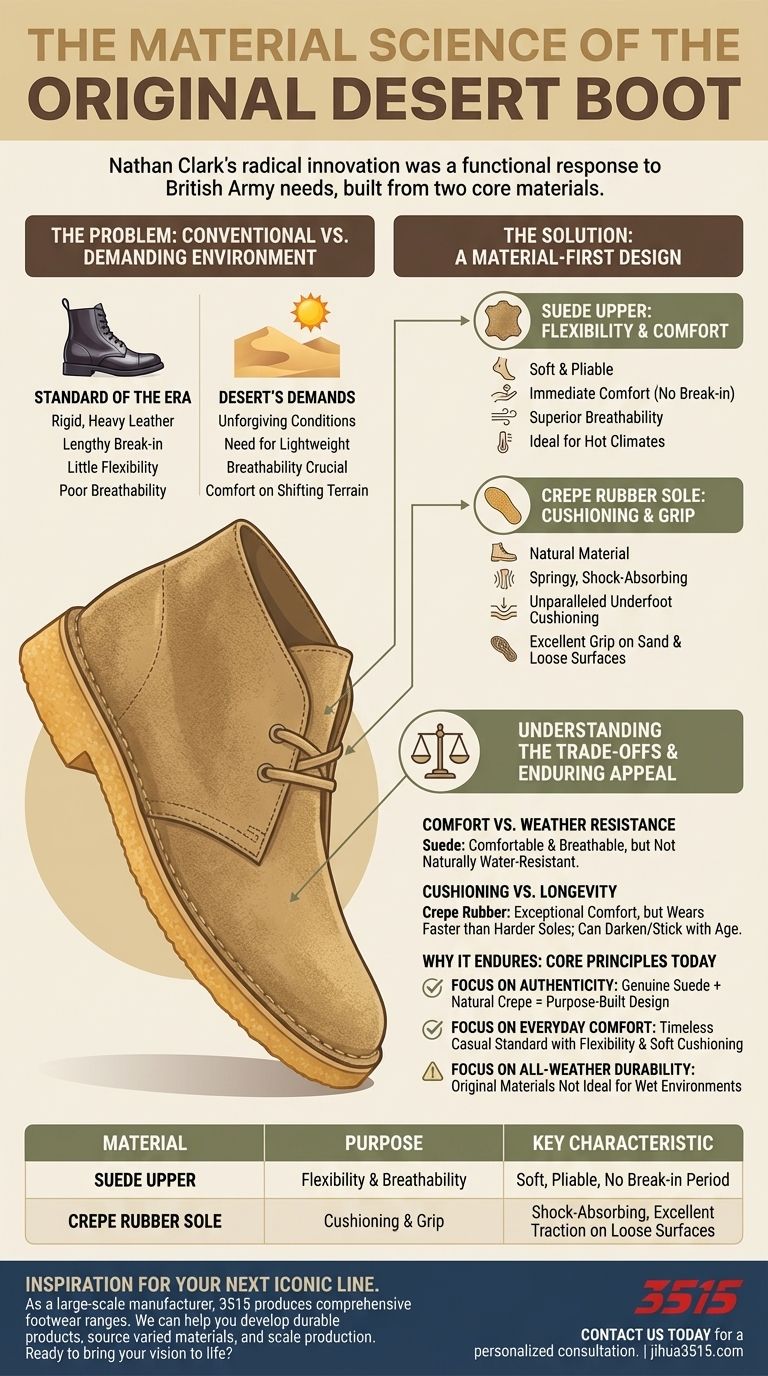
Most men's shoes and boots in the mid-20th century were constructed from rigid, heavy leathers. These materials required a lengthy break-in period and offered little flexibility or breathability.
The Demands of the Desert
The environment in which British officers found themselves was unforgiving. It required footwear that was lightweight to combat fatigue, breathable in the heat, and soft enough to remain comfortable on long marches over shifting terrain.
The Solution: A Material-First Design
Nathan Clark's design, inspired by the South African veldskoen, prioritized the inherent qualities of its materials to meet these specific environmental challenges.
The Suede Upper: Flexibility and Comfort
Clark's use of suede was a significant departure from tradition. Unlike stiff, polished leather, suede is soft and pliable right out of the box, eliminating the painful break-in period. Its porous nature also offered superior breathability, a critical feature for comfort in hot climates.
The Crepe Rubber Sole: Cushioning and Grip
The sole was made from plantation crepe rubber, a natural material known for its springy, shock-absorbing qualities. This provided a level of underfoot cushioning that was unparalleled at the time. The soft, tacky texture of the crepe also offered excellent grip on loose surfaces like sand.
Understanding the Trade-offs
While revolutionary, the original material choices come with inherent compromises. Acknowledging them is key to appreciating the boot's intended purpose.
Comfort vs. Weather Resistance
Suede is highly comfortable and breathable, but it is not naturally water-resistant. It is more susceptible to staining and water damage than the treated, polished leathers it replaced.
Cushioning vs. Longevity
Crepe rubber provides exceptional comfort, but it can wear down more quickly than harder synthetic rubber or leather soles. It also has a tendency to darken and become sticky with age and exposure to heat.
Why This Design Endures
The desert boot remains a classic because its core principles are as relevant today as they were over 70 years ago. Its success is a direct result of its material choices.
- If your primary focus is authenticity: The combination of a genuine suede upper and a natural crepe rubber sole is the defining feature of the original, purpose-built design.
- If your primary focus is everyday comfort: The boot's enduring appeal comes from these core principles of flexibility and soft cushioning, making it a timeless casual standard.
- If your primary focus is all-weather durability: Recognize that the original materials were chosen for specific dry, hot conditions and are not an ideal choice for wet environments.
Ultimately, the genius of the desert boot lies not in its style, but in its purposeful selection of materials to solve a specific, real-world problem.
Summary Table:
| Material | Purpose | Key Characteristic |
|---|---|---|
| Suede Upper | Flexibility & Breathability | Soft, pliable, no break-in period |
| Crepe Rubber Sole | Cushioning & Grip | Shock-absorbing, excellent traction on loose surfaces |
Inspired by Timeless Design? Let's Craft Your Next Iconic Footwear Line.
As a large-scale manufacturer, 3515 produces a comprehensive range of footwear for distributors, brand owners, and bulk clients. Our production capabilities encompass all types of shoes and boots, from purpose-built designs using premium materials to modern interpretations for today's market.
We can help you:
- Develop durable and comfortable products tailored to your target audience's needs.
- Source and work with a wide variety of materials, including suedes, leathers, and specialized rubbers.
- Scale production efficiently to meet your business demands.
Ready to bring your footwear vision to life? Contact our team today to discuss your project and receive a personalized consultation.
Visual Guide
Related Products
- Wholesale Lightweight Tactical Boots Custom Manufacturer for Desert & Combat Use
- Durable Military Combat Boots with Water Drainage for Wholesale & OEM
- Wholesale High-Traction Camo Boots - Custom Manufacturer for Brands
- Durable Leather Tactical Boots Wholesale & Custom Manufacturing for Brands
- Durable Waterproof Rain Boots | Custom Manufacturer for Wholesale & Brands
People Also Ask
- What are the common types of combat boots? Find the Right Boot for Your Mission
- What specialized protections do tactical boots offer? Maximize Endurance with High-Performance Footwear
- What are the main construction similarities between tactical boots and tactical sneakers? Built for Performance & Durability
- What is the role of high-frequency acquisition hardware in technical skill analysis for outdoor and tactical boots?
- How is the compatibility of polymer materials demonstrated in smart footwear? Enhancing Tactical & Training Performance