
At their core, snake boots are constructed from materials specifically chosen for high puncture and abrasion resistance. The most common materials for the main body of the boot are thick full-grain leather, durable synthetics like Cordura nylon, or molded compounds such as PVC and rubber.
The effectiveness of a snake boot isn't about a single "magic" material, but about using a material or a combination of layers that are too dense and tough for a snake's fangs to penetrate. Your choice of material is a direct trade-off between protection, weight, flexibility, and waterproofing.
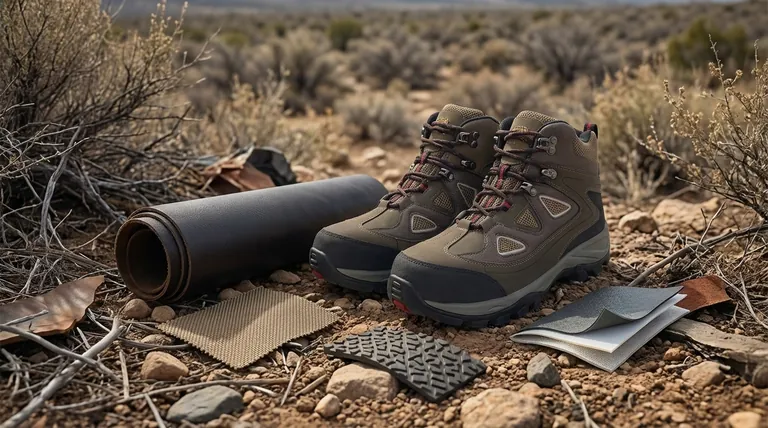
The Strategy Behind Snake-Proof Construction
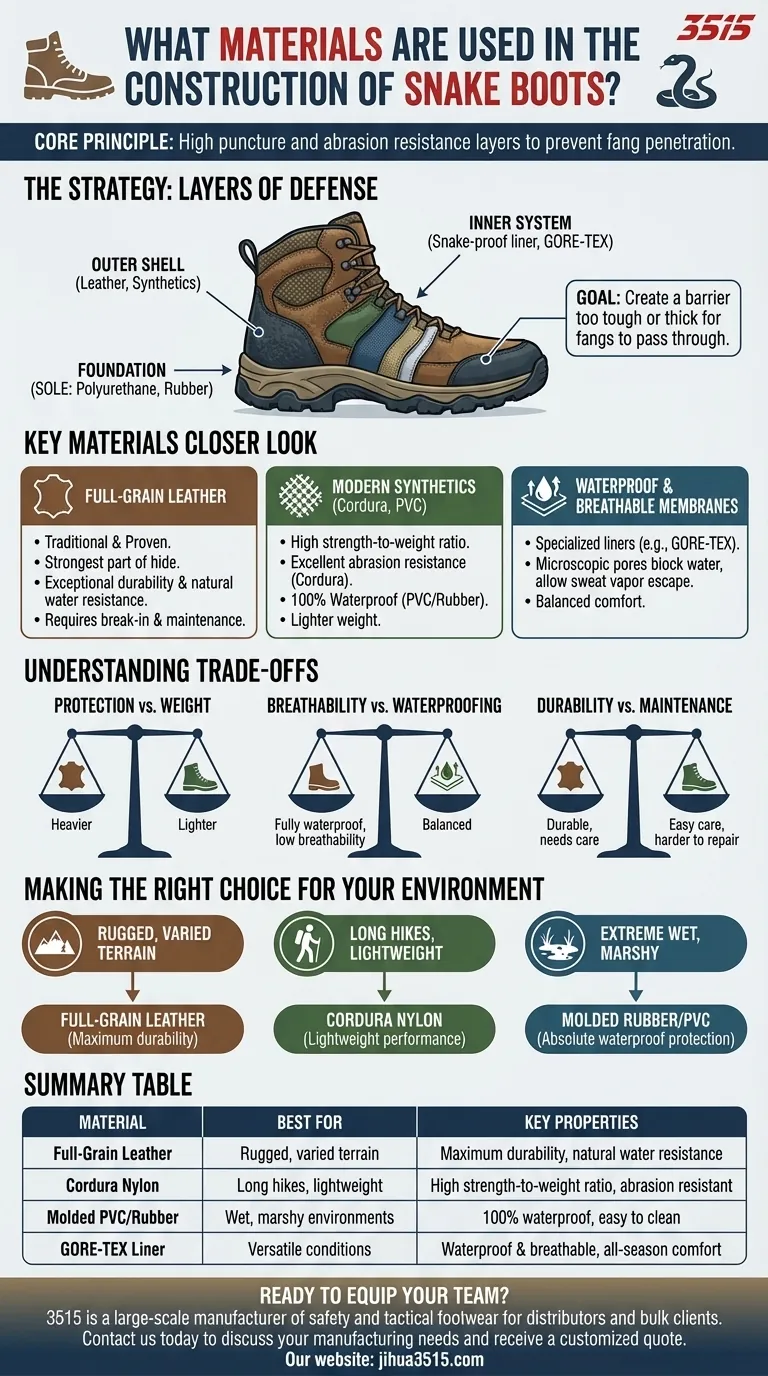
Snake boots are engineered with one primary goal: to prevent fangs from reaching your skin. This is achieved by creating a barrier that is either too tough to pierce or too thick to pass through.
The Outer Shell: The First Line of Defense
The exterior material of the boot is what faces the initial impact. It must be rugged enough to withstand not only a potential strike but also the harsh terrain where you'll be walking.
The two main categories for this outer shell are leather and synthetics.
The Inner System: Protection and Comfort
Many modern snake boots employ a layered system. Beneath the outer shell, they may have a dedicated snake-proof fabric liner.
Interior linings are also critical for comfort, with materials like polyester used for moisture-wicking, and membranes like GORE-TEX added for waterproofing and breathability.
The Foundation: The Sole
The sole of the boot provides traction and a final layer of protection from below. Materials like polyurethane and rubber are standard choices due to their durability and grip.
A Closer Look at Key Materials
Each material offers a distinct set of properties that affect the boot's performance, comfort, and ideal use case.
Full-Grain Leather
This is the traditional, time-tested material for snake boots. It uses the strongest part of the animal hide, offering exceptional durability and natural water resistance.
Leather boots are known for their long-term toughness but often require a break-in period and periodic maintenance to stay in prime condition.
Modern Synthetics (Nylon, Cordura, PVC)
Materials like Cordura nylon are woven fabrics renowned for their incredible strength-to-weight ratio. They provide excellent abrasion resistance in a much lighter package than leather.
Other synthetics, like polyvinyl chloride (PVC) or rubber, are used to create fully molded, 100% waterproof boots, ideal for swampy or extremely wet environments.
Waterproof & Breathable Membranes
Specialized liners like GORE-TEX or Sympatex are often laminated inside the boot, between the outer shell and your foot.
These membranes have microscopic pores that are large enough to let sweat vapor escape but too small for water droplets to enter, providing an excellent balance of waterproofing and comfort in varied conditions.
Understanding the Trade-offs
Choosing the right snake boot means understanding the compromises inherent in each material. No single boot is perfect for every person or every situation.
Protection vs. Weight
Full-grain leather offers proven, rugged protection but is typically the heaviest option. Synthetics like nylon provide comparable bite resistance while significantly reducing the boot's overall weight, which reduces fatigue on long treks.
Breathability vs. Waterproofing
Molded rubber or PVC boots are completely waterproof but offer zero breathability, which can lead to discomfort in hot weather. Boots with GORE-TEX liners offer a compromise, keeping water out while allowing sweat to escape. Less-protected materials like suede leather or mesh panels offer the highest breathability for hot, dry climates.
Durability vs. Maintenance
Leather is exceptionally durable but requires cleaning and conditioning to prevent it from drying out and cracking. Synthetics are generally easier to care for, often requiring little more than being hosed off, but can be more difficult to repair if punctured or torn.
Making the Right Choice for Your Environment
Your decision should be based on where you'll be and what you'll be doing.
- If your primary focus is maximum durability for rugged, varied terrain: A high-quality full-grain leather boot is a time-tested and reliable choice.
- If your primary focus is lightweight performance for long hikes: Look for boots made with Cordura nylon uppers, often paired with a waterproof membrane.
- If your primary focus is hunting or working in extremely wet, marshy areas: A molded rubber or PVC boot will provide the absolute best waterproof protection.
Ultimately, understanding these materials empowers you to choose the right tool to ensure your safety and comfort in the wild.
Summary Table:
| Material | Best For | Key Properties |
|---|---|---|
| Full-Grain Leather | Rugged, varied terrain | Maximum durability, natural water resistance |
| Cordura Nylon | Long hikes, lightweight needs | High strength-to-weight ratio, abrasion resistant |
| Molded PVC/Rubber | Wet, marshy environments | 100% waterproof, easy to clean |
| GORE-TEX Liner | Versatile, changing conditions | Waterproof & breathable, all-season comfort |
Ready to Equip Your Team with Durable, Protective Footwear?
As a large-scale manufacturer, 3515 produces a comprehensive range of safety and tactical footwear for distributors, brand owners, and bulk clients. Our production capabilities encompass all types of durable boots, including specialized designs for extreme environments.
We can help you provide reliable footwear that meets the highest standards of protection and comfort.
Contact us today to discuss your manufacturing needs and receive a customized quote.
Visual Guide
Related Products
- Durable Leather Tactical Boots Wholesale & Custom Manufacturing for Brands
- Wholesale High-Traction Camo Boots - Custom Manufacturer for Brands
- Durable Leather High-Ankle Tactical Boots for Wholesale & Custom Manufacturing
- High-Traction Suede Tactical Boots Wholesale & Custom Manufacturing
- Durable High-Ankle Tactical Boots Wholesale Manufacturer for Custom & Bulk Orders
People Also Ask
- What specialized protections do tactical boots offer? Maximize Endurance with High-Performance Footwear
- What features should law enforcement officers look for in tactical boots? Essential Guide for Safety & Performance
- Importance of Professional Tactical Boots in Loess Gully Regions: Ensure Safety and Precision for Field Monitoring
- What is rucking, and why are tactical boots suitable for it? Discover the Ultimate Footwear for Heavy Loads
- What makes the traction of tactical boots superior? Unlock the Science of Unbeatable Grip



















