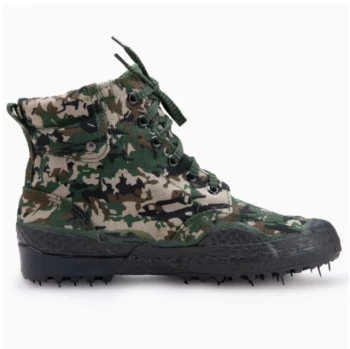
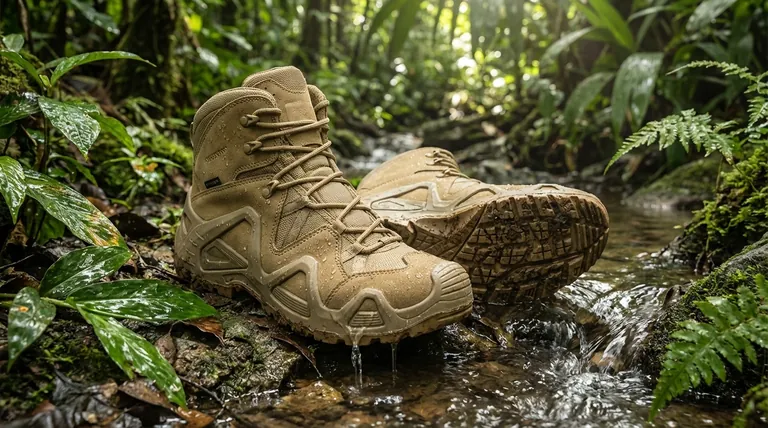
Historically, jungle boots were made from canvas and leather, while modern versions have largely transitioned to using a combination of leather and rugged textiles like ballistic nylon or Cordura. The sole is typically a durable synthetic material like rubber or polyurethane, designed for aggressive traction in mud and wet conditions.
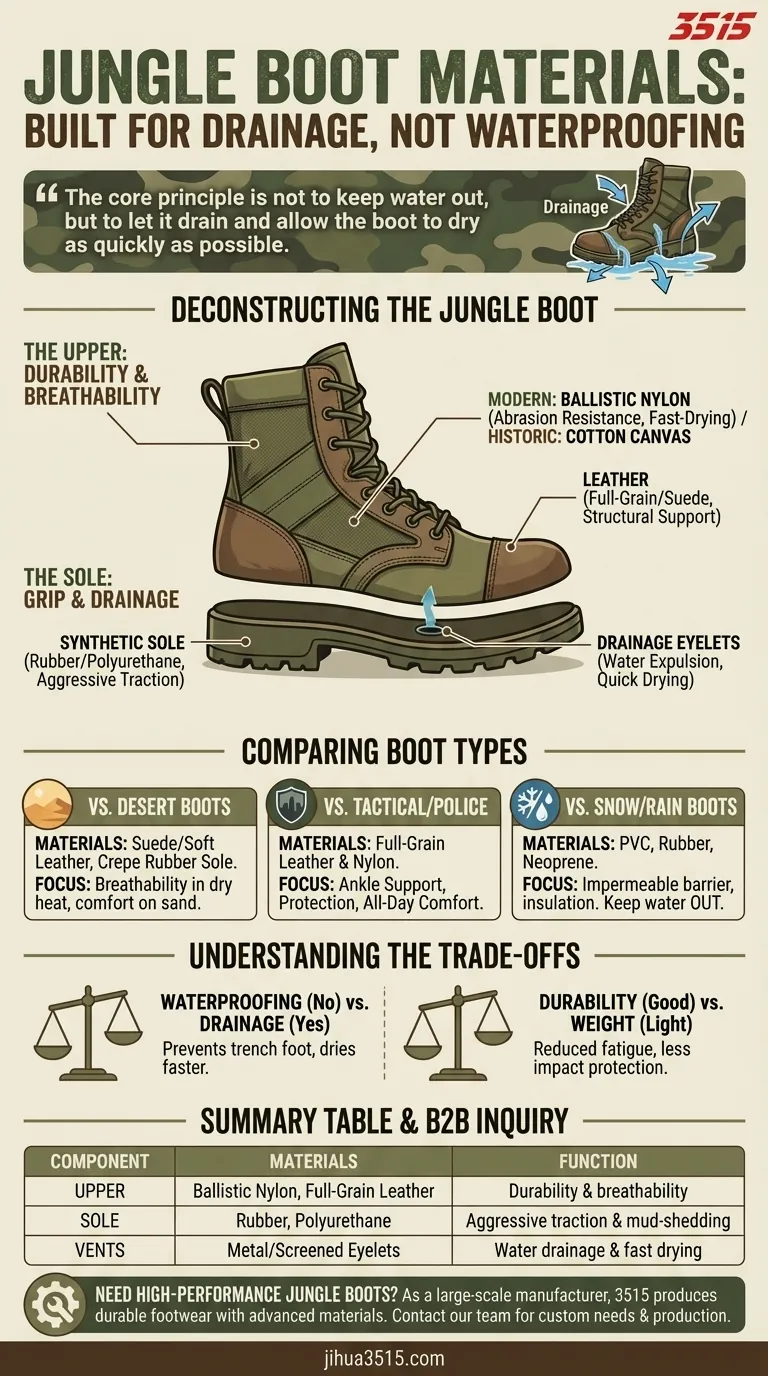
The core principle behind a jungle boot's material selection is not to keep water out, but to let it drain and allow the boot to dry as quickly as possible. This philosophy directly contrasts with waterproof boots and dictates every material choice.
Deconstructing the Jungle Boot
To understand why specific materials are used, we must look at the boot's primary components: the upper and the sole. Each serves a distinct function in a hot, wet environment.
The Upper: Balancing Durability and Breathability
The upper portion of the boot must be tough enough to withstand harsh terrain while allowing moisture to escape.
Early models used cotton canvas for the upper panels because it was lightweight and dried faster than leather.
Modern boots have replaced canvas with advanced synthetics like ballistic nylon. This material offers far greater abrasion resistance and durability without sacrificing the fast-drying properties required.
Leather, typically full-grain or suede, is retained in high-wear areas like the heel and toe cap. This provides structural support and protection where it's needed most.
The Sole: Grip and Drainage
The sole of a jungle boot is engineered for performance in slick, muddy conditions.
The material is almost always a hard-wearing synthetic like polyurethane or rubber. These compounds are molded into deep, aggressive lugs designed to shed mud and grip unstable surfaces.
A defining feature is the inclusion of drainage eyelets or vents near the instep. These small, often screened holes allow water that enters the boot to be physically pushed out with each step, accelerating the drying process.
How Jungle Boots Compare to Other Boots
The material choices for jungle boots become clearer when contrasted with boots designed for different environments.
vs. Desert Boots
Desert boots are typically made of suede or soft leather with a soft crepe rubber sole. Their construction prioritizes breathability in dry heat and comfort on sand, not water drainage or aggressive traction.
vs. Tactical & Police Boots
These boots often use full-grain leather and nylon, similar to modern jungle boots. However, they prioritize ankle support, protection, and all-day comfort on hard surfaces over lightweight construction and water drainage.
vs. Snow & Rain Boots
Snow and rain boots are on the opposite end of the spectrum. They use completely waterproof materials like molded PVC, rubber, or neoprene with insulation. Their goal is to create an impermeable barrier to keep water and cold out, whereas a jungle boot is designed to let water in and out.
Understanding the Trade-offs
Choosing a jungle boot means accepting a specific set of compromises designed for a niche environment.
Waterproofing vs. Drainage
The most significant trade-off is giving up on waterproofing. In a saturated jungle environment, a "waterproof" boot will eventually get wet from the inside (sweat) or from water overtopping the cuff.
By allowing water to drain, the jungle boot prevents trench foot and dries much faster than a waterlogged waterproof boot.
Durability vs. Weight
While tough, the use of nylon fabric panels makes jungle boots significantly lighter than all-leather work boots. This reduces fatigue during long treks but may offer less protection from sharp impacts compared to a steel-toed work boot.
Making the Right Choice for Your Environment
The effectiveness of a boot is entirely dependent on its intended use.
- If your primary focus is hot, wet climates: The jungle boot's combination of leather, nylon, and drainage vents is the superior choice for foot health and performance.
- If your primary focus is hot, dry climates: A suede or canvas desert boot will provide better breathability and comfort on sand and rock.
- If your primary focus is cold or temperate wet climates: An insulated, waterproof boot made of rubber or Gore-Tex-lined leather is necessary to keep your feet dry and warm.
- If your primary focus is all-purpose durability and support: A tactical or police-style boot offers a better balance for urban or varied terrain where drainage is not the top priority.
Ultimately, selecting the correct boot means matching the materials and design philosophy to the specific challenges of your environment.
Summary Table:
| Component | Key Materials | Primary Function |
|---|---|---|
| Upper | Ballistic Nylon, Full-Grain Leather | Durability & breathability |
| Sole | Rubber, Polyurethane | Aggressive traction & mud-shedding |
| Vents | Metal/Screened Eyelets | Water drainage & fast drying |
Need high-performance jungle boots for your customers?
As a large-scale manufacturer, 3515 produces a comprehensive range of durable footwear built with the right materials for the environment. We specialize in crafting jungle boots for distributors, brand owners, and bulk clients using advanced synthetics and leathers for superior performance.
Contact our expert team today to discuss your custom footwear needs and benefit from our extensive production capabilities.
Visual Guide
Related Products
- Durable Spiked Camouflage Boots Wholesale & Factory Production
- Wholesale Lightweight Tactical Boots Custom Manufacturer for Desert & Combat Use
- Wholesale High-Traction Camo Boots - Custom Manufacturer for Brands
- Durable Leather High-Ankle Tactical Boots for Wholesale & Custom Manufacturing
- Durable High-Ankle Tactical Boots Wholesale Manufacturer for Custom & Bulk Orders
People Also Ask
- How does boot height affect waterproofing? Choose the Right Height for Ultimate Protection
- What are the best types of shoes for different gardening conditions? Find Your Perfect Match.
- What role does camouflage play in hunting boots? It's More Than Just a Pattern
- What should you look for to ensure boots are fully waterproof? The Essential 2-Part System
- How does boot construction affect waterproofing? The Science Behind Truly Dry Feet