
At its core, a Goodyear welted sole is built from a select group of materials chosen for durability, comfort, and purpose. The most visible component, the outsole, is primarily made from either leather for classic dress shoes or rubber for casual and work-oriented footwear that requires superior traction. These materials are part of a larger system that includes a leather welt, a cork-filled midsole, and a structural shank.
The choice of sole material in a Goodyear welted shoe is a functional decision, not just an aesthetic one. It directly dictates the footwear's grip, durability, and ideal environment, transforming the shoe from a boardroom staple to a rugged daily companion.
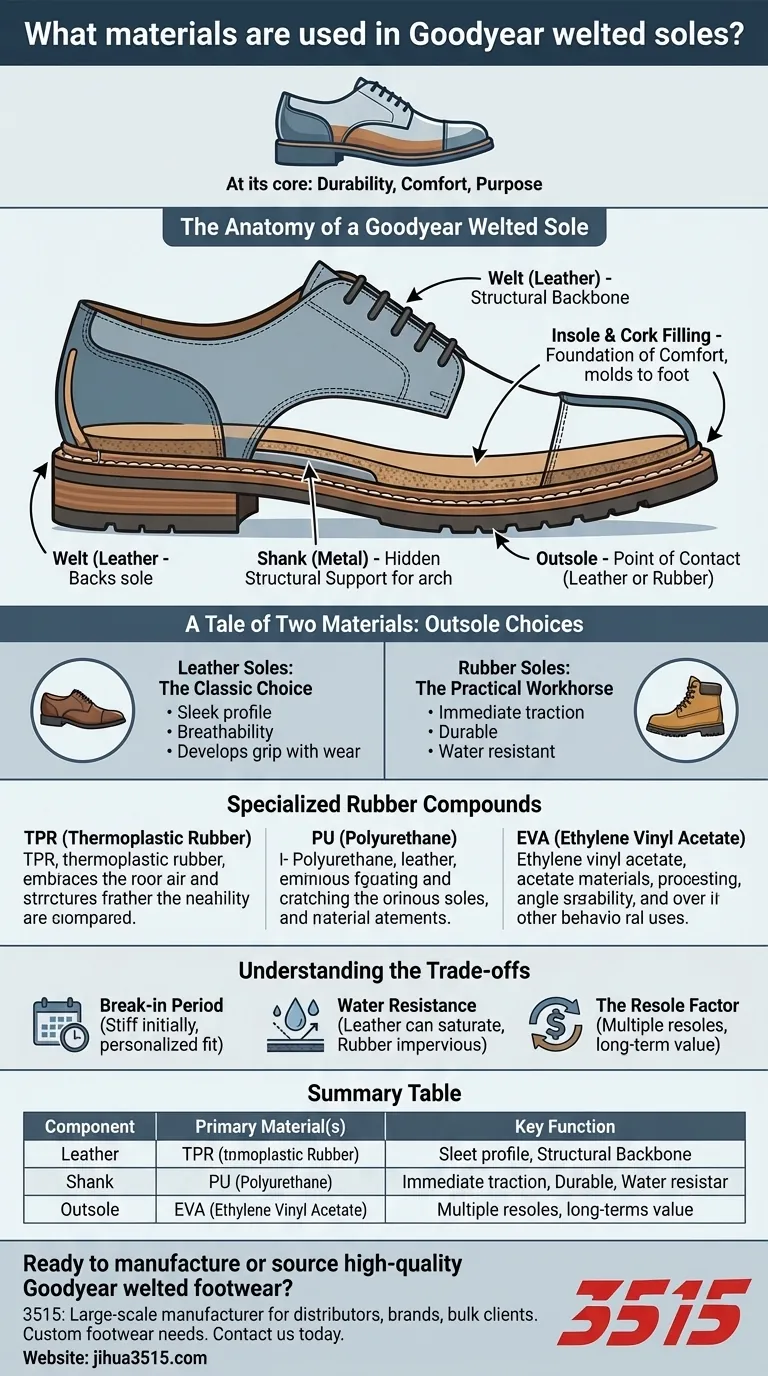
The Anatomy of a Goodyear Welted Sole
To understand the materials, you must first understand the structure. A Goodyear welted sole is a multi-layered system designed for longevity and comfort.
The Welt: The Structural Backbone
The welt itself is a strip of high-quality leather. This component is the lynchpin of the entire construction, stitched to both the upper and the insole rib. It creates a durable, flexible connection point for the outsole.
The Insole and Cork Filling: The Foundation of Comfort
The shoe's insole is typically made of leather, providing a durable foundation for the foot. Between the insole and the outsole, a cavity is filled with a layer of granulated cork. This cork filling is critical, as it molds to the shape of your foot over time, creating a custom, comfortable footbed.
The Shank: Hidden Structural Support
A rigid metal shank is embedded between the insole and outsole. This small but crucial component provides structural support to the arch of the foot, preventing the shoe from flexing in the wrong place and maintaining its shape.
The Outsole: The Point of Contact
The outsole is the part that meets the ground. This is where the primary material choice becomes most apparent and impactful.
A Tale of Two Materials: Leather vs. Rubber Outsoles
The outsole material defines the shoe's primary performance characteristics.
Leather Soles: The Classic Choice
Leather outsoles are the traditional choice for dress shoes, prized for their sleek, elegant profile and breathability. While they can be slippery when new, they develop a natural grip as the surface becomes scuffed with wear.
Rubber Soles: The Practical Workhorse
Rubber outsoles provide immediate and reliable traction, making them ideal for boots, casual shoes, and any footwear intended for daily wear or variable weather. They offer excellent durability and water resistance right out of the box.
Specialized Rubber Compounds
Not all rubber is the same. Specialized compounds are used for specific needs:
- Thermoplastic Rubber (TPR): Balances comfort, style, and slip resistance.
- Polyurethane (PU): A lightweight and chemical-resistant option.
- Ethylene Vinyl Acetate (EVA): Often used in midsoles for its exceptional shock absorption in high-impact footwear.
Understanding the Trade-offs
The Goodyear welt construction is renowned for quality, but the material choices involve specific considerations.
The Break-in Period
Both leather and the cork footbed require a break-in period. The sole will feel stiff initially, but this rigidity gives way to a personalized fit as the cork compresses and the leather flexes to your gait.
Water Resistance
The Goodyear welt stitching creates a highly water-resistant seam, keeping water from entering through the bottom of the shoe. However, leather soles can become saturated if worn in very wet conditions, whereas rubber soles are almost entirely impervious to water.
The Resole Factor
The ability to be resoled multiple times is the hallmark of this construction. The welt allows an old outsole to be removed and a new one stitched on without compromising the shoe's upper. This makes the quality of the upper leather just as important as the sole, as it must be durable enough to outlast several soles.
Making the Right Choice for Your Purpose
Your intended use should guide your decision.
- If your primary focus is formal elegance and office wear: A leather sole offers an unmatched sleek profile and classic aesthetic.
- If your primary focus is all-weather traction and daily durability: A rubber sole provides superior grip and resilience for commuting, casual, or work environments.
- If your primary focus is long-term comfort and a custom fit: Any Goodyear welted shoe will deliver this, as the cork footbed provides its signature benefit regardless of outsole material.
Ultimately, understanding these materials empowers you to select a Goodyear welted shoe that is not just well-made, but perfectly suited to its intended purpose.
Summary Table:
| Component | Primary Material(s) | Key Function |
|---|---|---|
| Welt | Leather | Structural backbone connecting upper to outsole |
| Insole | Leather | Durable foundation for the foot |
| Midsole Filling | Cork | Molds to foot shape for custom comfort |
| Shank | Metal | Provides arch support and structural integrity |
| Outsole | Leather or Rubber | Ground contact point for traction and durability |
Ready to manufacture or source high-quality Goodyear welted footwear?
As a large-scale manufacturer, 3515 produces a comprehensive range of durable footwear for distributors, brand owners, and bulk clients. Our production capabilities encompass all types of shoes and boots, including premium Goodyear welted constructions with the right material choices for your target market.
Contact us today to discuss your custom footwear needs and leverage our expertise in durable sole materials and construction techniques.
Visual Guide
Related Products
- Durable Goodyear Welt Leather Work Boots for Wholesale & Private Label
- Wholesale Durable Leather Work Boots | 8-Inch Goodyear Welt Manufacturer
- Durable Rubber Sole Outdoor Shoes Wholesale & Custom Manufacturing
- Wholesale Breathable Training Shoes Custom Athletic Footwear Manufacturer
- Durable Moc Toe Wedge Sole Work Boots for Wholesale and Private Label
People Also Ask
- What is the difference between full-grain and top-grain leather? Premium Material Guide for Boot Manufacturers
- What are the advantages of leather as an upper material for work boots? Unmatched Durability & Custom Comfort
- Why is it important to waterproof leather work boots? Protect Your Investment and Performance
- How should new leather work boots be broken in? A Guide to Comfort and Durability
- What are the advantages of leather uppers in work boots? Unmatched Durability & Protection














