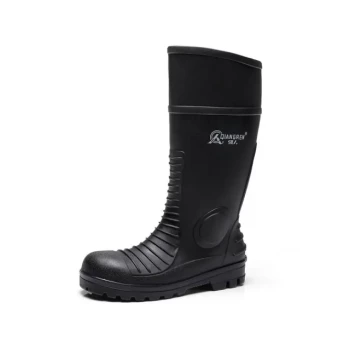
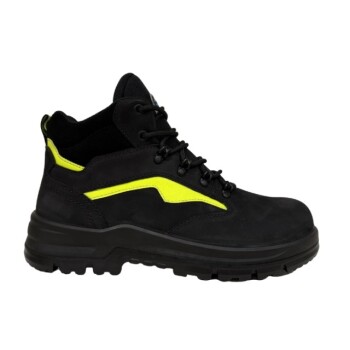
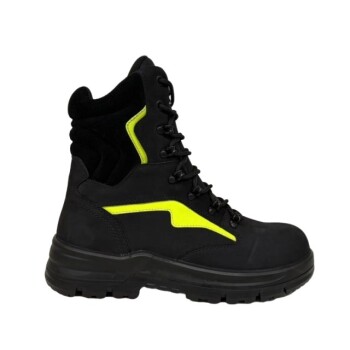
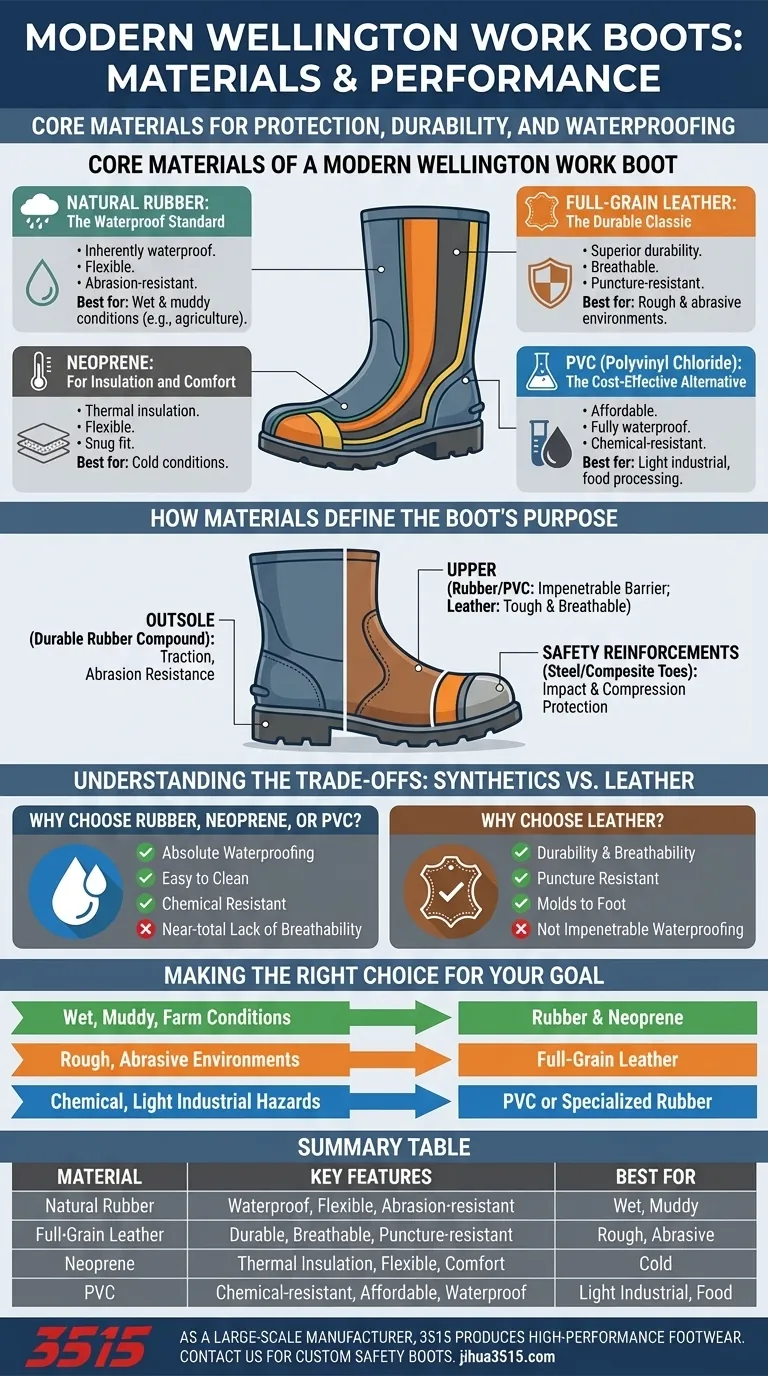
At their core, modern Wellington work boots are constructed from a select group of high-performance materials, primarily natural rubber, full-grain leather, neoprene, and polyvinyl chloride (PVC). These materials are chosen specifically for their ability to provide protection, durability, and waterproofing in demanding work environments.
The material of a Wellington work boot is not an aesthetic choice; it is a functional decision. The right material directly translates to the boot's performance in specific conditions, balancing absolute waterproofing against rugged durability and breathability.
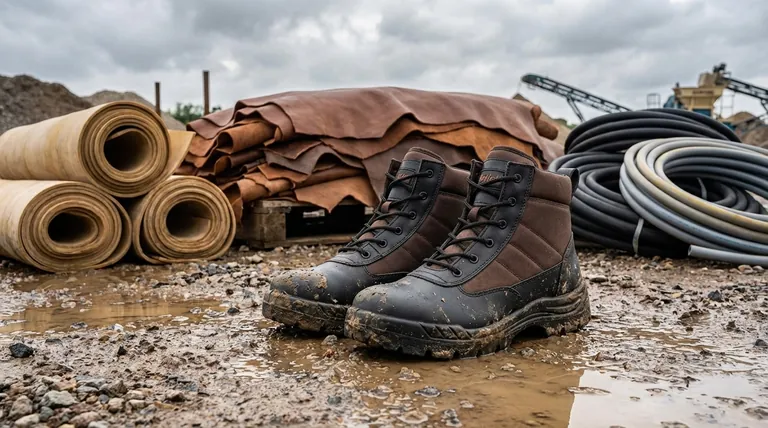
The Core Materials of a Modern Wellington Work Boot
The classic "Wellie" has evolved significantly from its leather origins. Today's work-focused designs use specialized materials to meet the needs of different industries, from agriculture to construction.
Natural Rubber: The Waterproof Standard
Natural rubber is the quintessential material for Wellington boots. It offers exceptional flexibility and is inherently waterproof, making it the top choice for wet and muddy conditions. Its natural resistance to wear and abrasion ensures a long service life.
Full-Grain Leather: The Durable Classic
Many pull-on work boots in the Wellington style are made from high-quality, full-grain leather. While not inherently waterproof without treatment, leather provides superior durability, puncture resistance, and breathability compared to rubber.
Neoprene: For Insulation and Comfort
Neoprene is a synthetic rubber often used in combination with natural rubber. Its primary benefit is thermal insulation, keeping feet warm in cold conditions. It also adds flexibility and helps create a snug, comfortable, and completely waterproof fit.
PVC (Polyvinyl Chloride): The Cost-Effective Alternative
PVC is a type of plastic used to create affordable, fully waterproof boots. It offers excellent resistance to certain chemicals, acids, and oils, making it a practical choice for food processing or light industrial settings.
How Materials Define the Boot's Purpose
Each component of the boot leverages a specific material to perform a critical function, from providing traction to protecting you from the elements.
The Outsole: Your Connection to the Ground
The outsole of nearly all Wellington work boots is made from a durable rubber compound. This is non-negotiable for safety, as rubber provides the best traction on wet or uneven surfaces and high resistance to abrasion.
The Upper: Protection and Structure
The "upper" is the main body of the boot. A rubber or PVC upper provides a complete, impenetrable barrier against water and chemicals. A leather upper offers a tougher, more breathable barrier suitable for rough, abrasive environments that may be less consistently wet.
Safety Reinforcements: The Industrial Edge
In industrial contexts, the core materials are augmented with critical safety features. Many Wellington work boots are reinforced with steel toes or composite safety toes to protect against impact and compression, regardless of whether the upper is made of rubber or leather.
Understanding the Trade-offs: Synthetics vs. Leather
Choosing the right Wellington work boot means understanding the inherent compromises between the two main material categories.
Why Choose Rubber, Neoprene, or PVC?
These synthetic materials offer absolute waterproofing. They are ideal for standing in water, mud, or chemicals for extended periods. They are also very easy to clean and decontaminate, a critical feature in agriculture or food production. The primary trade-off is a near-total lack of breathability.
Why Choose Leather?
Leather's main advantages are durability and breathability. It stands up better to scrapes, cuts, and punctures than rubber. Over time, it molds to your foot for a custom fit. While water-resistant when treated, a leather boot will not provide the same impenetrable waterproof seal as a rubber boot.
Making the Right Choice for Your Goal
Select the boot material that directly addresses the primary challenge of your work environment.
- If your primary focus is working in wet, muddy, or farm conditions: A boot made from natural rubber and neoprene offers the best combination of waterproofing and insulated comfort.
- If your primary focus is durability in rough, abrasive environments: A full-grain leather Wellington-style boot provides superior resistance to punctures and wear.
- If your primary focus is protection from chemicals or light industrial hazards: A PVC or specialized rubber boot offers reliable, easy-to-clean protection at an effective price point.
Ultimately, choosing the right material is the first step in ensuring your footwear provides the safety and performance your job demands.
Summary Table:
| Material | Key Features | Best For |
|---|---|---|
| Natural Rubber | Inherently waterproof, flexible, abrasion-resistant | Wet, muddy conditions (e.g., agriculture) |
| Full-Grain Leather | Highly durable, breathable, puncture-resistant | Rough, abrasive environments |
| Neoprene | Thermal insulation, flexible, waterproof fit | Cold conditions, added comfort |
| PVC | Chemical-resistant, affordable, fully waterproof | Light industrial, food processing settings |
Need Wellington work boots tailored to your industry's demands?
As a large-scale manufacturer, 3515 produces a comprehensive range of high-performance footwear for distributors, brand owners, and bulk clients. Our production capabilities encompass all types of safety boots, including durable rubber, leather, and PVC Wellington designs engineered for protection, comfort, and compliance.
We help you source or customize the ideal work boots to meet your specific safety standards and environmental challenges. Contact our expert team today to discuss your requirements and receive a customized solution!
Visual Guide
Related Products
- Durable Waterproof Rain Boots | Custom Manufacturer for Wholesale & Brands
- Durable Leather Work Boots for Wholesale & Custom Manufacturing
- Durable Goodyear Welt Leather Work Boots for Wholesale & Private Label
- Durable Leather Work Boots for Wholesale & Custom OEM Manufacturing
- Durable Leather Work Boots Wholesale Manufacturer & Custom Factory
People Also Ask
- What are the main materials for waterproof rain boots? Choose the Right Material for Durability & Comfort
- What is the overall recommendation for choosing rain boot materials? A Guide to Rubber vs. PVC
- How does boot height affect waterproofing? Choose the Right Height for Ultimate Protection
- Why are rain boots more flexible and comfortable than snow boots? The Key Differences Explained
- What are the best types of shoes for different gardening conditions? Find Your Perfect Match.