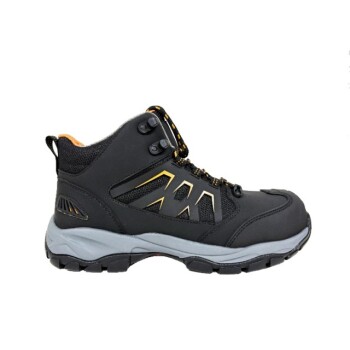
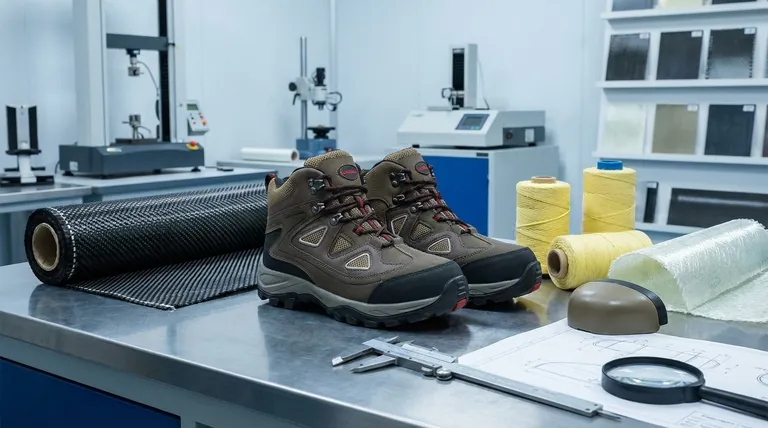
The most common materials used in composite-toe safety boots are advanced, non-metallic fibers and polymers. These typically include Kevlar, carbon fiber, fiberglass, and high-density plastics, which are layered to create a protective cap that is significantly lighter than traditional steel.
The core principle of composite-toe technology is to replace a single, heavy metal with a combination of lightweight, non-metallic materials. This achieves certified safety standards while eliminating electrical conductivity and improving comfort for the wearer.
The Engineering Behind the Composite Toe
A composite toe isn't made from a single substance but from a blend of materials engineered for strength and resilience. This approach allows for a customized balance of protection, weight, and comfort.
Key Material: Kevlar
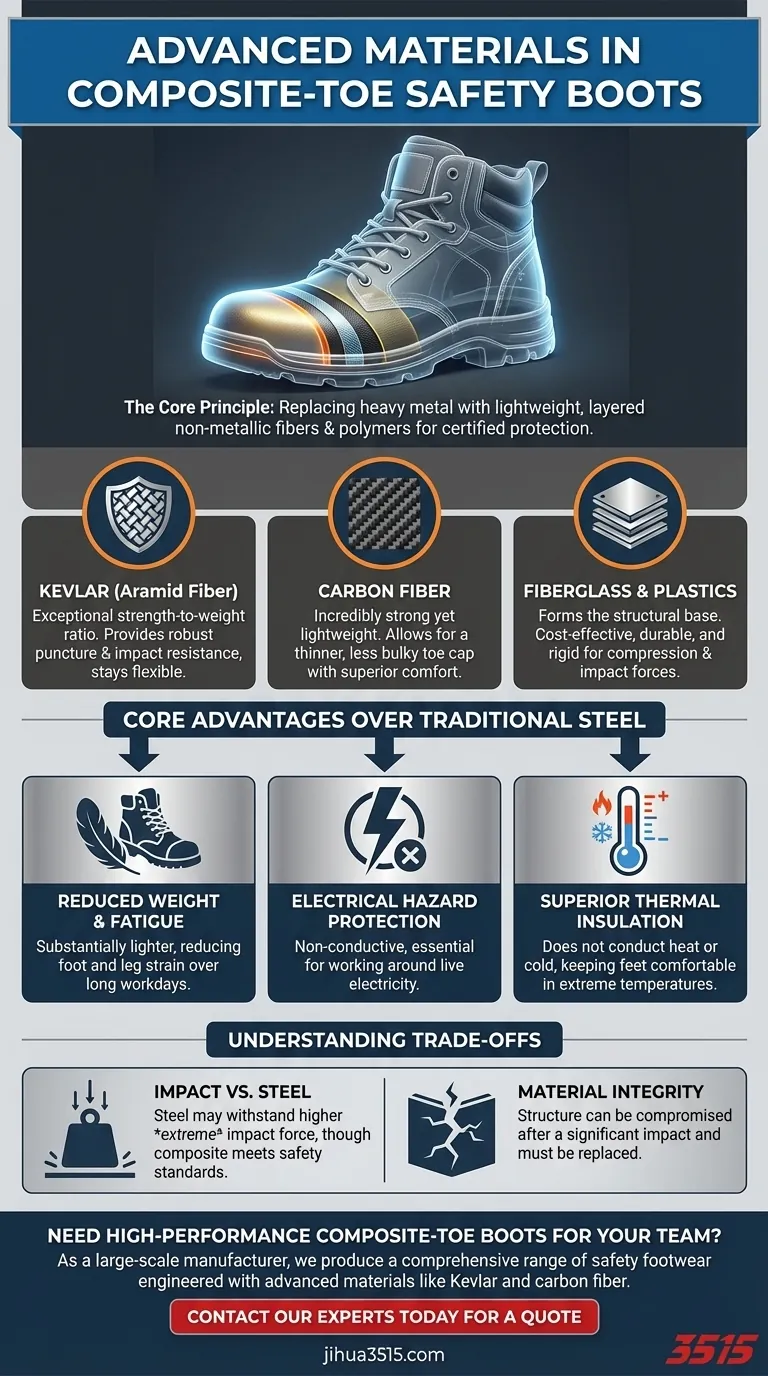
Kevlar is a synthetic aramid fiber known for its exceptional strength-to-weight ratio. In safety boots, it provides robust puncture and impact resistance while remaining flexible and resistant to extreme temperatures.
Key Material: Carbon Fiber
Carbon fiber is prized for being incredibly strong yet remarkably lightweight. Using carbon fiber allows for a thinner, less bulky toe cap without sacrificing protection, making the boot feel more like a standard piece of footwear.
Key Material: Fiberglass and Plastic
Fiberglass and specialized plastics often form the structural base of the composite toe cap. These materials are cost-effective, durable, and provide the necessary rigidity to withstand compression and impact forces.
Core Advantages Over Traditional Steel
Choosing composite materials is a deliberate engineering decision driven by specific performance goals. The benefits address common complaints associated with traditional steel-toe boots.
Reduced Weight and Fatigue
The most significant advantage is the reduced weight. By eliminating steel, composite boots can be substantially lighter, which leads to less foot and leg fatigue over a long workday.
Electrical Hazard Protection
Because they contain no metal, composite-toe boots are non-conductive. This makes them the mandatory choice for electricians, engineers, and anyone working in environments where electrical hazards are a primary concern.
Superior Thermal Insulation
Composite materials do not conduct heat or cold effectively. This provides superior insulation, keeping feet more comfortable in both extremely hot and cold working conditions compared to steel.
Understanding the Trade-offs
While composite-toe technology offers clear advantages, it's essential to understand its primary limitation. No single safety solution is perfect for every scenario.
Impact Resistance vs. Steel
Although composite toes meet or exceed all OSHA and ASTM safety requirements, steel can often withstand a higher maximum impact force. For environments with a high risk of extremely heavy falling objects, steel may offer a greater margin of safety.
Cost and Material Integrity
Advanced materials like carbon fiber and Kevlar can make composite boots more expensive. Furthermore, after a significant impact, the integrity of the composite structure may be compromised, and the boots should always be replaced.
Making the Right Choice for Your Environment
Your specific job requirements and daily tasks should dictate your choice of safety footwear.
- If your primary focus is working with live electricity: Composite-toe boots are non-negotiable due to their non-conductive properties.
- If your primary focus is all-day comfort and reduced fatigue: The lighter weight of composite-toe boots makes them the superior choice for long shifts.
- If your primary focus is maximum protection against extreme impact: A traditional steel-toe boot may provide a higher ultimate failure point in the most hazardous environments.
Ultimately, understanding the materials empowers you to select the tool that best protects you for the job at hand.
Summary Table:
| Material | Key Property | Primary Benefit |
|---|---|---|
| Kevlar | Exceptional strength-to-weight ratio | Puncture & impact resistance, flexibility |
| Carbon Fiber | Incredibly strong & lightweight | Less bulky toe cap, superior comfort |
| Fiberglass/Plastics | Durable & cost-effective | Structural rigidity for compression & impact |
Need high-performance composite-toe boots for your team?
As a large-scale manufacturer, 3515 produces a comprehensive range of safety footwear for distributors, brand owners, and bulk clients. Our production capabilities encompass all types of composite-toe boots, engineered with advanced materials like Kevlar and carbon fiber to provide superior protection, comfort, and compliance for your workforce.
Contact our experts today to discuss your custom safety footwear needs and receive a competitive quote.
Visual Guide
Related Products
- Wholesale Durable Safety Boots Manufacturer Customizable Steel Toe Work Boots
- Durable Leather Moc Toe Work Boots for Wholesale & Custom Manufacturing
- Wholesale Durable Breathable Safety Boots Custom OEM Manufacturer
- Wholesale Customizable Safety Boots Durable & Protective Footwear Manufacturing
- Durable Steel Toe Safety Boots Wholesale & Custom Manufacturing
People Also Ask
- What are the pros and cons of steel toe work boots? A Guide to Maximum Protection vs. Comfort
- What are the different types of steel toe work boots? Choose the Right Boot for Your Job
- What is the history of steel toe work boots? From German Invention to Modern Safety Standard
- How much weight can steel toe work boots withstand? Unpacking the 3,372 lb. Safety Standard
- What are some common myths about steel toe work boots? Debunked for Modern Workers