
At its core, the popularity of roughout leather for boots is not about aesthetics, but about pure function. This material is chosen for its exceptional durability, abrasion resistance, and straightforward maintenance, which are direct results of using the tougher, flesh-side of the animal hide facing outwards.
Roughout leather prioritizes functional resilience over cosmetic perfection. By exposing the fibrous flesh side and protecting the smooth grain on the interior, it creates a boot that is built to withstand hard use and hide the evidence of wear and tear.
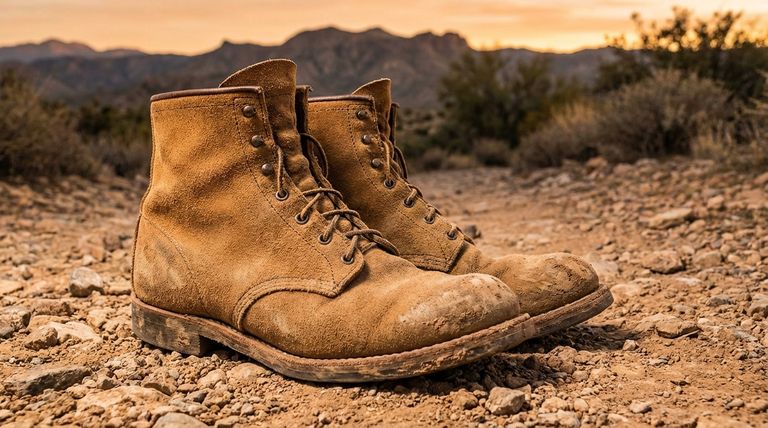
What Exactly is Roughout Leather?
To understand its benefits, we first need to clarify what roughout leather is—and what it is not. It is often confused with suede, but they are fundamentally different materials.
The Flesh Side vs. The Grain Side
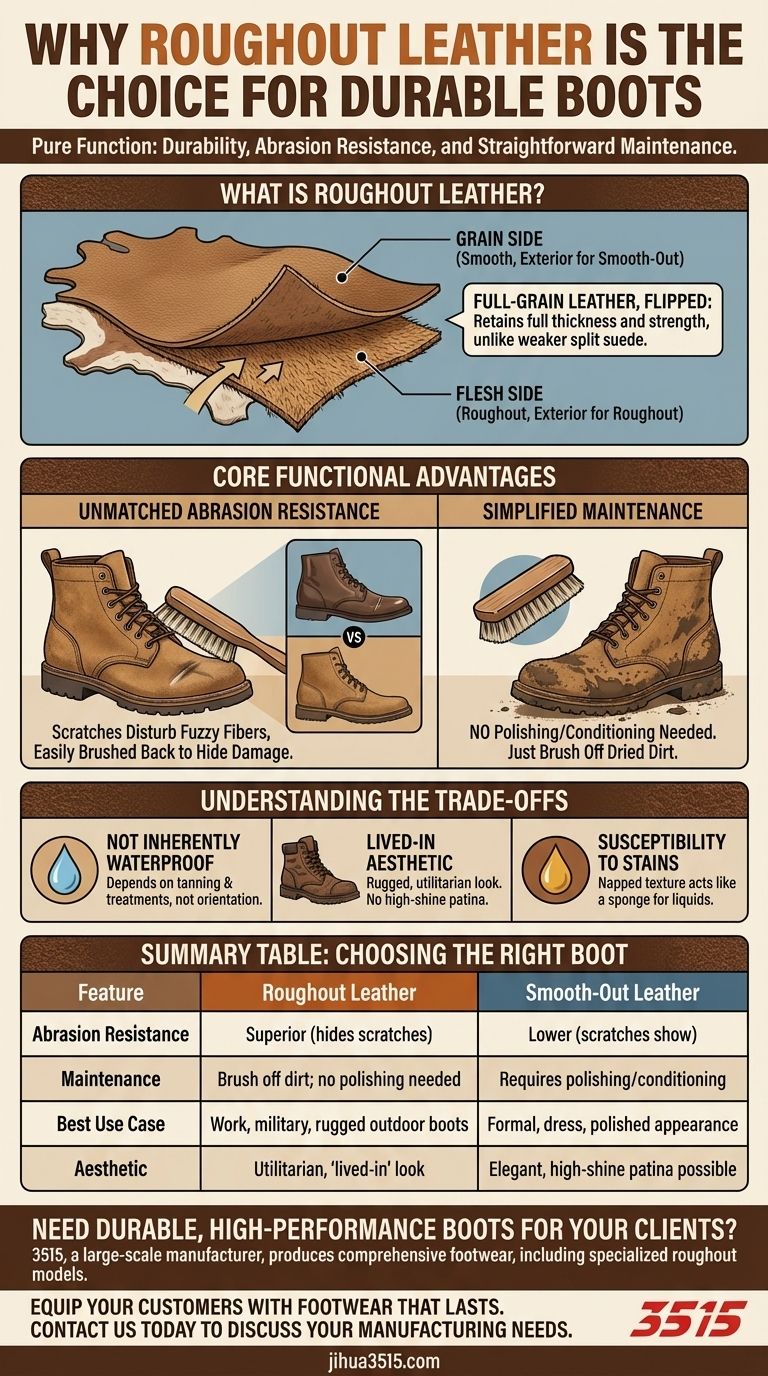
Every full-thickness hide has two sides: the grain side (the smooth, outer layer of the animal's skin) and the flesh side (the fibrous, napped underside). Most leather boots use the grain side out, which is then finished and polished.
A Full-Grain Leather, Flipped
Roughout leather is a full-grain leather that is simply oriented with the flesh side facing out. This means it retains the hide's entire thickness and strongest fibers, unlike suede, which is created by splitting the hide and is therefore weaker.
The Core Functional Advantages
The decision to put the flesh side out gives roughout leather its signature rugged properties. It’s a design choice that favors longevity and ease of care.
Unmatched Abrasion Resistance
The primary benefit of roughout is its incredible resistance to scuffs and scrapes. The smooth grain side of the leather is the most delicate; on a roughout boot, this layer is protected on the inside.
A scratch on a smooth leather boot damages the finish, leaving a permanent mark. A scratch on a roughout boot simply disturbs the fuzzy fibers of the nap, which can often be brushed back into place, effectively hiding the damage.
Simplified Maintenance
Caring for roughout is remarkably simple. There is no need for polishing or conditioning creams to maintain its appearance.
Dirt and mud can be allowed to dry and then simply brushed away with a stiff brush. This low-effort upkeep makes it ideal for work boots, military boots, and any footwear intended for harsh environments.
Understanding the Trade-offs
While highly functional, roughout leather is not the perfect choice for every situation. Its properties come with specific trade-offs that are important to recognize.
Not Inherently More Waterproof
A common misconception is that roughout is more waterproof than smooth leather. Water resistance is determined by the tanning process, the thickness of the hide, and any treatments applied, not by which side faces out. Both roughout and smooth-out boots require proper care to repel water effectively.
The "Lived-In" Aesthetic
Roughout leather has a rugged, utilitarian look from the start. It does not develop the high-shine patina that many people value in smooth leather boots. Its appearance is a matter of practical function, not formal elegance.
Susceptibility to Stains
The napped, fibrous texture that makes roughout so durable can also act like a sponge for oils, greases, and other liquids. While dirt brushes off easily, liquid stains can be more difficult to remove than from a finished, smooth-surfaced leather.
Making the Right Choice for Your Goal
Selecting between roughout and smooth-out leather depends entirely on your intended use and priorities.
- If your primary focus is maximum durability and minimal upkeep: Roughout is the superior choice, as it is designed to hide wear and requires only basic brushing.
- If your primary focus is a formal appearance that can be polished: Smooth-out leather is the correct option for achieving a high shine and a dressier look.
- If your primary focus is work in harsh, abrasive environments: The inherent resilience of roughout makes it the ideal material for withstanding constant wear and tear.
Ultimately, choosing roughout leather is a deliberate decision to prioritize rugged function over polished form.
Summary Table:
| Feature | Roughout Leather | Smooth-Out Leather |
|---|---|---|
| Abrasion Resistance | Superior (hides scratches) | Lower (scratches show) |
| Maintenance | Brush off dirt; no polishing needed | Requires polishing/conditioning |
| Best Use Case | Work, military, rugged outdoor boots | Formal, dress, polished appearance |
| Aesthetic | Utilitarian, 'lived-in' look | Elegant, high-shine patina possible |
Need durable, high-performance boots for your clients?
As a large-scale manufacturer, 3515 produces a comprehensive range of footwear for distributors, brand owners, and bulk clients. Our production capabilities encompass all types of shoes and boots, including specialized roughout leather models built for extreme durability and low maintenance.
Let us help you equip your customers with footwear that lasts. Contact our expert team today to discuss your manufacturing needs.
Visual Guide
Related Products
- Durable Leather Work Boots for Wholesale & Custom Manufacturing
- Durable Leather Work Boots for Wholesale & Custom OEM Manufacturing
- Wholesale Leather Work Boots with Customizable Wedge Sole for Brands
- Wholesale Leather Ankle Boots with Lug Soles for Custom Brand Manufacturing
- Durable Leather Work Boots Wholesale Manufacturer & Custom Factory
People Also Ask
- What is the difference between full-grain and top-grain leather? Premium Material Guide for Boot Manufacturers
- What are the common workplace hazards that can be mitigated with the right work boots? Protect Your Workforce
- What are the common foot issues workers face due to uncomfortable work boots? Prevent Pain & Deformities
- What are the advantages of leather versus synthetic work boots? A Guide to Choosing the Right Material
- What are the key components of modern work boots? Engineered for Ultimate Durability and Comfort















