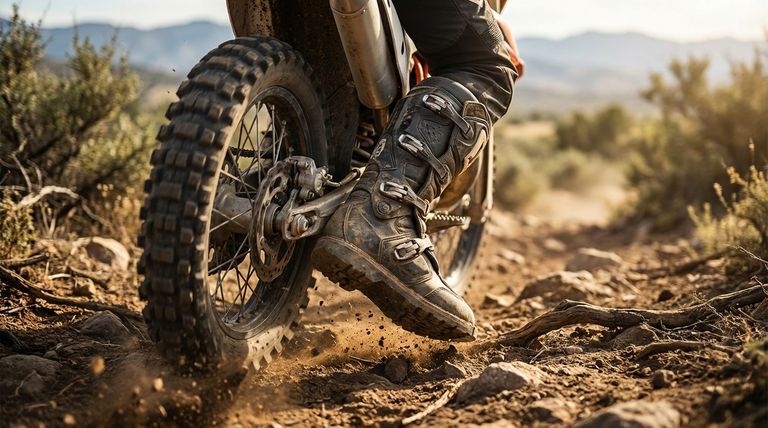
For off-road or extreme riding conditions, the only appropriate choice is a specialized motocross-style boot. These boots are purpose-built protective equipment, engineered with the extreme rigidity and impact resistance necessary to handle the unique hazards of unpaved, unpredictable terrain.
While many motorcycle boots offer protection, only true off-road boots are designed to prevent the specific types of high-impact injuries and joint torsion common in motocross, enduro, and trail riding.
Why Off-Road Riding Demands Specialized Gear
Riding on a track or trail is fundamentally different from riding on the street. The gear must reflect the increased risk and unique physical demands of the environment.
The Inherent Risks of the Trail
Off-road environments are filled with obstacles like rocks, roots, and ruts. This significantly increases the likelihood of a crash or a simple low-speed tip-over.
Your feet and lower legs are the first line of defense against both the ground and the motorcycle itself.
The Need for Maximum Stability
Off-road boots typically add 2 to 3 inches of height. This is a critical feature that helps riders with shorter inseams plant their feet firmly on uneven ground.
This ability to "flat-foot" the bike provides a massive boost in stability and confidence, especially when navigating challenging, low-speed sections.
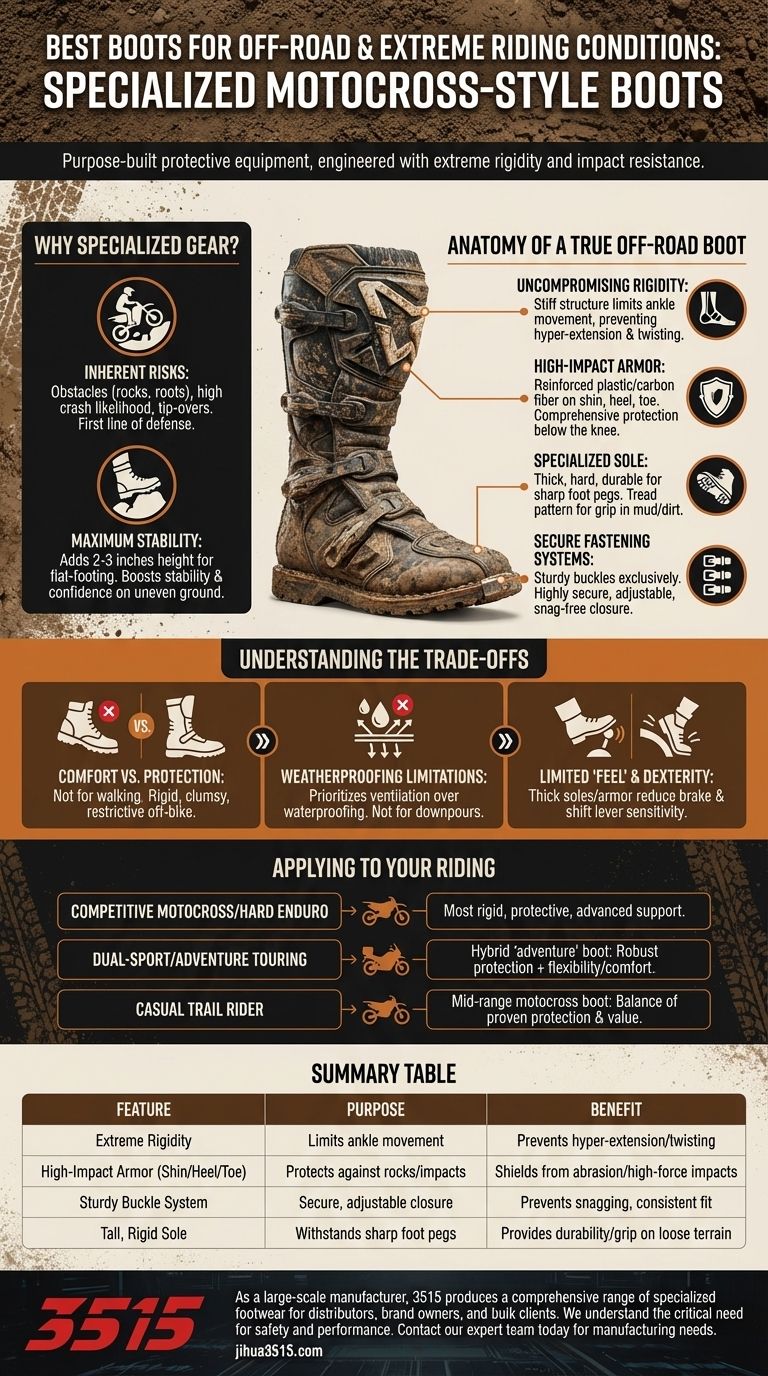
Anatomy of a True Off-Road Boot
Off-road boots are not simply taller touring boots. Their construction is entirely different, prioritizing ultimate protection over all other considerations.
Uncompromising Rigidity
The most defining characteristic of an off-road boot is its extreme rigidity. The structure is intentionally stiff to limit ankle movement.
This isn't a design flaw; it's a crucial safety feature designed to prevent hyper-extension and severe twisting injuries during a high-impact event.
High-Impact Armor
These boots are heavily armored, with reinforced plastic or carbon fiber panels covering the shin, heel, and toe box.
This armor extends up to just below the knee, providing comprehensive protection against both impacts and abrasion.
Specialized Sole Construction
The soles are thick, hard, and built for durability. This allows them to withstand the constant pressure and friction from sharp, serrated off-road foot pegs.
The tread pattern is also designed for maximum grip on mud, dirt, and other loose surfaces you'll encounter when walking or pushing the bike.
Secure Fastening Systems
You will not find zippers or laces on a proper off-road boot. They exclusively use a series of sturdy buckles for closure.
Buckles provide a highly secure and adjustable fit that will not loosen with vibration or snag on trail debris.
Understanding the Trade-offs
The single-minded focus on protection means these boots come with significant compromises in other areas. It's vital to understand what you are giving up.
Comfort vs. Protection
Off-road boots are not comfortable for walking or long-distance commuting. Their rigidity makes them feel clumsy and restrictive off the bike. They are a tool for riding, not a piece of everyday footwear.
Weatherproofing Limitations
Many off-road boots prioritize ventilation over waterproofing. During strenuous riding, your feet generate a lot of heat, and airflow is a priority. They are not designed to keep you dry in a downpour.
Limited "Feel" and Dexterity
The thick soles and heavy armor reduce your ability to feel the brake and shift levers. New riders often need a period of adjustment to get used to the lack of sensitivity compared to a road boot.
How to Apply This to Your Riding
Your choice should be dictated by the intensity and type of riding you do.
- If your primary focus is competitive motocross or hard enduro: You need the most rigid, protective boot available, prioritizing impact resistance and advanced support systems like mechanical hinges.
- If your primary focus is dual-sport or adventure touring: Consider a hybrid "adventure" boot that blends the robust protection of an off-road boot with slightly more flexibility and weatherproofing for on-road comfort.
- If you are a casual trail rider: A quality mid-range motocross boot offers an excellent balance of proven protection and value without the expense of pro-level features you may not need.
Investing in the right off-road boot is a direct investment in your safety and confidence on the trail.
Summary Table:
| Feature | Purpose | Benefit |
|---|---|---|
| Extreme Rigidity | Limits ankle movement | Prevents hyper-extension and twisting injuries |
| High-Impact Armor (Shin/Heel/Toe) | Protects against rocks and impacts | Shields from abrasion and high-force impacts |
| Sturdy Buckle System | Secure, adjustable closure | Prevents snagging and ensures a consistent fit |
| Tall, Rigid Sole | Withstands sharp foot pegs | Provides durability and grip on loose terrain |
As a large-scale manufacturer, 3515 produces a comprehensive range of specialized footwear for distributors, brand owners, and bulk clients.
We understand the critical need for safety and performance in extreme conditions. Our production capabilities encompass all types of off-road and motocross boots, engineered with the rigidity, armor, and durability required for serious riders.
Let us help you equip your customers with the best possible protection. Contact our expert team today to discuss your manufacturing needs and discover how we can bring your vision to life.
Visual Guide
Related Products
- Durable Moc-Toe Wedge Work Boots | Wholesale Manufacturing for Brands
- Wholesale Tactical Boots High-Traction & Reflective for Bulk & Brand Orders
- Durable Spiked Camouflage Boots Wholesale & Factory Production
- Durable Goodyear Welt Leather Work Boots for Wholesale & Private Label
- Wholesale Lightweight Tactical Boots Custom Manufacturer for Desert & Combat Use
People Also Ask
- How can you achieve a Classic Workwear Vibe with moc toe boots? Build a Rugged, Authentic Style
- What types of outfits can moc toe boots be worn with? Versatile Style Guide
- How did moc toe boots originate? A Legacy of Workwear Durability and Style
- How can moc toe boots be styled for casual wear? Master Rugged & Modern Looks
- What distinguishes moc toe boots? The Ultimate Guide to Unmatched Comfort & Style