
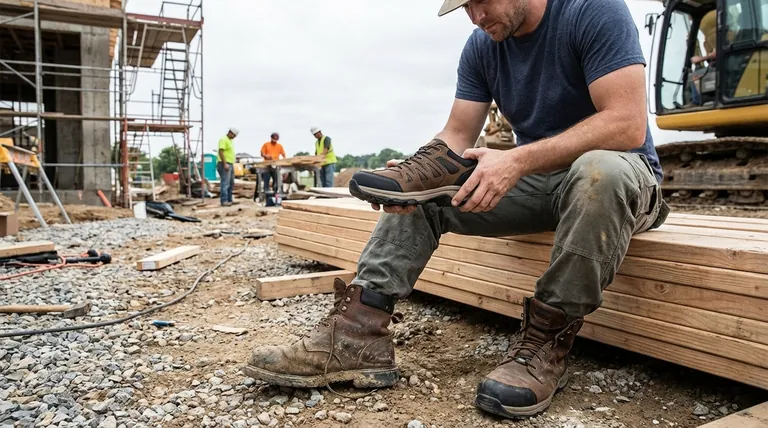
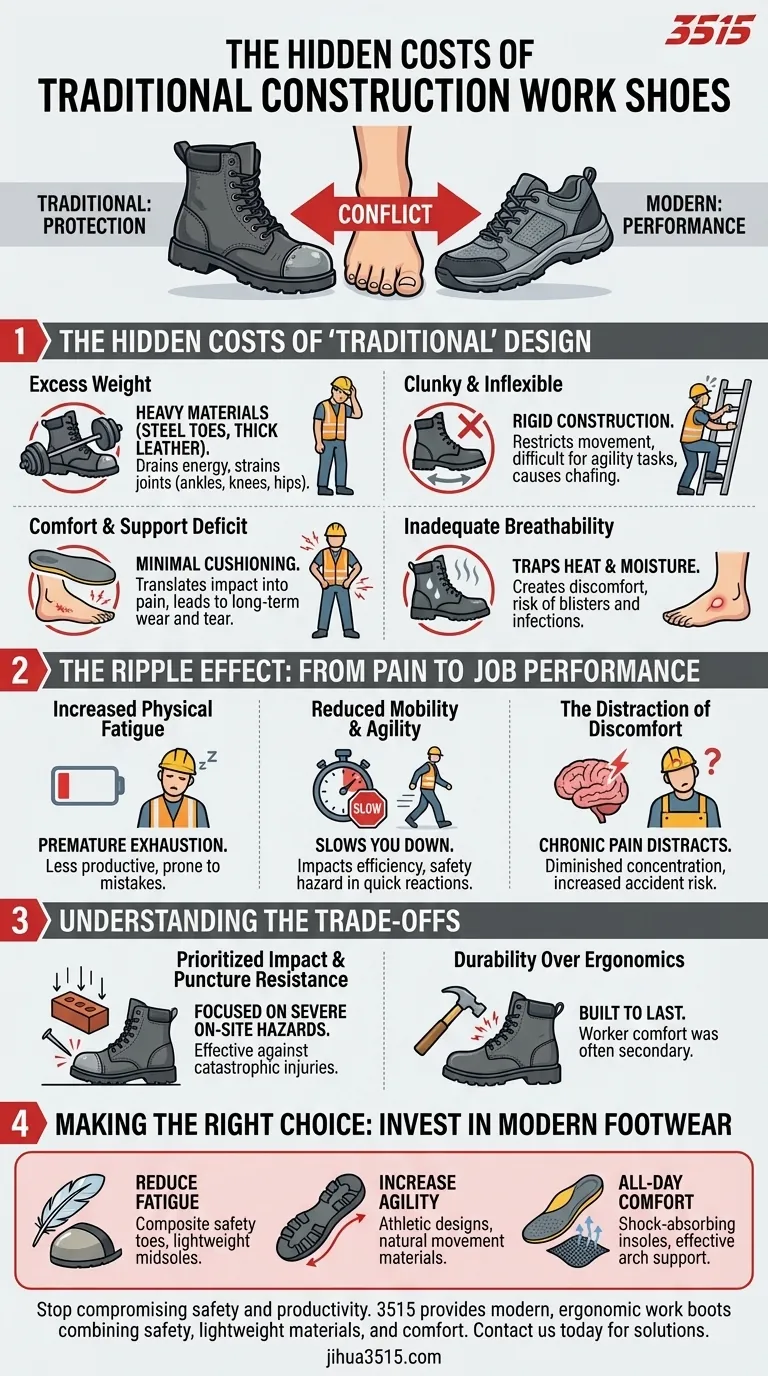
At their core, traditional construction work shoes present a fundamental conflict between protection and performance. They are often excessively heavy, rigid, and uncomfortable, which directly leads to foot pain, chronic fatigue, and a measurable decrease in a worker's daily productivity and safety.
The central issue with traditional construction footwear is that its design prioritizes outdated concepts of durability over modern ergonomics. This forces workers into a daily trade-off between long-term foot health and basic on-site protection.
The Hidden Costs of "Traditional" Design
The design philosophy behind many older work shoe models was simple: build an indestructible shell around the foot. While well-intentioned, this approach overlooks the dynamic needs of the modern construction professional and creates several persistent problems.
The Problem of Excess Weight
Traditional boots often feature heavy materials like steel for safety toes and shanks, combined with thick leather and dense rubber soles.
Carrying this extra weight on your feet with every step, thousands of times a day, acts like a constant drag on your body. It drains energy and places significant strain on the joints in your ankles, knees, and hips.
Clunky and Inflexible Construction
Rigidity was often seen as a sign of durability. However, this stiffness severely restricts the natural movement of your foot.
This lack of flexibility makes tasks that require agility—like climbing ladders, navigating uneven terrain, or kneeling—more difficult and less efficient. It can also lead to chafing and blisters as your foot fights against the rigid structure.
The Comfort and Support Deficit
Many older boot designs lack the advanced cushioning and ergonomic support common in modern footwear.
Insoles are often flat and unsupportive, while midsoles provide minimal shock absorption. This translates impact forces from walking on hard surfaces directly into your feet and joints, causing pain and long-term wear and tear.
Inadequate Breathability
Thick, non-breathable leather and minimal ventilation trap heat and moisture inside the boot.
This creates an environment ripe for blisters, fungal infections, and general discomfort, especially during long shifts or in warm weather.
The Ripple Effect: From Foot Pain to Job Performance
The physical issues caused by poor footwear do not exist in a vacuum. They have a direct and negative impact on a worker's ability to perform their job safely and effectively.
Increased Physical Fatigue
The combination of excess weight and the constant effort required to walk in stiff boots leads to premature physical exhaustion. A worker who is fatigued by midday is less productive and more prone to making mistakes.
Reduced Mobility and Agility
Clunky boots slow you down. The inability to move quickly and confidently can impact efficiency and, more critically, can become a safety hazard when quick reactions are necessary to avoid a fall or other on-site danger.
The Distraction of Discomfort
Chronic pain is a powerful distraction. When a worker is focused on their aching feet, their concentration on the task at hand is diminished, increasing the risk of accidents for themselves and their crew.
Understanding the Trade-offs
To be fair, traditional designs weren't created without reason. They focused on solving the most obvious and severe on-site hazards, but this focus came with significant trade-offs.
Prioritizing Impact and Puncture Resistance
The primary goal was to protect the foot from falling objects and sharp nails on the ground. Steel toes and thick, puncture-proof soles were the most direct solutions, and they were effective at preventing catastrophic injuries.
Durability Over Ergonomics
These boots were built to last for years on punishing job sites. The use of heavy-gauge leather and overbuilt soles ensured the boot could withstand extreme abuse. The comfort of the worker during that lifespan was often a secondary consideration.
Making the Right Choice for Your Goal
Modern footwear technology has largely eliminated the need to choose between safety and well-being. When selecting your next pair of work shoes, consider what problem you most want to solve.
- If your primary focus is reducing fatigue: Look for boots with composite safety toes and lightweight EVA midsoles to cut down on weight without sacrificing protection.
- If your primary focus is agility and flexibility: Seek out athletic-inspired designs that incorporate features like flexion grooves in the sole and materials that allow for more natural foot movement.
- If your primary focus is all-day comfort and foot health: Prioritize models with premium, shock-absorbing insoles, effective arch support, and waterproof yet breathable membranes.
Ultimately, investing in modern, well-designed work footwear is a direct investment in your own health, safety, and long-term career performance.
Summary Table:
| Problem with Traditional Shoes | Impact on Worker |
|---|---|
| Excess Weight | Increased fatigue, joint strain |
| Rigid Construction | Reduced agility, higher risk of trips/falls |
| Poor Cushioning | Foot pain, long-term joint damage |
| Lack of Breathability | Discomfort, blisters, fungal infections |
Stop compromising your crew's safety and productivity. As a large-scale manufacturer, 3515 produces a comprehensive range of modern, ergonomic work boots and shoes designed specifically for the demands of construction. We combine advanced safety features with lightweight materials and superior comfort to protect your workers and enhance their performance. Contact us today to discuss footwear solutions for your distributors, brand owners, or bulk client needs. Get a Quote
Visual Guide
Related Products
- Durable Leather Work Boots Wholesale Manufacturer & Custom Factory
- Durable Canvas Work Shoes with Rubber Lug Sole | Wholesale Manufacturer
- Durable Leather Moc Toe Work Boots for Wholesale & Custom Manufacturing
- Durable Leather Work Boots for Wholesale & Custom Manufacturing
- Durable Leather Safety Boots for Wholesale & Custom OEM Manufacturing
People Also Ask
- What are the common workplace hazards that can be mitigated with the right work boots? Protect Your Workforce
- How do PVC, neoprene, and rubber work boots compare in weight? Choose the Right Boot for All-Day Comfort
- What features should junk removal workers look for in work boots? A Guide to Safety & Comfort
- Which brands are known for high-quality work boots? A Guide to Durable, Safe Footwear
- What are the main differences between 6 inch and 8 inch boots? Support vs. Mobility Explained















