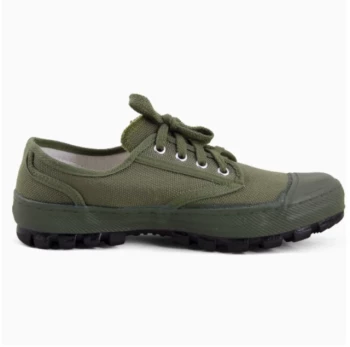
The use of standard training or walking shoes is a critical control measure for data integrity. By wearing appropriate footwear, you ensure that gait test results accurately reflect an individual's functional capacity in a real-world context, rather than measuring limitations caused by poor traction or lack of support.
The Core Takeaway Standardized footwear isolates the subject's physiological performance by stabilizing the mechanical interaction with the ground. This consistency eliminates external variables—such as slipping or foot instability—ensuring that data from assessments like walking speed tests and the Functional Timed Up and Go (TUG) is both reliable and clinically relevant.
The Role of Footwear in Data Reliability
Eliminating Gait Fluctuations
The primary technical value of standard training shoes is the minimization of gait fluctuation variables. Without proper footwear, data can be skewed by the subject's compensatory movements to maintain balance on a smooth laboratory floor.
Enhancing Friction and Support
Proper footwear provides necessary foot support and friction, which are essential for generating consistent ground reaction forces. This grip allows the subject to move confidently, ensuring that the measured speed and cadence are true to their physical capability.
Ensuring Repeatability
For protocols like the Functional Timed Up and Go (TUG) or standard walking speed tests, reliability is paramount. Standard shoes provide a constant baseline, allowing researchers to attribute changes in performance to the subject's condition rather than their choice of footwear on a specific day.
Bridging the Gap to Real-World Function
Simulating Daily Mechanics
Laboratory data must translate to practical application. Using standard walking shoes ensures that the knee joint angles and moments observed during testing closely mimic those occurring during daily living activities.
Safety in High-Impact Tasks
In dynamic assessments, such as step-down jumps, the cushioning and anti-slip protection of professional training shoes are vital. They protect the subject from injury while allowing for the expression of full motor potential during high-demand movements.
Neurological and Biomechanical Implications
Stabilizing Neuropathic Subjects
For individuals with peripheral neuropathy, postural instability can create "noise" in the data. Stable training shoes reduce this interference, ensuring a uniform distribution of plantar pressure.
Isolating Neural Function
By mechanically stabilizing the foot, researchers can more accurately observe specific physiological responses, such as H-reflex modulation. This ensures that observed deficits are due to neural conduction impairment rather than a mechanical struggle to stay upright.
Understanding the Trade-offs
Standardization vs. Personal Fit
While "standard" shoes offer control, they must be well-fitted to function correctly. An ill-fitting standard shoe can introduce the very instability it is meant to solve, negatively impacting the interaction between plantar receptors and the ground.
The Influence of Surface Interaction
The shoe does not exist in a vacuum; it interacts with the testing surface. The benefit of a standard shoe is strictly tied to the friction characteristics of the floor; a shoe that provides excellent grip on concrete may behave differently on a polished laboratory surface.
Making the Right Choice for Your Goal
To select the appropriate footwear protocol for your gait analysis, consider your specific objective:
- If your primary focus is Clinical Relevance: Prioritize standard walking shoes to ensure TUG and walking speed results reflect the patient's daily functional level.
- If your primary focus is Neurological Research: Use high-stability training shoes to minimize postural swaying and isolate specific neural deficits like H-reflex modulation.
- If your primary focus is High-Impact Biomechanics: Ensure footwear offers significant cushioning and grip to maintain subject safety and simulate realistic joint loading.
Standardizing footwear is not just about logistics; it is a fundamental calibration step that transforms raw movement into actionable, repeatable data.
Summary Table:
| Factor | Impact on Gait Testing | Benefit for Research/Clinical Data |
|---|---|---|
| Data Stability | Minimizes gait fluctuation variables | Ensures results reflect true physical capability |
| Friction & Grip | Enhances ground reaction forces | Prevents slipping and compensatory movements |
| Safety | Provides cushioning & anti-slip | Protects subjects during high-impact tasks like TUG |
| Neurological | Stabilizes plantar pressure | Isolates neural function from mechanical noise |
| Repeatability | Provides a constant baseline | Allows for consistent longitudinal assessments |
Partner with 3515 for High-Performance Footwear Solutions
As a leading large-scale manufacturer serving global distributors and brand owners, 3515 delivers the precision and durability required for professional footwear. Whether you need specialized Safety Shoes for industrial use, reliable Training & Tactical Boots, or high-performance Sneakers, our comprehensive production capabilities ensure your bulk requirements are met with excellence.
Boost your product line with our flagship safety and athletic series designed for maximum stability and performance. Contact us today to discuss your manufacturing needs!
References
- Mathilde Gigonzac, Philippe Terrier. Restoring walking ability in older adults with arm-in-arm gait training: study protocol for the AAGaTT randomized controlled trial. DOI: 10.1186/s12877-023-04255-9
This article is also based on technical information from 3515 Knowledge Base .
Related Products
- Custom OEM Training Shoes Wholesale Manufacturer Durable & Breathable
- Lightweight Breathable Training Shoes for Wholesale & Custom OEM Manufacturing
- Wholesale Durable & Breathable Training Shoes for Custom Brands
- Wholesale Breathable & Cushioned Training Shoes Custom Factory Production
- Wholesale Breathable Training Shoes Custom Athletic Footwear Manufacturer
People Also Ask
- Why is sole stiffness testing using a force gauge necessary? Build Superior Training Shoes with Precision
- Why is specialized athletic footwear necessary for ankle rehab? Unlock Safety and Stability in Recovery
- Why is the use of flat-soled or professional training shoes essential for WBV? Maximize Vibration Energy Transfer
- Why is it necessary for participants to wear professional training shoes? Ensuring Data Accuracy & Patient Safety
- Why is the integration of advanced cushioning in training shoes necessary for athletes? Boost Recovery and Performance