
At its core, the stitch or hand-corded pattern on a western boot serves a dual purpose that has evolved over time. Originally, it was a functional feature designed to add stiffness and structural integrity to the boot's shaft, preventing it from sagging. Today, while still adding some structure, its significance is primarily aesthetic—a hallmark of craftsmanship, heritage, and personal style.
While now prized for its beauty, the intricate stitching on a western boot shaft originated from a critical, practical need: to provide rigidity and protect the rider's leg before modern boot-making techniques existed.
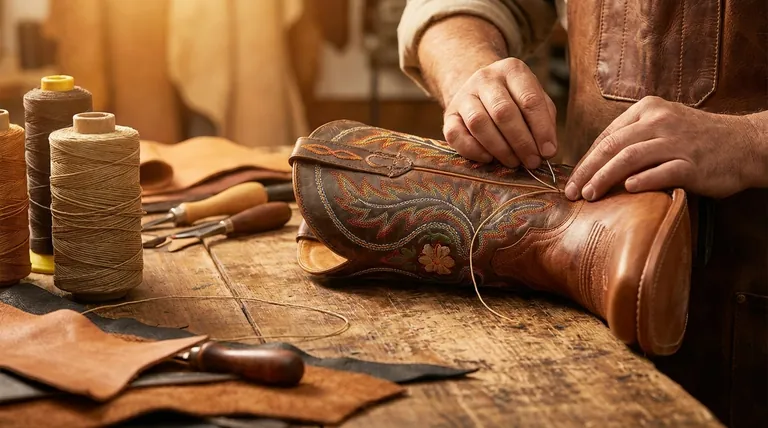
From Practical Engineering to Wearable Art
The story of the western boot's stitching is one of function evolving into form. What began as a simple solution to a structural problem became a canvas for artisans to showcase their skill and for wearers to express their identity.
The Original Purpose: Structural Integrity
Early cowboy boots were often made from softer, more pliable leathers. The tall shaft was essential for protecting a rider's leg from brush, thorns, and stirrup rub.
Without reinforcement, these soft leather shafts would slouch and collapse around the ankle. The solution was elaborate stitching, often with cord threaded between the layers of leather (cording), which created a reinforcing scaffold that helped the shaft stand tall and maintain its shape.
The Evolution into Signature Style
As bootmakers refined their craft, this functional stitching became a point of distinction. Different makers developed unique, signature stitch patterns that acted as an informal brand logo, instantly identifying the boot's origin.
This decorative aspect quickly overtook the purely functional one. The stitching became a way to display artistry and wealth, with complex, multi-colored patterns signifying a higher-quality, more expensive boot.
Decoding the Modern Stitch Pattern
Today, modern construction methods can ensure a boot shaft remains rigid without elaborate stitching. However, the tradition continues as a vital part of the boot's identity, signifying quality and authenticity.
A Hallmark of Craftsmanship
A dense, complex, and symmetrical stitch pattern is a clear indicator of a well-made boot. Executing these designs requires immense skill and specialized machinery, and the number of rows of stitching often correlates with the boot's overall quality and price point.
A Symbol of Heritage
The classic flame, feather, and floral motifs connect the modern boot directly to its historical roots on the American frontier. While the reference to a "Cowboy Code" is more metaphorical than literal, the stitching does carry the cultural heritage and rugged individualism associated with cowboy lore. It is a visual link to the boot's past.
Understanding the Trade-offs
While ornate stitching is iconic, it's not always the best choice for every situation. The purpose of the boot should guide your preference for its design.
The Case for Ornate Stitching
Intricate, multi-colored stitching is the quintessential choice for a traditional or dress western boot. It showcases the highest level of craftsmanship and makes a distinct style statement. For those who value heritage and artistry, a detailed stitch pattern is non-negotiable.
The Case for Minimal Stitching
Boots with minimal or no decorative stitching offer a more subtle, versatile look that can easily be worn in business or urban settings. For work boots used in harsh conditions, a plain shaft can be more practical, as there are no threads to snag or break.
Making the Right Choice for Your Goal
Consider what you value most in a boot to decide which style is right for you.
- If your primary focus is tradition and craftsmanship: Look for boots with complex, multi-row stitch patterns, as this is a direct indicator of quality and heritage.
- If your primary focus is versatility for daily wear: Consider a boot with minimal or tonal (same-color) stitching, which offers a cleaner profile that pairs with a wider range of clothing.
- If your primary focus is rugged utility for work: A plain, unstitched shaft is often the most durable choice, preventing potential snags and damage to the decorative elements.
Ultimately, the stitching on a western boot tells the story of its journey from a practical tool to a celebrated piece of cultural art.
Summary Table:
| Aspect | Significance |
|---|---|
| Original Purpose | Added stiffness and structural integrity to the boot shaft. |
| Modern Significance | Primarily aesthetic; a hallmark of quality, heritage, and personal style. |
| Indicates | Level of craftsmanship and boot quality. |
| Consider For | Traditional/dress wear (ornate) vs. versatility/work (minimal). |
Ready to Craft Your Signature Style?
As a large-scale manufacturer, 3515 produces a comprehensive range of footwear for distributors, brand owners, and bulk clients. Our production capabilities encompass all types of boots, from intricately stitched heritage designs to durable, minimalistic work boots. We can help you bring your vision to life with quality, consistency, and scale.
Contact us today to discuss your western boot needs and discover how we can be your trusted manufacturing partner.
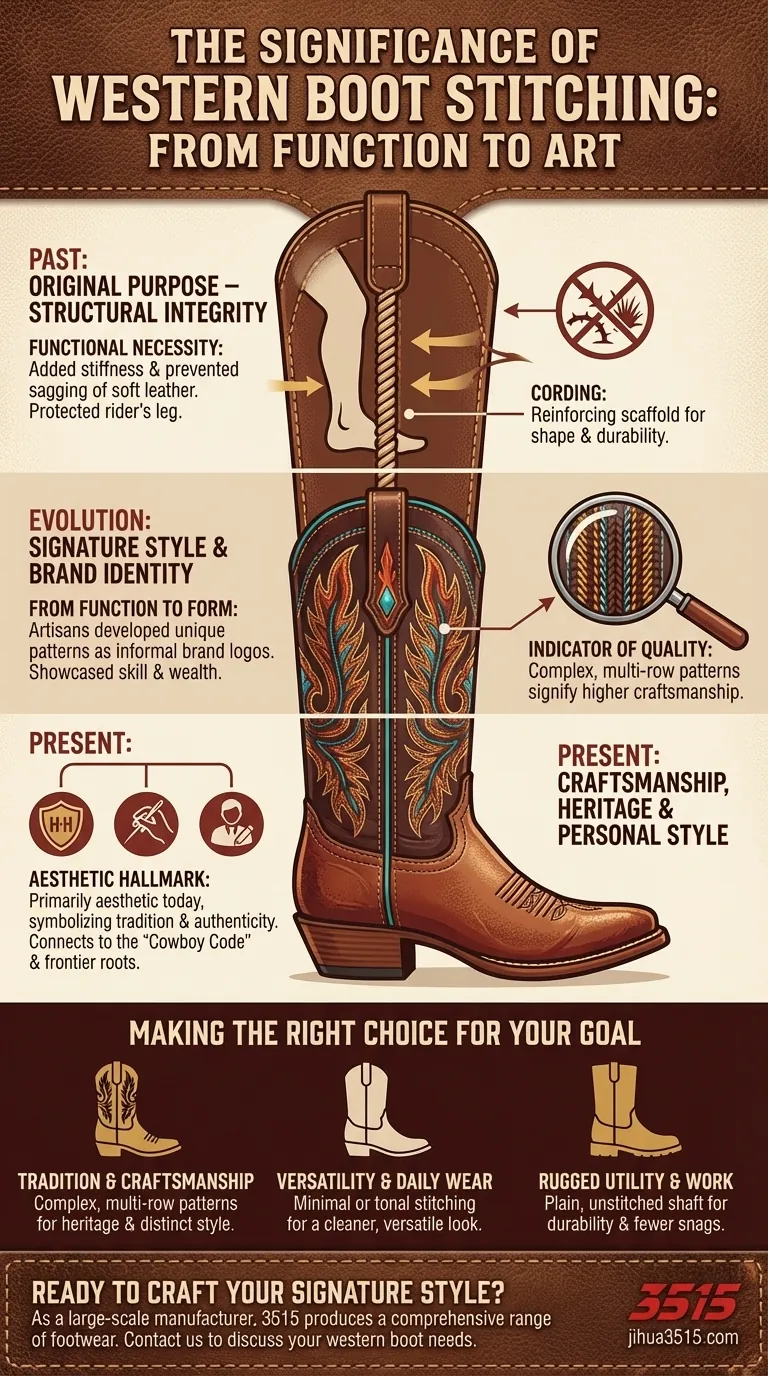
Visual Guide
Related Products
- Durable Goodyear Welt Leather Work Boots for Wholesale & Private Label
- High-Traction Suede Tactical Boots Wholesale & Custom Manufacturing
- Durable Leather Tactical Boots Wholesale & Custom Manufacturing for Brands
- Durable High-Ankle Tactical Boots for Wholesale & Custom Manufacturing
- Wholesale Safety Boots Manufacturer for Custom & Private Label Orders
People Also Ask
- What is the difference between full-grain and top-grain leather? Premium Material Guide for Boot Manufacturers
- What are the advantages of leather as an upper material for work boots? Unmatched Durability & Custom Comfort
- Why is it important to waterproof leather work boots? Protect Your Investment and Performance
- How should new leather work boots be broken in? A Guide to Comfort and Durability
- What are the advantages of leather uppers in work boots? Unmatched Durability & Protection
















