"No leg, no horse" is a foundational principle in horsemanship that underscores the absolute importance of a horse's legs to its overall health, performance, and very purpose. This saying frames leg protection not as a mere accessory, but as a critical investment in the animal's soundness and longevity. It is a stark reminder that even the most well-bred and athletic horse is useless if its legs fail.
The core message of "No leg, no horse" is that a horse's lower legs are both incredibly powerful and surprisingly fragile. Protecting these vital structures from injury with well-chosen equipment is fundamental to preserving the animal's long-term health and ability to perform.
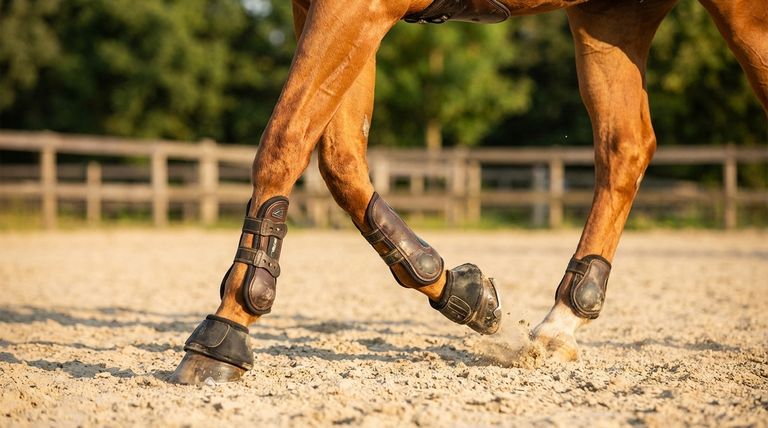
The Anatomy of a Vulnerable System
To truly grasp the saying's weight, you must understand the unique anatomy of the equine lower leg. It is a marvel of biological engineering, but its design comes with inherent vulnerabilities.
A Structure of Bone and Tendon
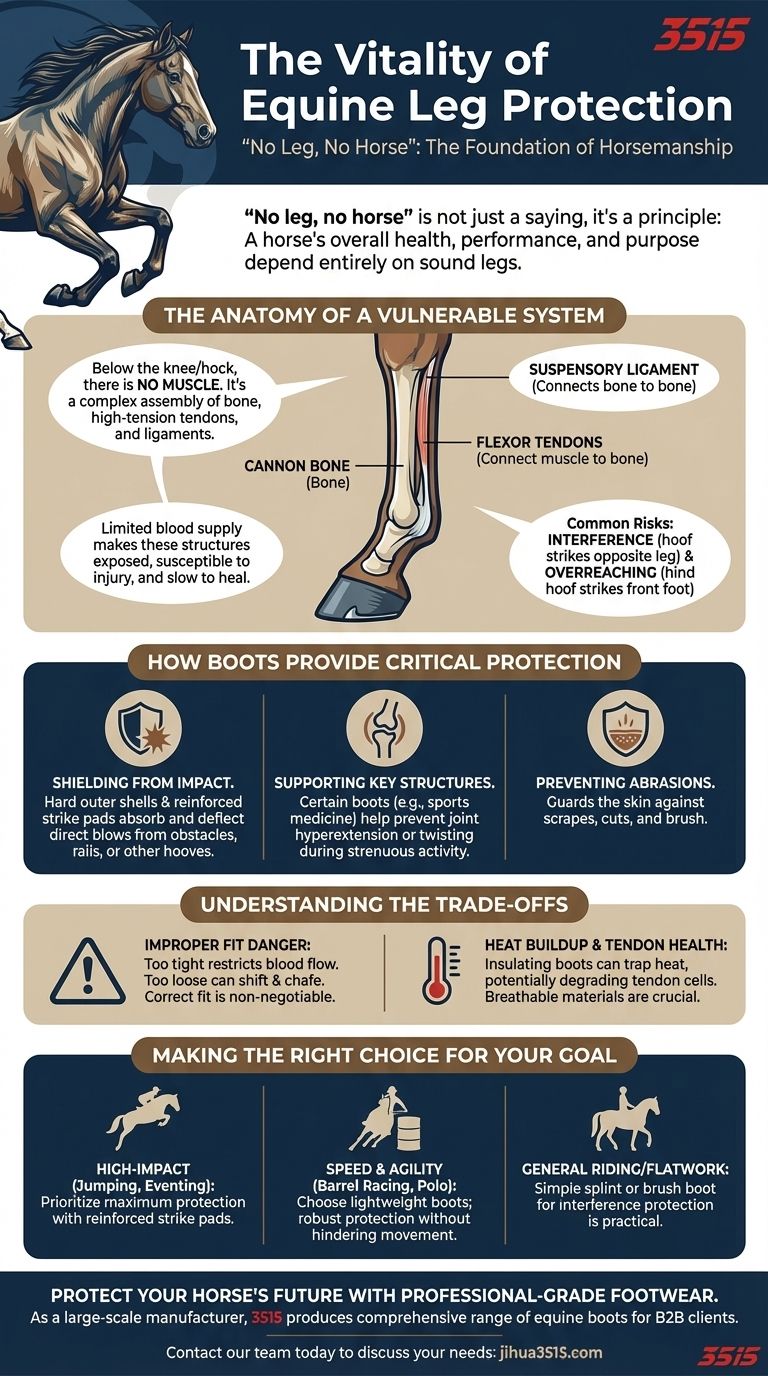
Below the knee and hock, a horse's leg contains no muscle. It is a complex assembly of bones, ligaments (which connect bone to bone), and tendons (which connect muscle to bone).
Think of the tendons and ligaments as high-tension cables responsible for locomotion. They are exposed and have a limited blood supply, which makes them susceptible to injury and slow to heal.
Common Risks to the Lower Leg
This exposed design makes the lower legs prone to several types of injuries that boots are designed to prevent. These include impact from obstacles, or more commonly, the horse injuring itself.
Key risks include interference, where one hoof strikes the opposite leg, and overreaching, where a hind hoof strikes the heel or pastern of a front foot.
How Boots Provide Critical Protection
Horse boots are a form of personal protective equipment (PPE) specifically engineered to mitigate the risks associated with this vulnerable anatomy. Their function goes beyond simple covering.
Shielding from Impact
The primary purpose of most boots is to act as a shield. Boots with a hard outer shell or reinforced strike pads are designed to absorb and deflect the force of a direct blow, whether from a jump rail, a rock, or another hoof.
This protection is crucial for preventing bruises, splints (inflammation of the splint bone), and potentially catastrophic injuries to the cannon bone or vital soft tissues.
Supporting Key Structures
While "support" can be a debated term, certain boots, like sports medicine or fetlock boots, are designed to help prevent the joint from hyperextending or twisting during strenuous activity.
Their main value, however, remains protection against external impact.
Preventing Abrasions and Cuts
The simplest function of any leg protection is to guard the skin against scrapes, cuts, and abrasions. This is especially important when riding through dense brush, working in rough footing, or during turnout with other horses.
Understanding the Trade-offs
While essential, boots are not a universal solution and come with their own set of considerations. An informed owner understands the potential downsides.
The Danger of Improper Fit
A boot that is too tight can restrict blood flow and create pressure points, leading to sores and potential tendon damage. A boot that is too loose can shift, chafe the skin, or get debris trapped inside. The correct fit is non-negotiable.
Heat Buildup and Tendon Health
Tendons are highly sensitive to heat. Insulating boots can trap heat during exercise, and excessive temperatures can degrade tendon cells over time, increasing the risk of injury. Modern boots often prioritize breathable materials to combat this very issue.
A False Sense of Security
Boots are a tool to mitigate risk, not eliminate it. They cannot replace proper conditioning, correct training, good riding, and attention to footing. Relying on boots to compensate for poor fundamentals is a recipe for failure.
Making the Right Choice for Your Goal
The principle of "No leg, no horse" guides you to select protection that matches your activity.
- If your primary focus is high-impact work (jumping, eventing): You need maximum protection against strikes from obstacles and hooves, so prioritize boots with reinforced strike pads.
- If your primary focus is speed and agility (barrel racing, polo): Choose lightweight boots that offer robust protection without hindering movement or adding unnecessary weight.
- If your primary focus is flatwork or general riding: A simple splint boot or brush boot that guards against interference is often the most practical and comfortable choice for your horse.
Ultimately, "No leg, no horse" is a call to be a proactive and responsible horse owner, making informed decisions to safeguard your horse's most critical assets.
Summary Table:
| Function of Horse Boots | Key Benefit |
|---|---|
| Shielding from Impact | Absorbs blows from obstacles or hooves to prevent bone and tendon injuries. |
| Supporting Structures | Helps prevent joint hyperextension during strenuous activity. |
| Preventing Abrasions | Guards skin against cuts and scrapes from rough footing or brush. |
| Considerations | Proper fit and breathability are critical to avoid heat buildup and chafing. |
Protect your horse's future with professional-grade footwear. As a large-scale manufacturer, 3515 produces a comprehensive range of equestrian boots for distributors, brand owners, and bulk clients. Our expertise ensures durable, well-fitting protection designed for optimal performance and horse health. Contact our team today to discuss your equine footwear needs and secure your supply of reliable leg protection.
Visual Guide
Related Products
- Wholesale High-Traction Camo Boots - Custom Manufacturer for Brands
- Wholesale Lightweight Tactical Boots Custom Manufacturer for Desert & Combat Use
- High-Traction Suede Tactical Boots Wholesale & Custom Manufacturing
- Durable Leather Tactical Boots Wholesale & Custom Manufacturing for Brands
- Wholesale Perforated Comfort Dress Shoes | Custom Derby Shoe Manufacturer
People Also Ask
- What are the key features of the new line of camo boots? Built for Extreme Cold & Rugged Terrain
- Are camo boots necessary for hunting success? Prioritize Performance Over Pattern
- How does the Rank Score Test identify the primary causes of premature failure in tactical and work boots? Key Insights
- What is the technical logic behind using closed-eye testing for tactical boots? Unlocking Peak Footwear Stability
- What shoes to wear for a security job? Durable, Protective Footwear for Long Shifts