
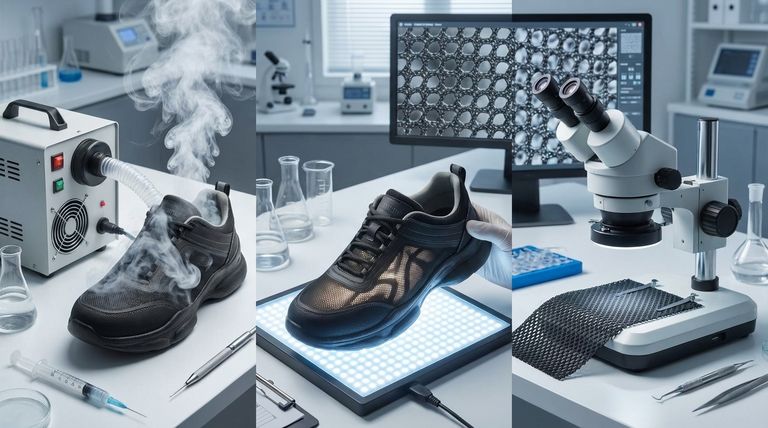
To evaluate shoe breathability, testers primarily use a series of qualitative, visual methods to assess how easily air can pass through the upper material. The most common tests involve pumping smoke into the shoe to observe its escape, hovering the upper over a light source to check for porosity, and examining the fabric's structure under a microscope.
The core purpose of breathability tests is not just to measure airflow, but to create a visual proxy for a shoe's ability to vent heat and moisture vapor (sweat), which is the true key to foot comfort and health.
What "Breathability" Really Means
True footwear breathability is about moisture vapor transmission, not just letting air in and out. A shoe that manages this well keeps your foot drier and more comfortable.
The Goal: Venting Moisture
Your feet sweat, releasing heat and water vapor. If this vapor is trapped, it creates a damp, hot environment inside the shoe, which can lead to blisters and discomfort.
The Role of the Upper
The shoe's upper—the material covering the top of your foot—is the primary barrier. Its material composition, weave, and structure determine how effectively that moisture vapor can escape.
A Closer Look at the Evaluation Methods
The common tests are simple yet effective ways to visualize a material's potential to breathe. They are often used in combination to form a complete picture.
The Smoke Test: Visualizing Air Permeability
Testers fill the shoe's interior with smoke and apply light pressure. They then observe how quickly and from which areas the smoke escapes through the upper.
A shoe where smoke billows out easily from all over the mesh indicates high air permeability.
The Light Test: Assessing Material Porosity
The shoe's upper is held over a bright LED light. The amount of light that passes through the fabric reveals the density of the weave.
More light shining through suggests a more open, porous structure, which is a strong indicator of good breathability.
The Microscope Test: Analyzing Fabric Structure
This test provides a detailed, scientific view of the material itself. Under a microscope, an expert can see the knit pattern, the size of the gaps between fibers, and the type of yarn used.
This analysis validates the findings from the smoke and light tests, confirming why a material performs the way it does.
The Breathability Score Explained
To make the results easy to understand, the findings from these tests are often compiled into a single, standardized rating.
How the Score is Determined
Each shoe is assigned a breathability score from 1 to 5. This number is a composite judgment based on the performance across all visual tests.
A score of 5 represents the most breathable footwear, while a score of 1 indicates the least breathable.
What the Numbers Mean
- Score 1-2: Typically found in waterproof leather boots or shoes with heavy weather-resistant membranes. These prioritize protection over ventilation.
- Score 3: A common middle ground for many daily trainers or versatile shoes. It offers a balance of structure and airflow.
- Score 4-5: Reserved for elite racing shoes or lightweight summer runners with extremely open and thin mesh uppers designed for maximum heat dissipation.
The Inevitable Trade-off: Breathability vs. Protection
Choosing a shoe always involves balancing competing needs. Highly breathable designs inherently sacrifice other features.
The Durability Dilemma
The materials that make shoes most breathable—thin, open-weave meshes—are often the least resistant to abrasion and tearing. Increasing durability usually means using a denser, less breathable fabric.
The Weatherproofing Challenge
A shoe that lets air and moisture out very easily will also let external elements like water and cold air in. True weatherproofing requires membranes or coatings that inevitably seal off the pathways that allow for breathability.
How to Choose the Right Shoe for Your Needs
Use the concept of breathability to select footwear that aligns with its intended purpose.
- If your primary focus is maximum ventilation for hot weather or racing: Seek out shoes with a breathability score of 4 or 5 and uppers you can clearly see light through.
- If your primary focus is all-around versatility for daily use: A mid-range score of 3 often provides the best compromise between airflow, durability, and structure.
- If your primary focus is maximum protection from wet or cold conditions: Prioritize weather-resistant or waterproof materials and accept that a low breathability score (1-2) is a necessary trade-off.
Ultimately, understanding these tests empowers you to look beyond marketing and choose a shoe based on the physical properties that matter for your specific goal.
Summary Table:
| Breathability Score | Ideal For | Characteristics |
|---|---|---|
| 1-2 | Waterproof/Cold Weather | Maximum protection, minimal airflow |
| 3 | Daily/All-Round Use | Balanced ventilation and durability |
| 4-5 | Hot Weather/Racing | Maximum airflow, thin mesh uppers |
Need breathable footwear for your customers? As a large-scale manufacturer, 3515 produces a comprehensive range of shoes and boots for distributors, brand owners, and bulk clients. Our expertise in material science and production capabilities ensures you get footwear that perfectly balances breathability, durability, and style. Let's discuss your specific needs—contact our team today to get a quote!
Visual Guide
