nTop software acts as a specialized computational engine for designing high-performance footwear midsoles through advanced lattice generation. It leverages implicit modeling to give designers precise control over complex geometries—specifically Triply Periodic Minimal Surfaces (TPMS) and graphical units—enabling the creation of structures that are difficult or impossible to define with traditional CAD software.
The software’s defining capability is the creation of functional gradient materials. By allowing engineers to spatially vary lattice parameters like wall thickness and cell size, nTop transforms a single material into a tuned mechanical system with customized cushioning and support zones.
The Power of Implicit Modeling
Overcoming CAD Limitations
Traditional design software relies on boundary representations (B-rep), which struggle to process the thousands of surfaces found in a lattice structure.
nTop uses implicit modeling, a mathematical approach that represents geometry as a continuous 3D field.
This allows the software to handle complex midsole architectures without the computational crashes common in standard CAD tools.
Precise Geometric Control
The software provides granular control over the fundamental building blocks of the midsole.
Designers can select specific lattice unit types, including WTPMS (Triply Periodic Minimal Surfaces) and graphical units.
These structures offer superior energy return and fatigue resistance compared to standard solid foams.
Creating Functional Gradient Materials
Spatial Distribution
A key role of nTop in footwear design is defining the spatial distribution of the lattice.
Rather than a uniform structure, the software allows the lattice to morph seamlessly across the shape of the foot.
This ensures that the lattice structure aligns perfectly with the foot's pressure map.
Adjusting Wall Thickness
The software enables the modulation of lattice wall thickness at a microscopic level.
Thicker walls can be applied in the heel for impact stability, while thinner walls are used in the forefoot for flexibility.
This capability creates a "functional gradient," changing the shoe's performance characteristics without changing the base material.
Fine-Tuned Customization
nTop facilitates a level of design freedom unavailable in traditional molding or machining processes.
Engineers can manipulate unit dimensions to tune the mechanical performance of the midsole.
This results in a product that is optimized for specific athletic movements or biometric data.
Understanding the Trade-offs
Complexity Management
While nTop offers immense freedom, the complexity of implicit geometry can be abstract.
Engineers must transition from thinking in terms of explicit surfaces (edges and faces) to thinking in terms of fields and mathematical rules.
This requires a fundamental shift in the design approach compared to legacy footwear design workflows.
Dependency on Advanced Manufacturing
The complex lattices designed in nTop, particularly those with variable densities and undercuts, are often impossible to manufacture via traditional injection molding.
Realizing these designs usually requires additive manufacturing (3D printing).
Therefore, the software's utility is tightly coupled with the availability of production-grade 3D printing hardware.
Making the Right Choice for Your Goal
To maximize the value of nTop in your footwear project, align your design strategy with the specific mechanical needs of the athlete.
- If your primary focus is localized comfort: Utilize functional gradients to soften lattice density in high-pressure areas like the metatarsal heads.
- If your primary focus is structural stability: Increase lattice wall thickness and unit dimensions in the medial arch to provide rigid support without adding heavy distinct components.
By mastering the spatial manipulation of lattice parameters, you turn the midsole into a programmable mechanical device tailored to human biomechanics.
Summary Table:
| Key Role of nTop |
|---|
| Implicit Modeling |
| Functional Gradient Materials |
| Precise Geometric Control |
| Fine-Tuned Customization |
| Enables Advanced Manufacturing |
| Benefit for Footwear Midsole Design |
|---|
| Enables complex lattice geometries unachievable by traditional CAD, preventing crashes. |
| Creates customized cushioning & support zones by varying lattice parameters spatially. |
| Designs high-performance TPMS/graphical units for superior energy return & fatigue resistance. |
| Optimizes midsoles for specific athletic movements or biometric data, achieving unique performance. |
| Designs complex structures only feasible with additive manufacturing (3D printing). |
Looking to elevate your footwear designs with cutting-edge midsole technology?
As a large-scale manufacturer, 3515 partners with distributors and brand owners to bring innovative footwear to market. From our flagship Safety Shoes to work and tactical boots, outdoor, training, and dress shoes, we offer comprehensive production capabilities to meet your diverse bulk requirements.
Discover how 3515 can transform your vision into high-performance footwear. Contact us today to discuss your project!
References
- Mohammad Javad Hooshmand, Mohammad Abu Hasan Khondoker. Machine Learning Algorithms for Predicting Mechanical Stiffness of Lattice Structure-Based Polymer Foam. DOI: 10.3390/ma16227173
This article is also based on technical information from 3515 Knowledge Base .
Related Products
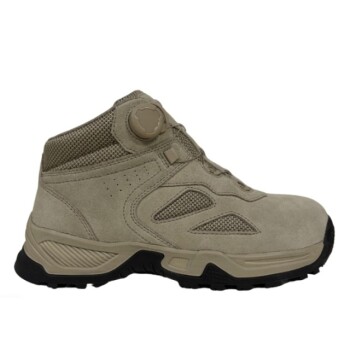
- Premium Wholesale Wheat Nubuck Safety Boot with Rapid Lacing System
- Premium Wholesale Waterproof Safety Boots High Performance Protection for Industrial Markets
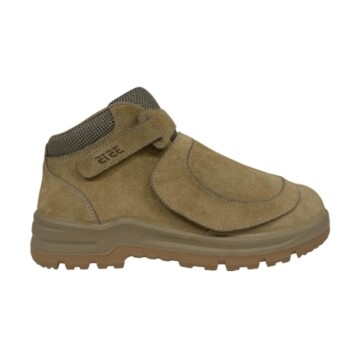
- Premium Suede Metatarsal Guard Safety Boots Work Shoes
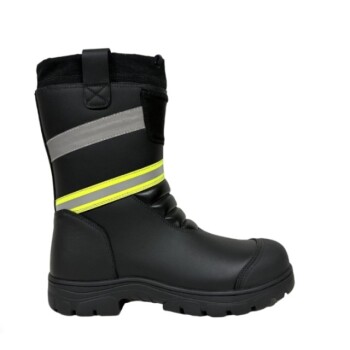
- High Performance Fire-Retardant Waterproof Safety Boots
- Durable Mid-Cut Tactical Boots for Wholesale & Private Label
People Also Ask
- Why are oil-resistant and anti-slip properties critical for industrial safety boots? Expert Outsole Engineering Guide
- What are the primary protective functions of industrial safety boots in oil palm plantations? Master Rough Terrain Safety
- How do industrial safety boots assist maintenance personnel working on high-level palm oil factory structures?
- What are the primary protective functions of industrial safety boots in granite quarry environments? Essential Guide
- Why are industrial safety boots with high-grip outsoles required for oil leaks and B3 waste? Ensure Worker Stability